ADVERTISEMENT

Caught on camera: Technology can be a double-edged sword

Published Aug 2, 2025 12:05 am  |  Updated Aug 1, 2025 06:15 pm
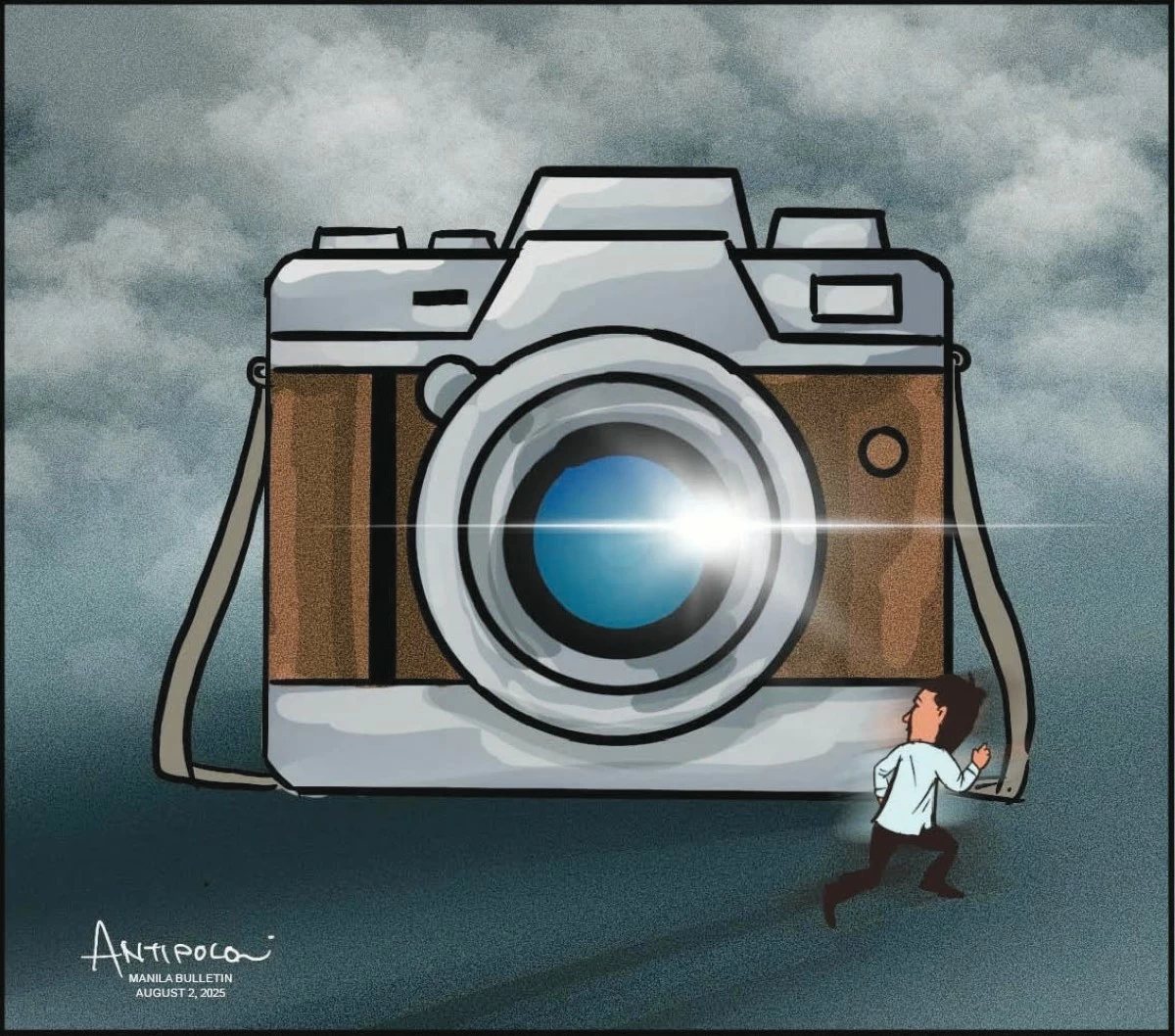
Cameras have the power to humble the arrogant and hold the powerful accountable. We have seen many instances where abusive motorists and traffic enforcers, rude government clerks, or even VIPs bypassing rules have been caught red-handed. For the public, the lens can be a form of justice.
It can also be the source of witnessing situations we would never have the chance to see if CCTVs were not perched somewhere up there. Among these — an angry motorist pulling out his gun and shooting a person; an SUV "running amok" crashing onto vehicles, speeding through the highway and finally causing a gas station fire; random people walking in the midst of crawling traffic and divesting a truck of its valuable cargo.
In today’s hyperconnected world, it often feels like someone is always watching. From CCTV units on every street corner to camera phones in every hand, a person is constantly in the lens of a camera — sometimes knowingly, often not. In many cases, this has brought good results.
Public officials, once emboldened by anonymity or power, now act with more caution, aware that even the smallest indiscretion could be recorded, uploaded, and go viral within minutes. Arrogant citizens who break the law, bully traffic enforcers, or who run away from the scene of a crime are caught on street CCTV — or on curious citizens’ phones — and get penalized by the authorities.
There have been many videos that became viral on social media that have shown images of people in questionable situations, like the image of online gaming on a mobile phone screen. Whether or not these images were real, manipulated, or came from an email inbox, these triggered public outrage.
The clip became a rallying point for renewed calls to ban or heavily regulate online gaming and other forms of digital gambling, which have reportedly led to personal bankruptcies, domestic conflict, and addiction. In this case, the camera has sparked debates on regulating online gambling.
But technology is also a double-edged sword. And there is a deeper concern here – privacy. As much as we value the ability to call out misconduct, we must also be mindful of the growing invasion of private spaces especially while in public places. Everyday citizens are increasingly vulnerable to being filmed during unguarded moments — at work, on public transport, in elevators, even in what they assumed were private conversations. These clips, often uploaded without consent, can lead to online shaming, damage or reputations, and even legal trouble.
What, then, can we do?
First, we must educate ourselves and others about digital privacy and the laws that protect privacy.
Second, we must urge the government to create clearer policies on surveillance, facial recognition, and data retention. Who owns the data? Who ensures it won’t be misused? These are questions still largely unanswered.
Third, we must hold ourselves accountable. Not every viral clip deserves to be shared. The dignity of others — even those we disagree with — should not be sacrificed for clicks.
Technology is not inherently good or evil. It reflects the values of those who use it. As cameras become more present in our daily lives, let us use them responsibly — protecting the truth, upholding accountability, and defending each other’s right to be human.
Because someone is always watching. The question is: for what purpose?
ADVERTISEMENT
.most-popular .layout-ratio{ padding-bottom: 79.13%; } @media (min-width: 768px) and (max-width: 1024px) { .widget-title { font-size: 15px !important; } }

{{ articles_filter_1561_widget.title }}

.most-popular .layout-ratio{ padding-bottom: 79.13%; } @media (min-width: 768px) and (max-width: 1024px) { .widget-title { font-size: 15px !important; } }

{{ articles_filter_1562_widget.title }}

.most-popular .layout-ratio{ padding-bottom: 79.13%; } @media (min-width: 768px) and (max-width: 1024px) { .widget-title { font-size: 15px !important; } }

{{ articles_filter_1563_widget.title }}

{{ articles_filter_1564_widget.title }}

.mb-article-details { position: relative; } .mb-article-details .article-body-preview, .mb-article-details .article-body-summary{ font-size: 17px; line-height: 30px; font-family: "Libre Caslon Text", serif; color: #000; } .mb-article-details .article-body-preview iframe , .mb-article-details .article-body-summary iframe{ width: 100%; margin: auto; } .read-more-background { background: linear-gradient(180deg, color(display-p3 1.000 1.000 1.000 / 0) 13.75%, color(display-p3 1.000 1.000 1.000 / 0.8) 30.79%, color(display-p3 1.000 1.000 1.000) 72.5%); position: absolute; height: 200px; width: 100%; bottom: 0; display: flex; justify-content: center; align-items: center; padding: 0; } .read-more-background a{ color: #000; } .read-more-btn { padding: 17px 45px; font-family: Inter; font-weight: 700; font-size: 18px; line-height: 16px; text-align: center; vertical-align: middle; border: 1px solid black; background-color: white; } .hidden { display: none; }
function initializeAllSwipers() { // Get all hidden inputs with cms_article_id document.querySelectorAll('[id^="cms_article_id_"]').forEach(function (input) { const cmsArticleId = input.value; const articleSelector = '#article-' + cmsArticleId + ' .body_images'; const swiperElement = document.querySelector(articleSelector); if (swiperElement && !swiperElement.classList.contains('swiper-initialized')) { new Swiper(articleSelector, { loop: true, pagination: false, navigation: { nextEl: '#article-' + cmsArticleId + ' .swiper-button-next', prevEl: '#article-' + cmsArticleId + ' .swiper-button-prev', }, }); } }); } setTimeout(initializeAllSwipers, 3000); const intersectionObserver = new IntersectionObserver( (entries) => { entries.forEach((entry) => { if (entry.isIntersecting) { const newUrl = entry.target.getAttribute("data-url"); if (newUrl) { history.pushState(null, null, newUrl); let article = entry.target; // Extract metadata const author = article.querySelector('.author-section').textContent.replace('By', '').trim(); const section = article.querySelector('.section-info ').textContent.replace(' ', ' '); const title = article.querySelector('.article-title h1').textContent; // Parse URL for Chartbeat path format const parsedUrl = new URL(newUrl, window.location.origin); const cleanUrl = parsedUrl.host + parsedUrl.pathname; // Update Chartbeat configuration if (typeof window._sf_async_config !== 'undefined') { window._sf_async_config.path = cleanUrl; window._sf_async_config.sections = section; window._sf_async_config.authors = author; } // Track virtual page view with Chartbeat if (typeof pSUPERFLY !== 'undefined' && typeof pSUPERFLY.virtualPage === 'function') { try { pSUPERFLY.virtualPage({ path: cleanUrl, title: title, sections: section, authors: author }); } catch (error) { console.error('ping error', error); } } // Optional: Update document title if (title && title !== document.title) { document.title = title; } } } }); }, { threshold: 0.1 } ); function showArticleBody(button) { const article = button.closest("article"); const summary = article.querySelector(".article-body-summary"); const body = article.querySelector(".article-body-preview"); const readMoreSection = article.querySelector(".read-more-background"); // Hide summary and read-more section summary.style.display = "none"; readMoreSection.style.display = "none"; // Show the full article body body.classList.remove("hidden"); } document.addEventListener("DOMContentLoaded", () => { let loadCount = 0; // Track how many times articles are loaded const offset = [1, 2, 3, 4, 5, 6, 7, 8, 9, 10]; // Offset values const currentUrl = window.location.pathname.substring(1); let isLoading = false; // Prevent multiple calls if (!currentUrl) { console.log("Current URL is invalid."); return; } const sentinel = document.getElementById("load-more-sentinel"); if (!sentinel) { console.log("Sentinel element not found."); return; } function isSentinelVisible() { const rect = sentinel.getBoundingClientRect(); return ( rect.top < window.innerHeight && rect.bottom >= 0 ); } function onScroll() { if (isLoading) return; if (isSentinelVisible()) { if (loadCount >= offset.length) { console.log("Maximum load attempts reached."); window.removeEventListener("scroll", onScroll); return; } isLoading = true; const currentOffset = offset[loadCount]; window.loadMoreItems().then(() => { let article = document.querySelector('#widget_1690 > div:nth-last-of-type(2) article'); intersectionObserver.observe(article) loadCount++; }).catch(error => { console.error("Error loading more items:", error); }).finally(() => { isLoading = false; }); } } window.addEventListener("scroll", onScroll); });

Sign up by email to receive news.