ADVERTISEMENT

49% of Filipino families still consider themselves poor — SWS

Published Aug 2, 2025 11:18 am  |  Updated Aug 2, 2025 01:14 pm
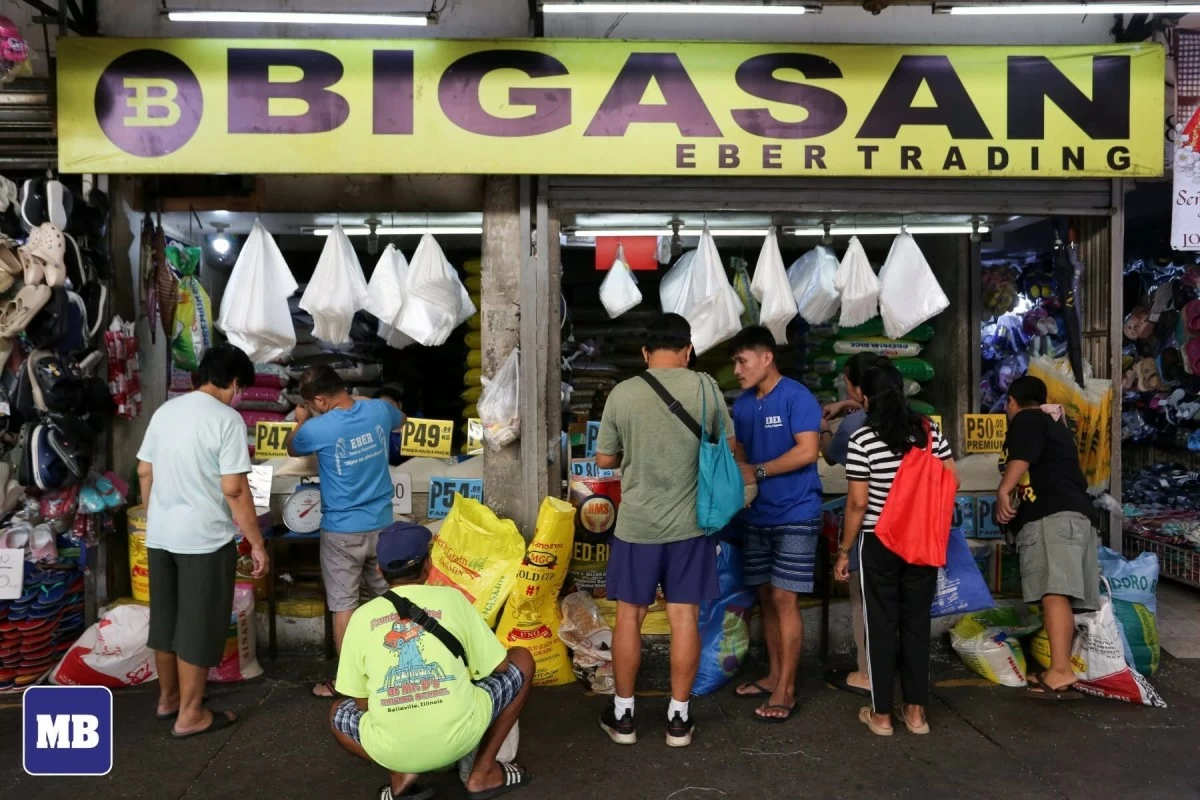
(MB FILE PHOTO)
(MB FILE PHOTO)
Nearly half of Filipino families, or 49 percent, rated themselves as “mahirap” or poor in the latest national survey by Social Weather Stations (SWS), conducted from June 25 to 29. 
This translates to an estimated 13.7 million households who see themselves as poor.
The number is slightly lower than the 50 percent recorded in April 2025, continuing a gradual decline from 55 percent earlier that month.
“The percentage of Self-Rated Poor families has dropped slightly, but 49 percent is still a staggering figure,” SWS said in its report.
The SWS said the small national decline was due to drops in the Visayas (from 67 percent to 60 percent) and Balance Luzon (from 43 percent to 38 percent). 
However, these were offset by increases in Mindanao (from 61 percent to 69 percent) and Metro Manila (from 33 percent to 36 percent).
Self-Rated Poverty remains highest in Mindanao at 69 percent, followed by the Visayas at 60 percent, Balance Luzon at 38 percent, and Metro Manila at 36 percent.
“The regional shifts suggest continued economic pressure in Mindanao and Metro Manila, even as other areas show modest improvements,” SWS added.
Borderline and not poor
The share of families placing themselves on the dividing line between Poor and Not Poor, or “Borderline,” rose to 10 percent, up from the record-low 8 percent in April. 
Those who identified as Not Poor dropped slightly to 41 percent, just one point below the all-time high of 42 percent in April.
Food poverty static at 41%
The nationwide Self-Rated Food Poverty figure stayed at 41 percent, unchanged since April. This remains three points below the 2024 average and is the lowest since 33 percent in March 2024. 
At the same time, Food Borderline rose from 7 percent to 10 percent, while Not Food-Poor fell from 51 percent to 49 percent.
Mindanao again had the highest Self-Rated Food Poverty at 60 percent, up five points from April. 
Meanwhile, the Visayas improved, dropping from 51 percent to 44 percent. Rates in Balance Luzon and Metro Manila stayed at 34 percent and 31 percent respectively.
Poverty thresholds rise nationally
The national Self-Rated Poverty Threshold rose from P10,000 in December 2024 and April 2025 to P12,000 in June 2025. 
On the other hand, the national median Self-Rated Poverty Gap stayed at P5,000 from September 2024 to June 2025.
“The SRP Threshold, or the minimum monthly budget self-rated poor families say they need for home expenses in order not to consider themselves poor, has remained sluggish for several years despite considerable inflation. This indicates that poor families have been lowering their living standards, i.e., belt-tightening,” the report stated.
“In the past, the median SRP Gap has generally been half of the median SRP Threshold. This means that typical poor families lack about half of what they need to not consider themselves poor. An increase in the proportion of the median SRP Gap relative to the median SRP Threshold means a worsening in families’ budgets for home expenses,” SWS noted.
The national median Self-Rated Food Poverty Threshold rose from P6,000 in April 2025 to P7,000 in June 2025, while the national median Self-Rated Food Poverty Gap rose slightly from P2,500 to P3,000.
“Of the estimated 13.7 million Self-Rated Poor families in June 2025, 2.2 million were Newly Poor, 1.8 million were Usually Poor, and 9.8 million were Always Poor,” SWS reported.
“Of the estimated 14.3 million Self-Rated Non-Poor families in June 2025, 3.1 million were Newly Non-Poor, 6.4 million were Usually Non-Poor, and 4.7 million were Always Non-Poor,” the report added.
Compared to April 2025, SWS said the median monthly family expense remained unchanged for house rent at P3,000, transportation to work and school at P2,000, and internet at P800. 
However, it reported a decrease in mobile phone load expenses, which dropped from P400 to P300.
As of June 2025, SWS noted that the median family expense for house rent was highest in Metro Manila at P3,250, followed by P2,500 in Balance Luzon, P2,000 in the Visayas, and P1,500 in Mindanao. 
Compared to April, rent costs dropped from P4,000 in Metro Manila and from P3,000 in Mindanao, while they remained unchanged in Balance Luzon and the Visayas.
In its survey background, SWS explained that the Self-Rated Poverty question was directed to household heads from July 1985 to December 2024, to registered voters from January 17 to 20 and April 11 to 15, 2025, and to adult respondents in the April 23 to 28 and June 25 to 29, 2025 rounds. 
It also emphasized that these survey items were non-commissioned, included on SWS’s initiative, and released as a public service.
ADVERTISEMENT
.most-popular .layout-ratio{ padding-bottom: 79.13%; } @media (min-width: 768px) and (max-width: 1024px) { .widget-title { font-size: 15px !important; } }

{{ articles_filter_1561_widget.title }}

.most-popular .layout-ratio{ padding-bottom: 79.13%; } @media (min-width: 768px) and (max-width: 1024px) { .widget-title { font-size: 15px !important; } }

{{ articles_filter_1562_widget.title }}

.most-popular .layout-ratio{ padding-bottom: 79.13%; } @media (min-width: 768px) and (max-width: 1024px) { .widget-title { font-size: 15px !important; } }

{{ articles_filter_1563_widget.title }}

{{ articles_filter_1564_widget.title }}

.mb-article-details { position: relative; } .mb-article-details .article-body-preview, .mb-article-details .article-body-summary{ font-size: 17px; line-height: 30px; font-family: "Libre Caslon Text", serif; color: #000; } .mb-article-details .article-body-preview iframe , .mb-article-details .article-body-summary iframe{ width: 100%; margin: auto; } .read-more-background { background: linear-gradient(180deg, color(display-p3 1.000 1.000 1.000 / 0) 13.75%, color(display-p3 1.000 1.000 1.000 / 0.8) 30.79%, color(display-p3 1.000 1.000 1.000) 72.5%); position: absolute; height: 200px; width: 100%; bottom: 0; display: flex; justify-content: center; align-items: center; padding: 0; } .read-more-background a{ color: #000; } .read-more-btn { padding: 17px 45px; font-family: Inter; font-weight: 700; font-size: 18px; line-height: 16px; text-align: center; vertical-align: middle; border: 1px solid black; background-color: white; } .hidden { display: none; }
function initializeAllSwipers() { // Get all hidden inputs with cms_article_id document.querySelectorAll('[id^="cms_article_id_"]').forEach(function (input) { const cmsArticleId = input.value; const articleSelector = '#article-' + cmsArticleId + ' .body_images'; const swiperElement = document.querySelector(articleSelector); if (swiperElement && !swiperElement.classList.contains('swiper-initialized')) { new Swiper(articleSelector, { loop: true, pagination: false, navigation: { nextEl: '#article-' + cmsArticleId + ' .swiper-button-next', prevEl: '#article-' + cmsArticleId + ' .swiper-button-prev', }, }); } }); } setTimeout(initializeAllSwipers, 3000); const intersectionObserver = new IntersectionObserver( (entries) => { entries.forEach((entry) => { if (entry.isIntersecting) { const newUrl = entry.target.getAttribute("data-url"); if (newUrl) { history.pushState(null, null, newUrl); let article = entry.target; // Extract metadata const author = article.querySelector('.author-section').textContent.replace('By', '').trim(); const section = article.querySelector('.section-info ').textContent.replace(' ', ' '); const title = article.querySelector('.article-title h1').textContent; // Parse URL for Chartbeat path format const parsedUrl = new URL(newUrl, window.location.origin); const cleanUrl = parsedUrl.host + parsedUrl.pathname; // Update Chartbeat configuration if (typeof window._sf_async_config !== 'undefined') { window._sf_async_config.path = cleanUrl; window._sf_async_config.sections = section; window._sf_async_config.authors = author; } // Track virtual page view with Chartbeat if (typeof pSUPERFLY !== 'undefined' && typeof pSUPERFLY.virtualPage === 'function') { try { pSUPERFLY.virtualPage({ path: cleanUrl, title: title, sections: section, authors: author }); } catch (error) { console.error('ping error', error); } } // Optional: Update document title if (title && title !== document.title) { document.title = title; } } } }); }, { threshold: 0.1 } ); function showArticleBody(button) { const article = button.closest("article"); const summary = article.querySelector(".article-body-summary"); const body = article.querySelector(".article-body-preview"); const readMoreSection = article.querySelector(".read-more-background"); // Hide summary and read-more section summary.style.display = "none"; readMoreSection.style.display = "none"; // Show the full article body body.classList.remove("hidden"); } document.addEventListener("DOMContentLoaded", () => { let loadCount = 0; // Track how many times articles are loaded const offset = [1, 2, 3, 4, 5, 6, 7, 8, 9, 10]; // Offset values const currentUrl = window.location.pathname.substring(1); let isLoading = false; // Prevent multiple calls if (!currentUrl) { console.log("Current URL is invalid."); return; } const sentinel = document.getElementById("load-more-sentinel"); if (!sentinel) { console.log("Sentinel element not found."); return; } function isSentinelVisible() { const rect = sentinel.getBoundingClientRect(); return ( rect.top < window.innerHeight && rect.bottom >= 0 ); } function onScroll() { if (isLoading) return; if (isSentinelVisible()) { if (loadCount >= offset.length) { console.log("Maximum load attempts reached."); window.removeEventListener("scroll", onScroll); return; } isLoading = true; const currentOffset = offset[loadCount]; window.loadMoreItems().then(() => { let article = document.querySelector('#widget_1690 > div:nth-last-of-type(2) article'); intersectionObserver.observe(article) loadCount++; }).catch(error => { console.error("Error loading more items:", error); }).finally(() => { isLoading = false; }); } } window.addEventListener("scroll", onScroll); });

Sign up by email to receive news.