






Manila Bulletin
 Philippines
National
Why OPAPRU rues MILF decision to delay final phase of combatant decommissioning
Philippines
National
Why OPAPRU rues MILF decision to delay final phase of combatant decommissioning
Philippines
National
Why OPAPRU rues MILF decision to delay final phase of combatant decommissioning
Why OPAPRU rues MILF decision to delay final phase of combatant decommissioning
Published Aug 1, 2025 01:07 pm


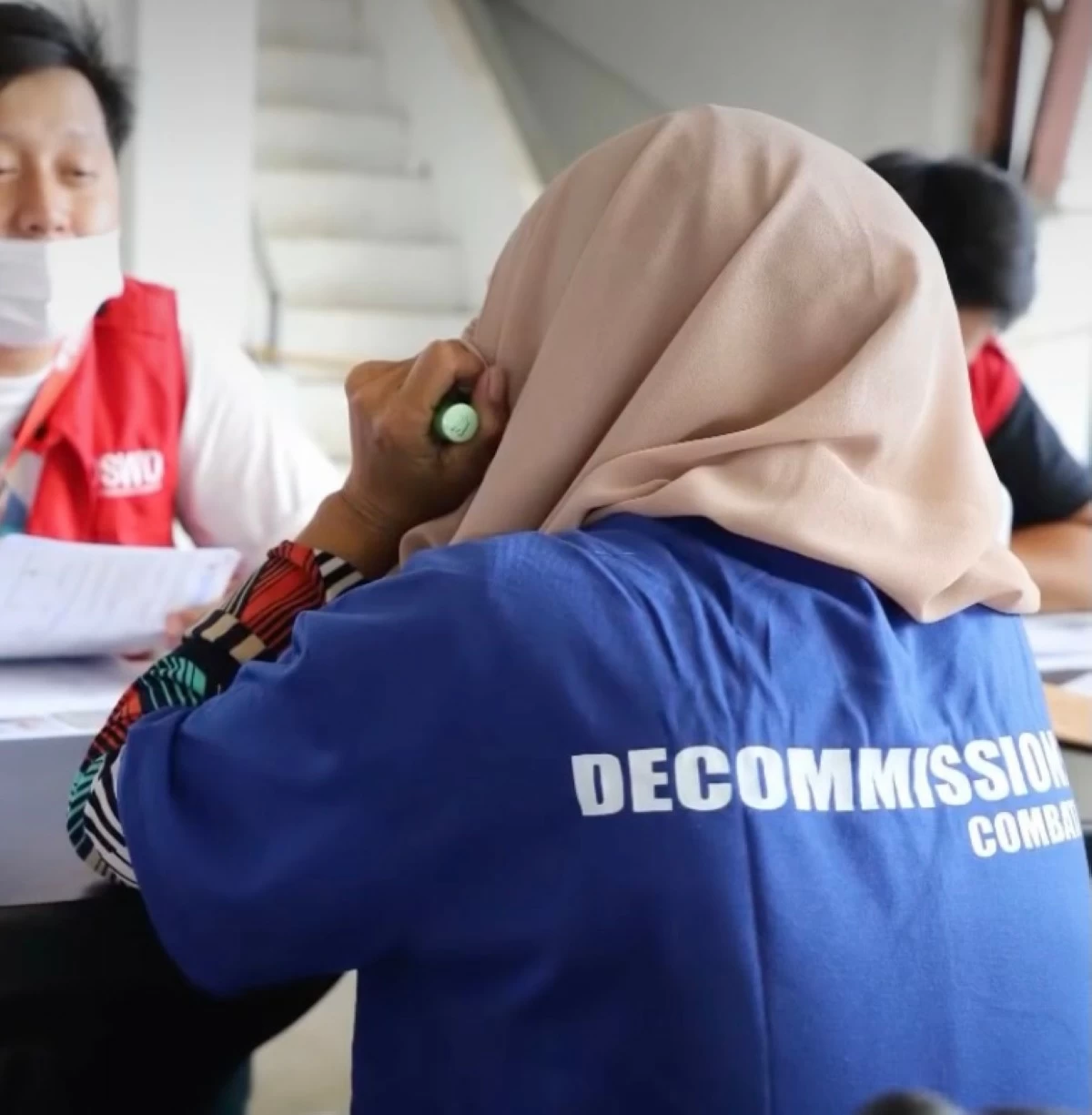
(Photo: OPAPRU)
The Office of the Presidential Adviser on Peace, Reconciliation and Unity (OPAPRU) expressed regret after the Moro Islamic Liberation Front (MILF) decided to postpone the final phase of the decommissioning of its combatants and firearms.
In a statement released Thursday, July 31, OPAPRU Office for Bangsamoro Transformation head David Diciano said the move delays the scheduled decommissioning of 14,000 combatants and 2,450 weapons, which is supposed to be the last and final batch under the Comprehensive Agreement on the Bangsamoro (CAB).
“The transformation process necessitates a shift in mindset, as the possession of illegal firearms is anathema to a peaceful and civilized society. This constitutes the fundamental principle of the peace agreement, whereby armed revolutionary groups are to be transitioned into social and political movements. That is why the decommissioning process is vital and crucial,” Diciano said.
“The government has and will always be sincere in its commitment to the CAB through the political and the normalization tracks, which not only focus on the individuals, but the wholeness of the process that encompasses the benefits to the MILF families and the greater communities in the Bangsamoro,” he added.
The CAB is the final peace agreement signed by the GPH and MILF in 2014 which led to the creation of the Bangsamoro Autonomous Region in Muslim Mindanao (BARMM). The agreement consisted of two main components which are the “Normalization Track” and the “Political Track”.
Under the Normalization Track, the MILF committed to disband its armed wing, the Bangsamoro Islamic Armed Forces (BIAF) and surrender its firearms to a third-party group jointly chosen by both the government and the MILF.
Meanwhile, the Political Track focused on the establishment of a new autonomous political entity called the Bangsamoro, which replaced the Autonomous Region in Muslim Mindanao (ARMM) that had been in place since 1989.
An integral part of the Normalization Track is the decommissioning process where 40,000 MILF forces and their firearms were to be decommissioned in four phases. The first phase began in 2015 when 145 weapons and 75 combatants were decommissioned; followed by around 12,000 combatants from 2019 to 2020; and more than 13,000 combatants from 2021 to 2022.
Why the delay?
According to the MILF Central Committee, the decommissioning of the remaining combatants and weapons shall commence only upon the substantial compliance of the GPH in the other tracks of normalization, including the provision of socio-economic package as agreed upon by the two parties’ peace implementing panels to the decommissioned combatants.
At present, a total of 26,145 MILF combatants had been decommissioned, representing 65 percent of the group’s total strength.
The MILF Central Committee argued that out of the 26,145 decommissioned MILF members, “not a single one has successfully undergone ‘transition to productive civilian life,’ as other interventions for decommissioning have essentially not been provided, save for the P100,000 per combatant.”
But Diciano disagreed with the MILF’s accusation that the GPH has not substantially delivered on its socio-economic commitments.
In essence, every decommissioned combatant shall receive P100,000 in transitional cash assistance, health insurance, skills training and livelihood programs, educational assistance for them or their families, and housing, civil registration, and other support services to jumpstart their reintegration to mainstream society.
Diciano emphasized that major programs have been rolled out since 2015, even prior to the formal adoption of the socioeconomic framework in 2024.
He said the 26,145 decommissioned combatants have received benefits such as transitional cash aid, PhilHealth coverage, civil registry documentation, skills training, and educational assistance. Government investments for these interventions have reached at least P4 billion since 2019, he said.
Diciano also cited the implementation of P8.5 billion worth of infrastructure and development projects in the six recognized MILF camps, the disbandment of 15 private armed groups, and the recovery of over 9,000 loose firearms in the Bangsamoro region as evidence of progress in the normalization track.
He also highlighted the political gains made under the CAB, particularly the establishment of the BARMM, which has been under MILF leadership since its creation. From 2020 to 2025, the BARMM has received a total of P420.9 billion in block grants and annual allocations of P5 billion in Special Development Funds, the official noted.
‘Not only about the money’
Diciano reminded the MILF that the decommissioning process is not only about aid but a key element of the broader peace process and transformation of Mindanao.
“The MILF’s deferment will likely, and once again, force the government to return the funds to the national treasury by the end of this year. It is unfair and unjust for those who are willing to undergo the decommissioning process, depriving them of their opportunity and right to be transformed into productive, peaceful citizens as envisioned in the CAB. The decision of the few should not deny the aspirations of the many,” he stressed.
He also urged the MILF to raise implementation issues through appropriate channels such as the Peace Implementing Panels and the Intergovernmental Relations Body, reaffirming the government’s commitment to the full implementation of the CAB.
“In the spirit of continued partnership, we invite our partners in the MILF leadership to reaffirm our shared vision: a BARMM that is free of armed groups and illegal firearms, and where the rule of law prevails and peace reigns,” Diciano concluded.