







Cebu Landmasters: Building with heart, growing with purpose
By MB Business
Published Jul 31, 2025 08:13 pm


At A Glance
- Cebu Landmasters, Inc. (CLI) delivers high-impact developments that uplift communities, drive local economies, and create spaces where families thrive. This Corporate Social Responsibility (CSR) Month, CLI strengthens its commitment to lasting impact–not just through projects, but through a legacy built on care, resilience, and hope.
Cebu Landmasters, Inc. (CLI), the undisputed real estate leader (*based on Colliers Philippines Real Estate Market Study 2024 in the Visayas and Mindanao [VisMin] regions), delivers high-impact developments that uplift communities, drive local economies, and create spaces where families thrive. This Corporate Social Responsibility (CSR) Month, CLI strengthens its commitment to lasting impact–not just through projects, but through a legacy built on care, resilience, and hope.
“We design with the principles of sustainability in mind: maximize resources, minimize impacts on the environment, and ensure that users of the space can work with the intuitive design to shape their everyday lives. We anticipate the needs of every Filipino with consideration for safety, functionality, and ease of connection with the larger community,” said Jose R. Soberano III, Chairman and CEO of CLI.
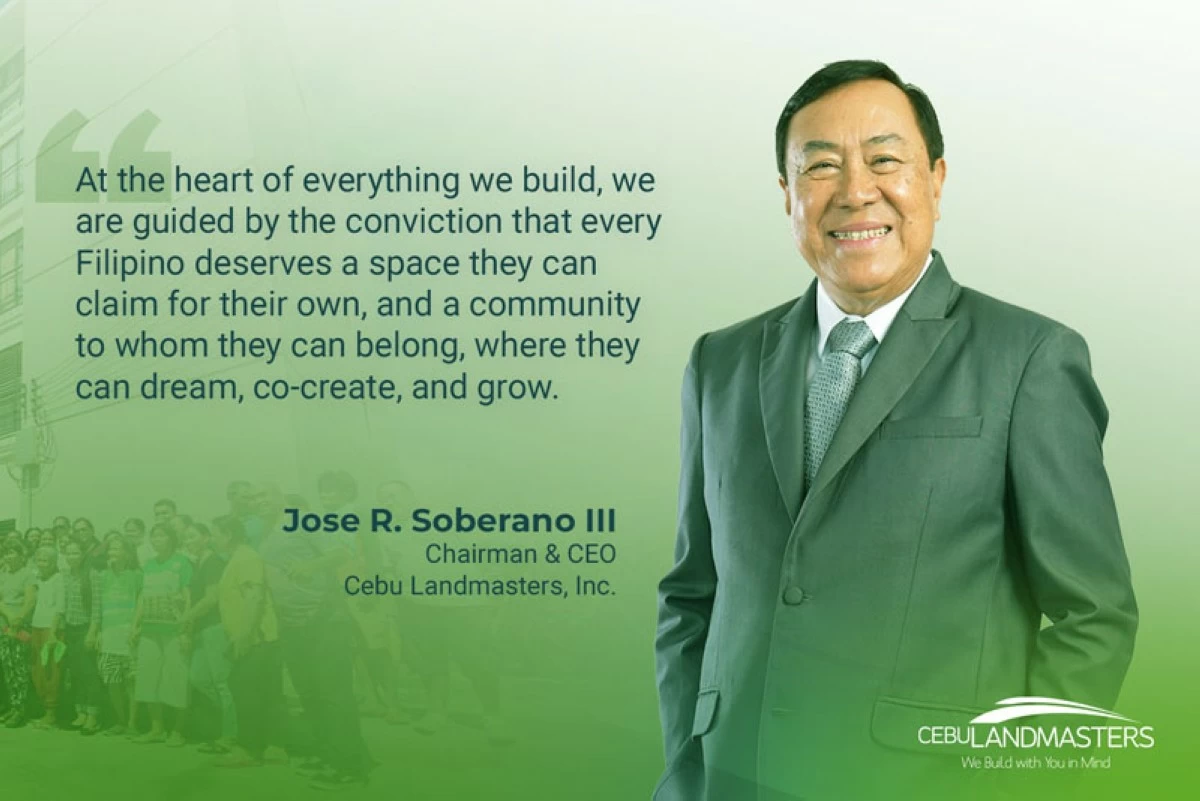
“At the heart of everything we build, we are guided by the conviction that every Filipino deserves a space they can claim for their own, and a community to whom they can belong, where they can dream, co-create, and grow,” Mr. Soberano added.
Growth aligned with purpose
From its founding in 2003, CLI has since diversified from providing residential subdivisions to being a fully integrated real estate developer with around 130 residential, commercial, hotels & resorts, co-living, mixed-use, and township projects across 17 key cities in VisMin.
Mr. Soberano believes in fostering community development alongside the company’s growth. Reflecting this commitment, close to 50% of CLI's 43,042 residential units cater to low-income markets, with more than 20,000 housing units delivered to date, namely: economic housing in Casa Mira Homes (10,929 units), Casa Mira Towers (8,186 units), and Mirani Steps (215 units); and socialized housing in Villa Casita (764 units), Pinamalayan housing in Oriental Mindoro (338 units), Walk-Up Sugbo 1 Residences (100 units), and Tipolo Residences (90 units).
“We’ve seen how environmental degradation and recurring natural disasters have displaced families and rendered them homeless. We’ve seen firsthand the poor living conditions endured by communities affected by economic disparity, and how parents are encountering challenges in meeting rent while securing education for their children. These are challenges that we can try to address in our own capacity, as developers,” said Mr. Soberano.
Where growth meets giving, the CLI Foundation story
Amidst its continued success, CLI remains deeply committed to social responsibility. The company’s growth has opened significant opportunities to address the needs of underserved communities.
To advance this mission, CLI established the Cebu Landmasters Foundation, Inc. (CLI Foundation) in 2018, aiming to transform CSR into meaningful, long-term social impact. Through the foundation, CLI partners with local governments to provide access to socialized housing and integrated community development support for informal settlers and vulnerable families. Demonstrating this commitment, CLI turned over its first medium-rise building, Walk Up Sugbo 1 in Cebu City in 2023 and its second building, Tipolo Residences 2 in Mandaue City in 2024.
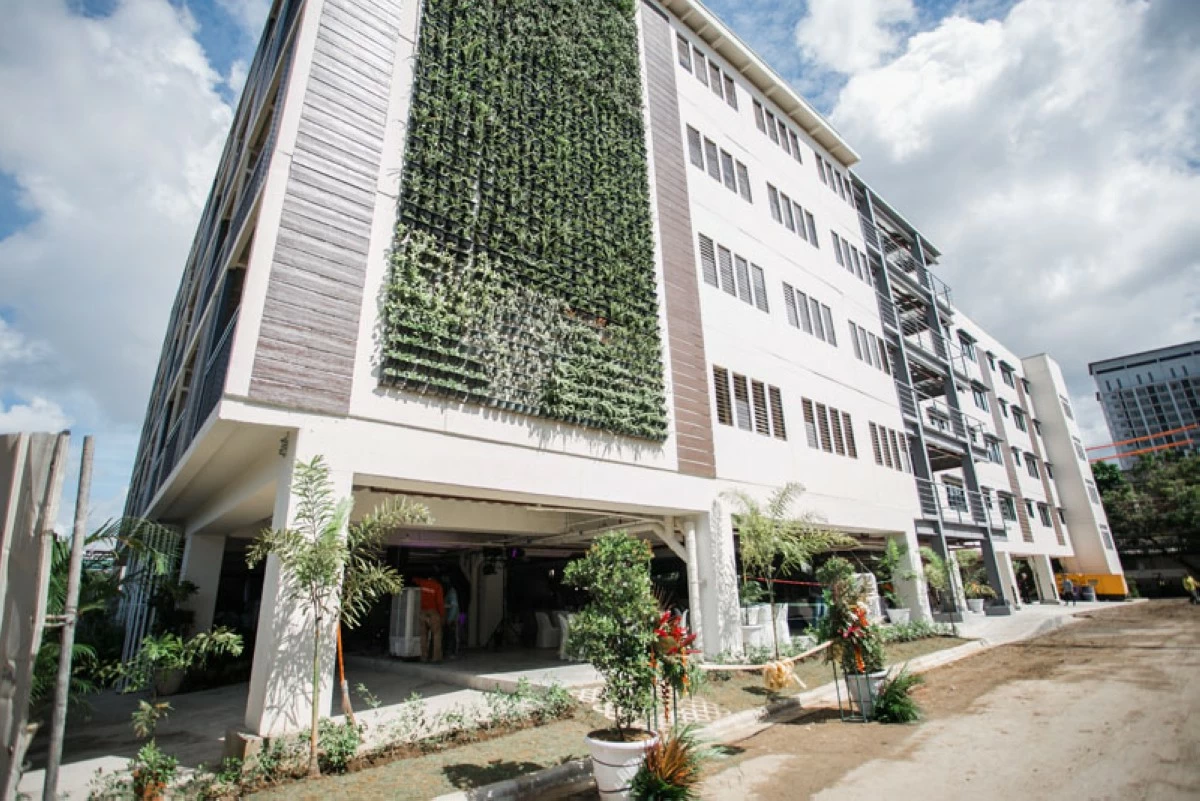
The 100-unit Walk-Up Sugbo 1 stands as the tallest socialized housing development in VisMin, a pioneering project by Cebu Landmasters, Inc., the Cebu City Government, and DHSUD. Designed for informal settlers from danger zones, the building features PWD-friendly access, solar-powered common areas, a chapel, retail spaces, and a Livelihood Training Hall—raising the bar for inclusive and sustainable community living in the Philippines.
Walk Up Sugbo 1, a five-story building and one of the tallest socialized housing projects in VisMin, now houses 100 families formerly living in danger zones. Over 60% are local to Barangay Lorega-San Miguel, minimizing displacement and disruption. The ground floor includes a chapel, retail spaces, and a Livelihood Training and Multi-Purpose Hall. Nature-based features such as solar-powered common areas and green wall walkways help naturally cool the building.
Tipolo Residences 2 now houses 90 families previously living near flood-prone rivers or in fire-prone areas of Mandaue City. Many were displaced by fires in Barangays Guizo and Mantuyong (2016) and Tipolo (2019). Each family occupies a 24.79 sq.m. unit in the BERDE-certified green condominium, offering affordable, sustainable, and healthy housing.
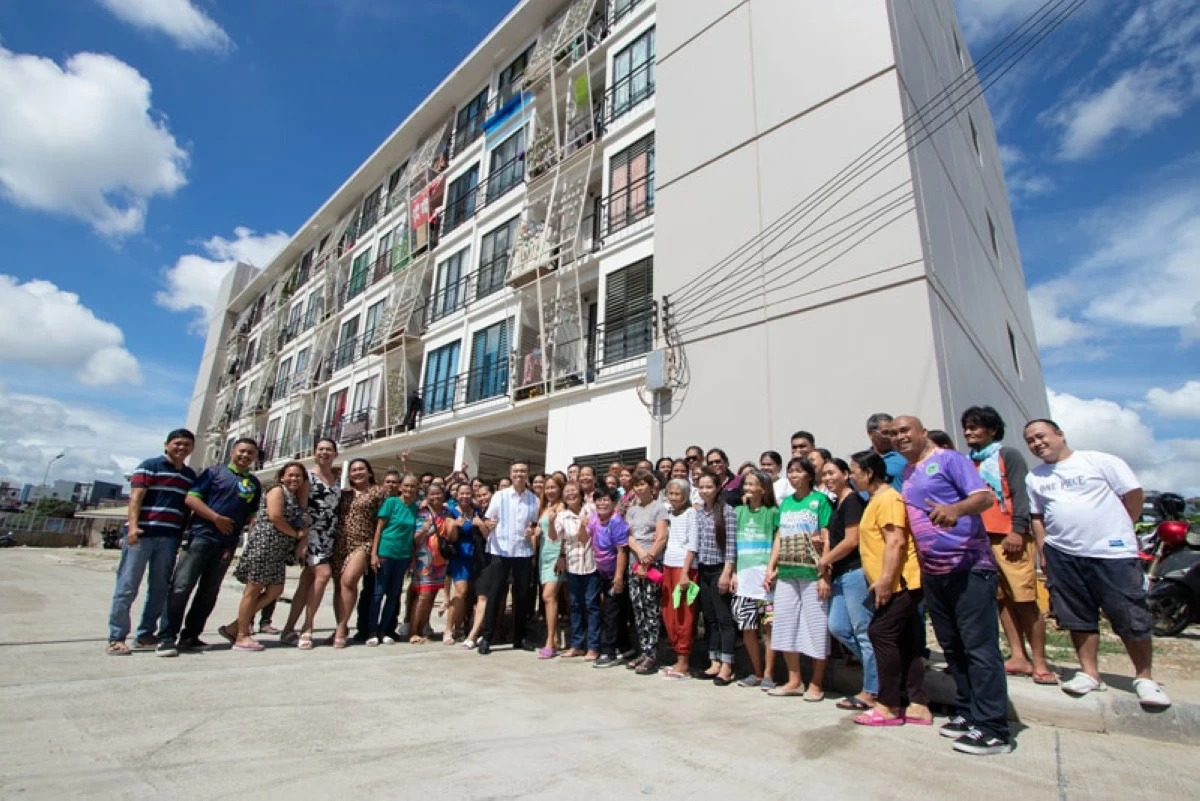
Tipolo Residences Tower 4 in Mandaue City is a 90-unit mid-rise socialized housing project developed by Cebu Landmasters for fire victims and informal settlers of the city. Designed with green features like daylight-maximized units, cross-ventilation, and a self-watering green wall, the building promotes sustainable, dignified living for the displaced families.
CLI has helped families move from precarious horizontal settlements to government-subsidized vertical housing, built in record time using sustainable pre-cast materials that minimize waste and allow quick occupancy. The units are well-designed for air flow, natural light, and standard ceiling height—reducing costs and improving comfort. More than just shelter, CLI aims to create peaceful spaces where residents can recover and rebuild, restoring dignity and faith in a just society.
To ensure long-term success, CLI supports community integration by guiding local governments and beneficiary families through social preparation and capacity-building. This includes pre-move-in orientations, crafting house rules, tenure plans, and consultations on contributions and property management. Residents enjoy secure tenure with only minimal monthly payments for maintenance.
Community-building at CLI
CLI continues to give back to the community through its Foundation’s four-pillar strategy—access to shelter, education, livelihood, and environmental stewardship—powered by cross-functional collaboration and a structured employee volunteer program. Guided by the company’s family-rooted values and people-first culture, CLI employees actively support both time-based and skills-based volunteering initiatives. These include teaching financial literacy to farmers, engineering tree nurseries, and supporting community eco-programs such as coastal cleanups and mangrove rehabilitation. Participation in these activities grew significantly in the first half of 2025, reflecting a deepening culture of engagement and purpose across the organization.
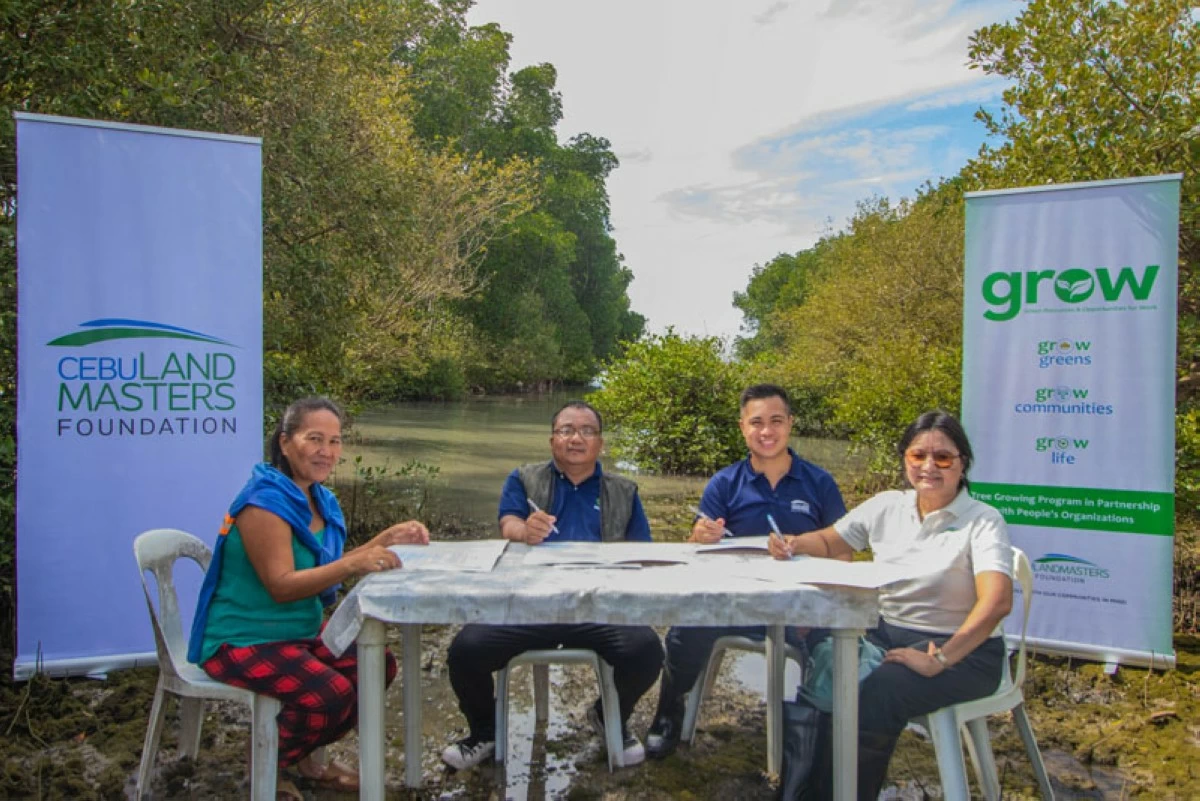
CLI Foundation and San Isidro Farmers and Fishermen’s Association sign the partnership agreement to plant 13,159 mangroves in the Municipality of San Fernando, Cebu.
Under the GROW (Green Resources and Opportunities for Work) initiative and the TREE (Taking Responsibility for Ecosystems Enrichment) program, CLI empowers fisherfolk and farmers to grow mangroves and native trees, while learning about sustainable agroforestry. Not only do they have a means of alternative livelihood using their newly acquired green skills, they also gain an appreciation of ecosystem services, thus motivating them to be better stewards of the environment that sustains them. This partnership with people’s organizations further enhances CLI’s efforts in contributing to tree cover and enhancing biodiversity, as well as providing conservation-based livelihood. In 2024, CLI planted 99,066 seedlings, maintained 308,333 trees, and monitored 10,150 trees, contributing to a greener Cebu by 396.4 hectares of vegetated spaces in the northern and southern part of Cebu.
Another program, the Livelihood Assistance for Mutli-sectoral Beneficiary Organizations or LAMBO—a Cebuano word meaning "to flourish"—was launched to promote farmers’ produce through a farm-to-market initiative. The farmers are provided access to common areas and other spaces at CLI’s offices, retail, mixed-use and residential developments, enabling them to offer fresh and locally-grown produce to employees, residents and customers.
By directly connecting farmers with consumers, LAMBO reduces reliance on middlemen, ensures fair pricing, and strengthens ties between producers and businesses. It boosts farmer incomes, builds trust and promotes sustainability–empowering local communities to thrive. LAMBO creates a collaborative, self-sustaining network that delivers value across the entire supply chain.
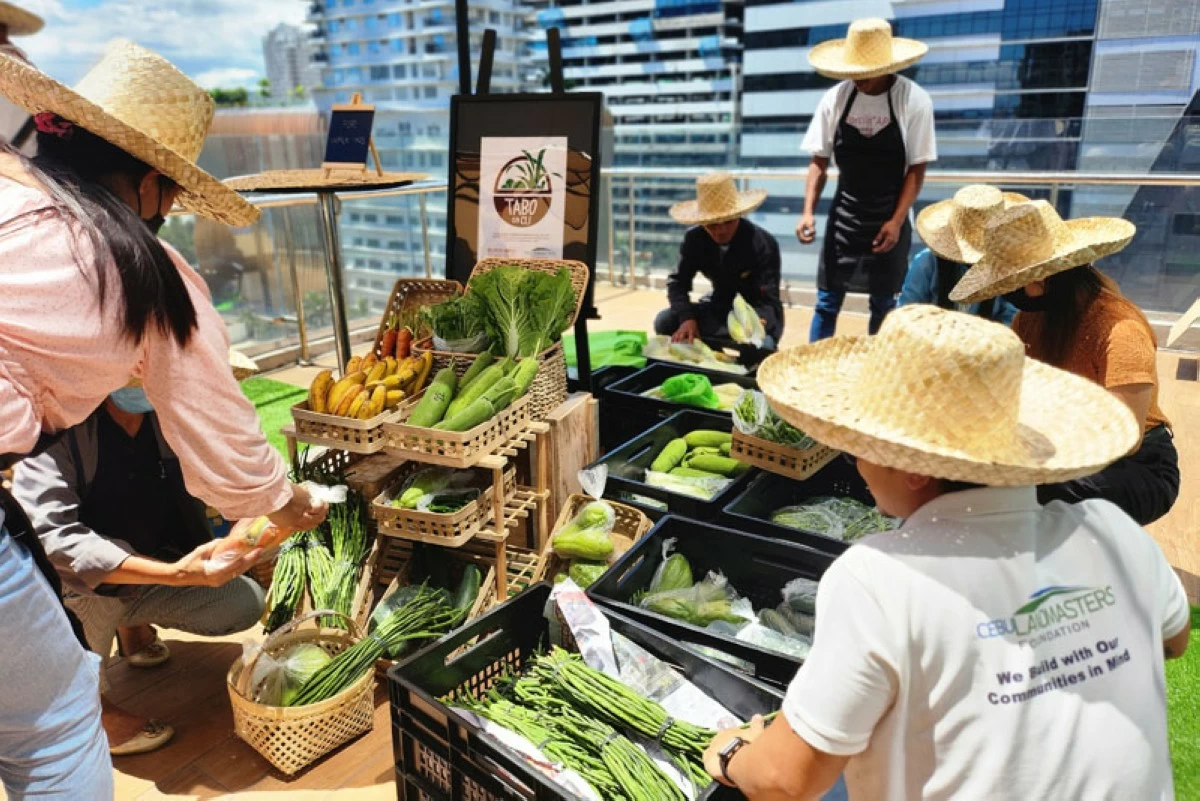
Partner farmers from the Municipality of Balamban sell fresh and locally-grown produce to employees and other building occupants of Park Centrale at Cebu IT Park.
Meanwhile, the company’s LEAP (Leadership and Educational Assistance Program) is supporting scholars to complete their college education, while the STEP UP vocational training program equips women with hotel and cookery skills. Together, these programs promote education-to-employment pipelines for youth and women in CLI communities.
“CLI created the CLI Foundation to address the need for a more systematic approach and a structured framework—and institutionalize CSR efforts, to expand or maximize reach while ensuring that these community development programs are measurable, scalable and sustainable and can create a lasting positive impact,” said Vera Alejandria, AVP for Sustainability at CLI and Executive Director of CLI Foundation.
Ripples of impact
From only two employees in 2003—including Mr. Soberano as the founder and primary mover—CLI now has more than 1,000 employees who subscribe to the mission, vision, and values of the company. These employees form the heart and soul of CLI’s CSR initiatives; employee morale is boosted by the ability to give back and create positive social impact, also contributing to CLI’s certification as one of the best workplaces in the country by Great Place to Work Philippines.
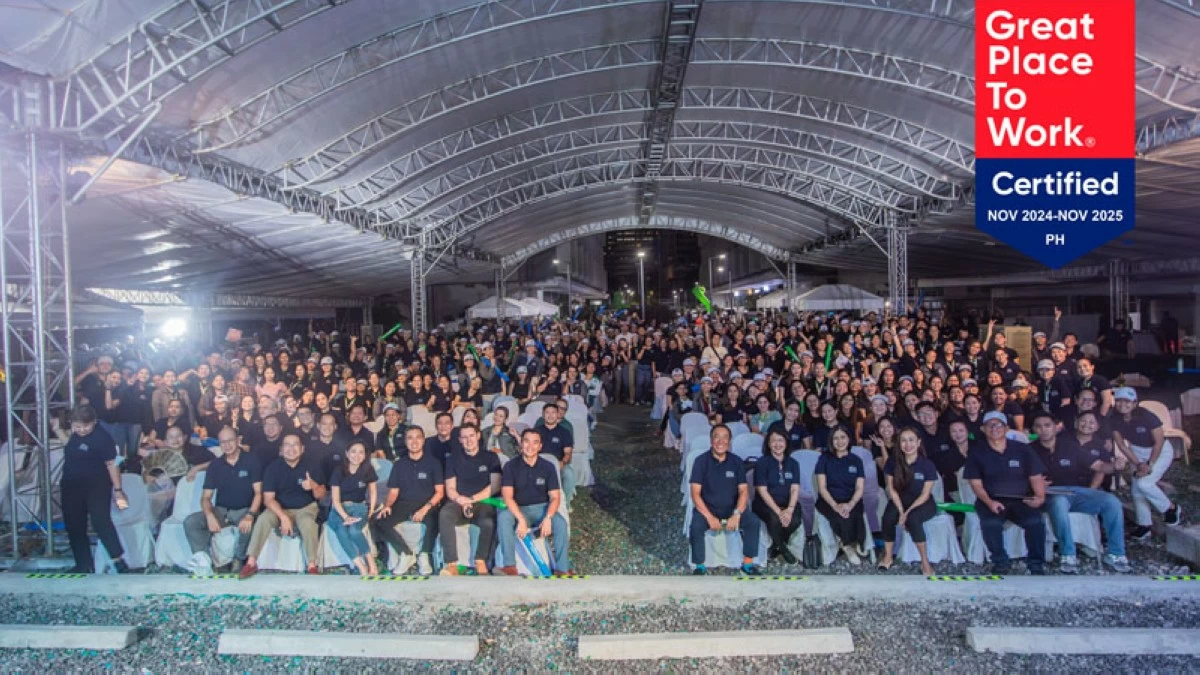
With 93% of employees calling it a great workplace, Cebu Landmasters far exceeds the national average—fostering pride, purpose, and a thriving team across VisMin. CLI also earned a 95% pride rating, with its workforce saying, “I am proud to tell others I work here.”
CLI Senior VP for Marketing and HR Joanna Marie Bergundthal highlighted, “When employees feel that their roles contribute to something bigger and more meaningful, this translates to a positive organizational culture, one that is deeply connected to the communities it serves.”
“When CSR is not siloed, it becomes a platform for collective action. At CLI, everyone has a stake in shaping the future, from employees to engineers, farmers to families, communities to customers,” she added.
CLI’s CSR initiatives don’t just build goodwill, they build understanding, trust, and shared purpose. Every time an employee plants a seed, mentors a student, or walks alongside a family into a new home, a culture of care is strengthened.
As a testament to its leadership in driving positive change and fostering a culture of service for the community, CLI was recognized in the Community Initiative category (2023), and also received the “Sustainability Rising Star” (2024) and the “Green Initiative Award” (2025) at the Asia Corporate Excellence and Sustainability (ACES) Awards. The company also bagged a Bronze Award (2023) and a Silver Award (2024), both for Innovative Achievement in Corporate Social Responsibility, and a Bronze Award for Fostering Community Resilience (2025) at the Asia-Pacific Stevie Awards.
In the words of Mr. Soberano: “There are many ways each of us can contribute, no matter the path we take, or the turns it may bring. When we lead with service and purpose, we help shape not just industries, but lives. That’s the true blueprint for a better future.”