







Seven senators want end to budget distortions, open bicam


At A Glance
- The seven senators—Vicente "Tito" Sotto III, Juan Miguel "Migz" Zubiri, Risa Hontiveros, Panfilo "Ping" Lacson, Loren Legarda, Paolo "Bam" Aquino IV and Francis "Kiko" Pangilinan—pushed that all bicameral deliberations be open to the public, either in person or via digital livestream.
The five-man Senate minority bloc and two other senators have signed a Senate resolution seeking to uphold transparency and accountability in the legislative process following concerns over alleged irregularities in the 2025 General Appropriations Act.

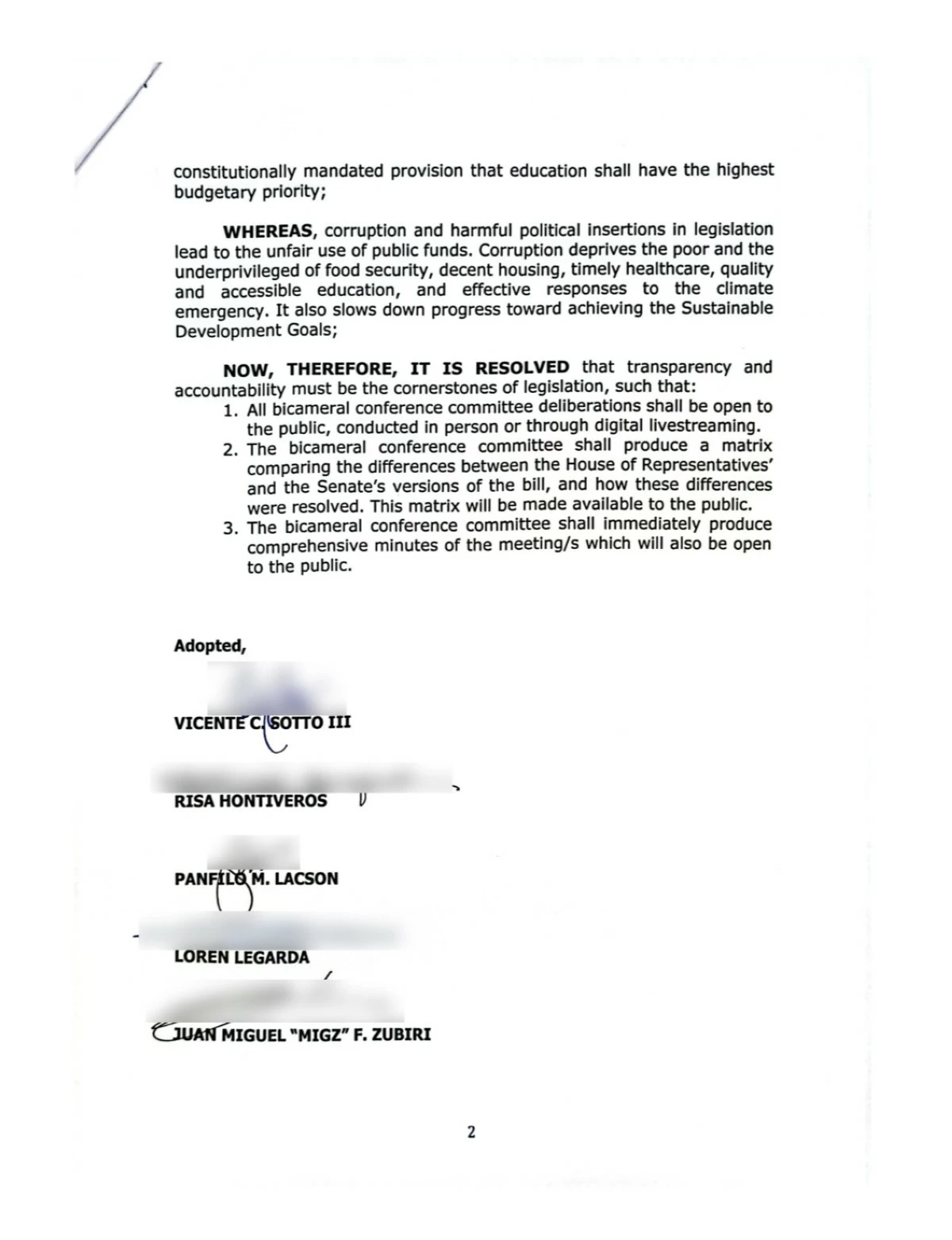
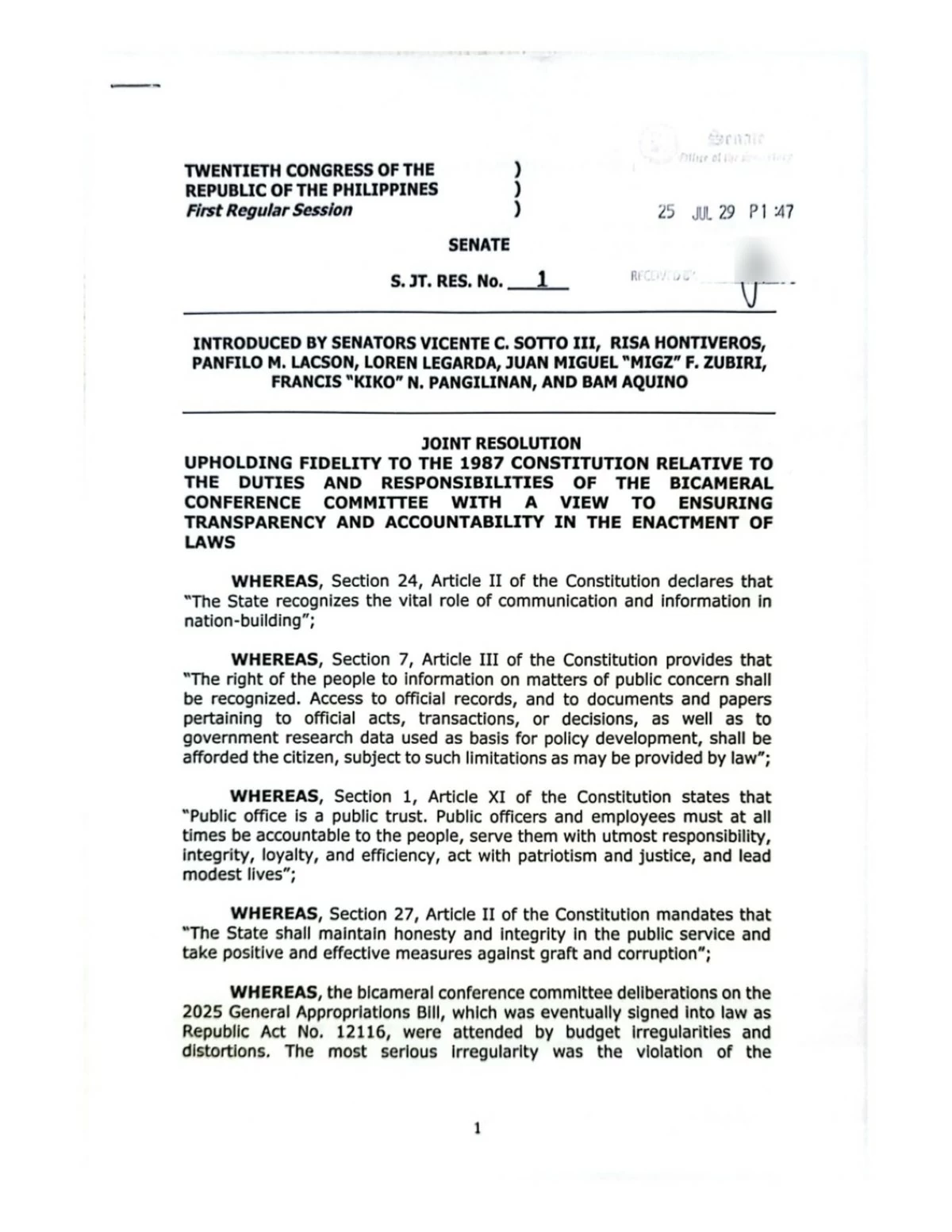
Senators who signed Senate Joint Resolution No. 1 include members of the Senate minority bloc led by its minority leader Vicente Sotto III, Senators Juan Miguel “Migz” Zubiri, Risa Hontiveros, Panfilo “Ping” Lacson, Loren Legarda and Senators Paolo “Bam” Aquino IV and Francis “Kiko” Pangilinan who were part of the majority bloc.
The seven senators pushed that all bicameral deliberations be open to the public, either in person or via digital livestream.
“We owe it to the Filipino people to show transparency on how the taxes are allocated. Let the public see what we’re doing. That’s the least we can do in a democracy,” Sotto said.
According to the senators, the bicameral conference committee deliberations on the 2025 national budget was eventually signed into law even after it was reportedly riddled by “budget irregularities and distortions.”
“The most serious irregularity was the violation of the constitutionally mandated provision that education shall have the highest budget priority,” the senators said.
The seven senators also noted that “corruption and harmful political insertions in legislation lead to the unfair use of public funds.”
“Corruption deprives the poor and the underprivileged of food security, decent housing, timely healthcare, quality and accessible education, and effective responses to the climate emergency,” they said.
To boost accountability and transparency, the seven senators urged that “all bicameral conference committee deliberations shall be open to the public, conducted in person or through digital livestreaming; for the bicameral conference committee to produce a matrix comparing the differences between the House of Representatives’ and Senate’s version of the bill and how these differences were resolved.
The matrix, they said, should also be made available to the public.
The group also pushed that the bicameral conference committee immediately produce the comprehensive minutes of the meeting/s which will also be open to the public.