







Gibo, Brawner appeal to Congress: Amend AFP modernization law
Published Jul 30, 2025 05:46 pm


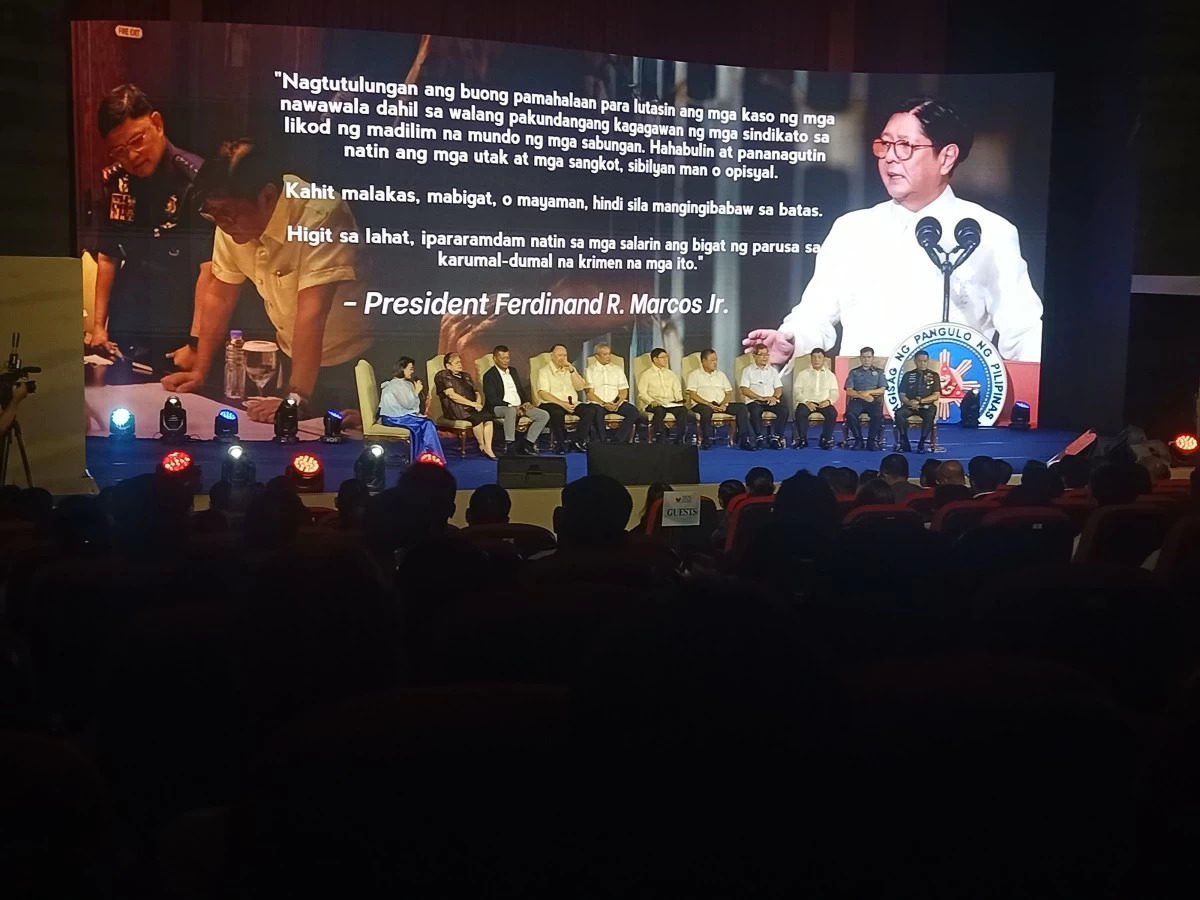
Defense Secretary Gilberto Teodoro Jr. urges the Congress to amend the Armed Forces of the Philippines (AFP) Modernization Act during the second day of the post-SONA discussions in San Juan City on July 30, 2025. (Photo: Martin A. Sadongdong/MANILA BULLETIN)
Department of National Defense (DND) Secretary Gilberto Teodoro Jr. and Armed Forces of the Philippines (AFP) Chief, General Romeo Brawner Jr. urged the Congress to amend the law mandating the modernization of the Armed Forces of the Philippines (AFP), citing the rapid pace of technological obsolescence and the increasing security demands across the country's two million square kilometers of maritime domain.
Teodoro and Brawner made the pitch during the second day of the post-State of the Nation Address (SONA) discussions which centered on good governance, peace and order, and security in San Juan City on Wednesday, July 30.
“The modernization is ongoing, and we aim to accelerate it further. That’s why we are hoping that Congress will amend the AFP modernization program, which is currently based on a 15-year horizon program, because we know that equipment becomes obsolete in a much shorter period of time,” Teodoro said.
The Republic Act No. 7898 or the AFP Modernization Act was enacted in 1995, aiming to modernize the AFP’s major service branches: the Philippine Army, Philippine Navy, and Philippine Air Force within a 15-year period.
Upon the program’s expiration in 2010, It was amended in 2012 and became the revised AFP Modernization Act, extending its validity into another 15 years with a funding of P75 billion and dividing its implementation into three “horizons”.
In 2024, President Marcos Jr. approved what was supposed to be the third and final horizon of the AFP modernization into “Re-horizon 3”, a 10-year defense spending which overhauled the previous acquisition list with a funding of P2 trillion.
Teodoro emphasized that as the AFP expands its area of operations, particularly in the maritime domain, it must also upgrade and expand its infrastructure to accommodate new systems and platforms, some of which are already on order or have recently been acquired.
“Our area of operations has increased and we are now concentrating in our maritime domain,” the defense chief noted.
“The President’s goal is not just change, but continuous transformation,” he stressed. “The nature of threats keeps changing, traditional, asymmetric, hybrid, and cyber, and we must be prepared.”
He noted the importance of the AFP's role not just in defense but also in disaster response, highlighting how military assets are essential in transporting relief goods to far-flung communities, especially during typhoons and other calamities.
Teodoro also linked a strong military to the country's independent foreign policy.
“There is no truly independent foreign policy without a credible armed force. Peace and sovereignty are not free, they must be defended or prepared for to deter those who might challenge them,” he said.
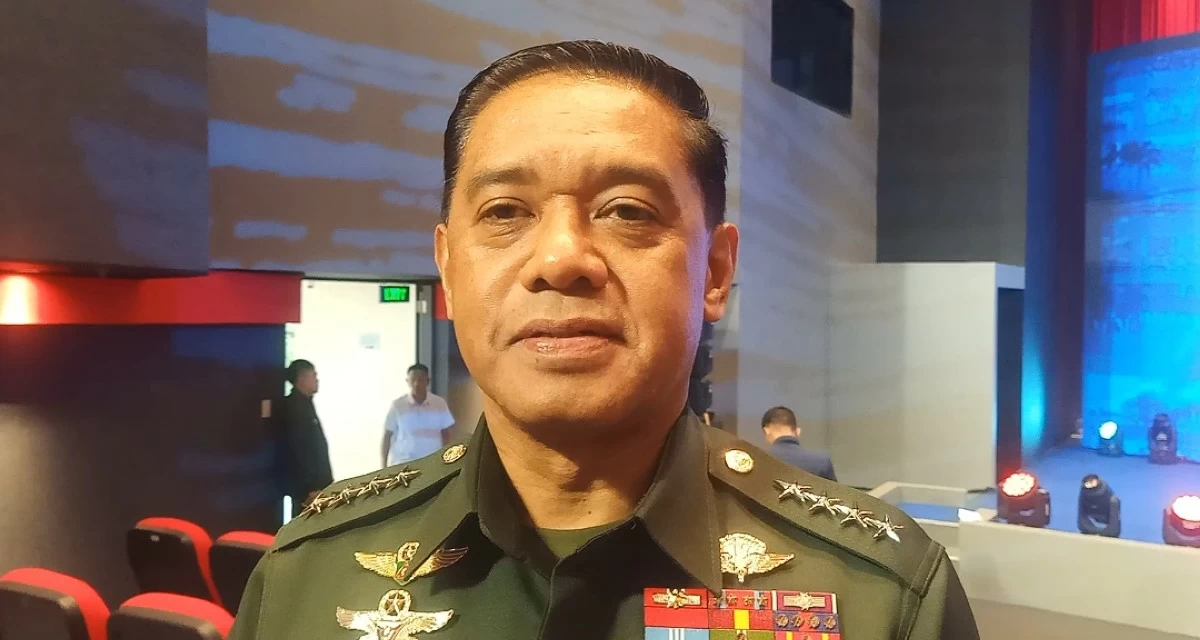
Armed Forces chief, General Romeo Brawner Jr. (Martin A. Sadongdong/MANILA BULLETIN)
Brawner Jr. backed Teodoro’s proposal.
“Maganda po iyon, I agree with that dahil outdated na po ang ating modernization law. Marami na po kasing bagong anyo ng giyera katulad ng cyber, information cognitive, electro magnetic, space. Kailangan pabilisin natin ang pagkuha natin ng mga bagong kagamitan, pag-train natin upang maging mahusay tayo sa modern equipment and systems nang sa gayon ay magkaroon tayo ng deterrence,” Brawner told the MANILA BULLETIN on the sidelines of the post-SONA discussion.
(That's a good point, and I agree with it because our modernization law is already outdated. There are now many new forms of warfare such as cyber, information and cognitive warfare, electromagnetic, and space. We need to speed up the acquisition of new equipment and the training of our personnel so that we can become proficient with modern systems and, in turn, establish credible deterrence.)
Brawner said among the big-ticket projects that will be lined up by the AFP include ships from South Korea, radar systems from Japan, as well as fighter jets and transport aircraft.