






Manila Bulletin
 Philippines
National
Estrada seeks heftier fines, longer jail time for scammers using mobile disaster alerts
Philippines
National
Estrada seeks heftier fines, longer jail time for scammers using mobile disaster alerts
Philippines
National
Estrada seeks heftier fines, longer jail time for scammers using mobile disaster alerts
Estrada seeks heftier fines, longer jail time for scammers using mobile disaster alerts
Published Jul 30, 2025 03:17 pm


At A Glance
- The senator filed Senate Bill No. 475 in light of the warning of the Office of Civil Defense (OCD) against fraudulent text messages promising financial aid and other forms of government assistance under the name of the National Disaster Risk Reduction and Management Council (NDRRMC).
Senate President Pro Tempore Jinggoy Ejercito Estrada is now seeking the passage of a bill providing stringent penalties against scammers and unscrupulous individuals who use the free mobile emergency alert messaging system for fraudulent schemes.
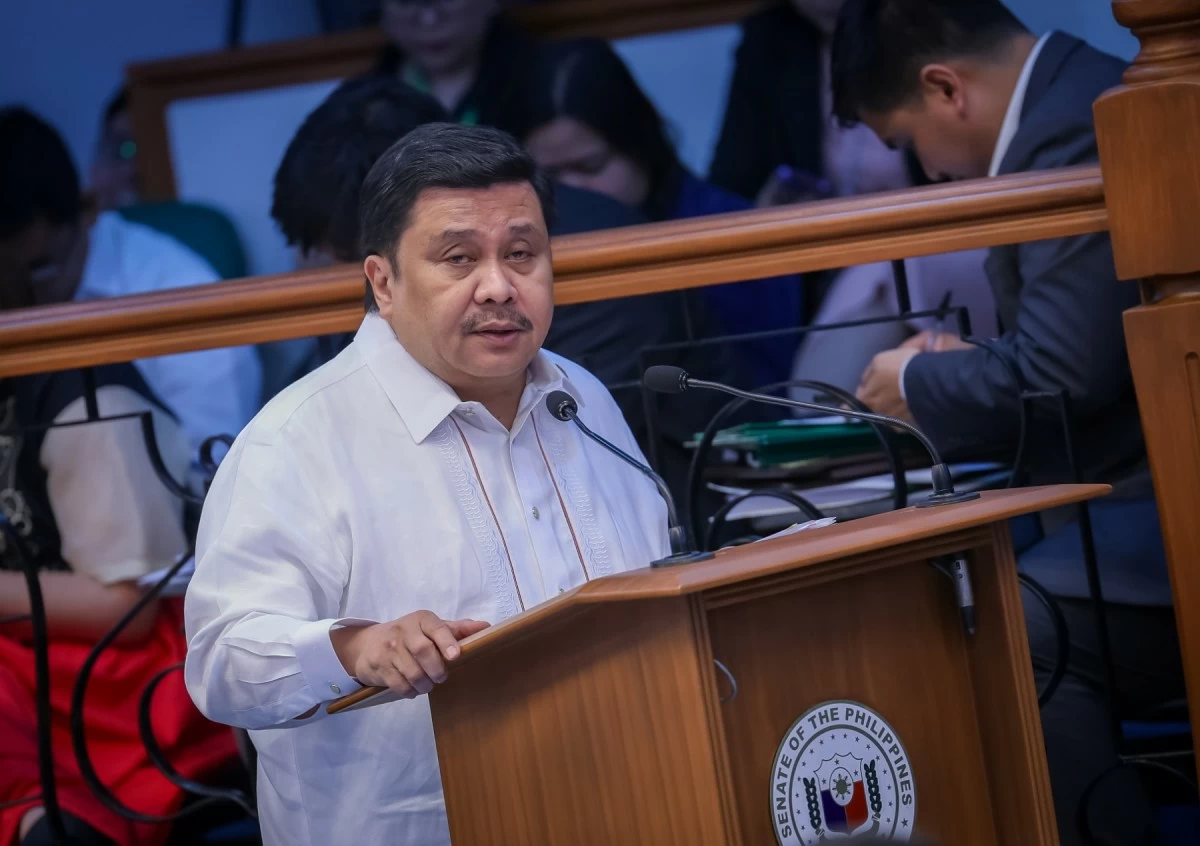
In filing Senate Bill No. 475, Estrada seeks to strengthen the provisions under Republic Act No. 10639, also known as “The Free Mobile Disaster Alerts Act” against persons who use it to scam and even for election propaganda.
“Our mobile disaster alert system exists to save lives. Any attempt to exploit it for political, commercial, or fraudulent purposes is irresponsible and dangerous. We must protect the integrity of this system so that people can trust and act on the alerts they receive,” Estrada said.
“This measure aims to prevent abuse, preserve public trust in our disaster alert systems, and ensure that in times of crisis, every alert counts and every second matters,” the senator said.
Under SBN 475, any person who uses the mobile disaster alert mechanism to disseminate information unrelated to its intended purpose shall face imprisonment of two to five years and a fine ranging from ₱100,000 to ₱1 million.
This includes using mobile disaster alerts for election campaign messages, advertisements, and other promotional materials.
The senator filed the bill in light of the warning of the Office of Civil Defense (OCD) against fraudulent text messages promising financial aid and other forms of government assistance under the name of the National Disaster Risk Reduction and Management Council (NDRRMC).
Estrada also cited reports during the recent election period where mechanisms such as the Emergency Cell Broadcast System (ECBS) were allegedly exploited for campaign purposes.
The Commission on Elections (Comelec) had issued show-cause orders to several candidates in Masbate after residents received emergency alerts promoting political personalities.
Estrada said R.A. No. 10639 was enacted in 2014 to ensure the timely dissemination of life-saving information during disasters through mobile alerts issued by the NDRRMC, the Philippine Atmospheric, Geophysical and Astronomical Services Administration (PAGASA), the Philippine Institute of Volcanology and Seismology (PHIVOLCS), and other relevant agencies in the event of an impending tropical storm, typhoon, tsunami, or other calamities.
“Our laws should have a place for those who abuse the emergency alert messaging system. We must not allow even mobile disaster alerts to be used as tools in their deceptive activities,” the lawmaker said.