






Manila Bulletin
 Philippines
National
'Bumabaha ng scam!' OCD warns vs fake NDRRMC aid messages flooding the public
Philippines
National
'Bumabaha ng scam!' OCD warns vs fake NDRRMC aid messages flooding the public
Philippines
National
'Bumabaha ng scam!' OCD warns vs fake NDRRMC aid messages flooding the public
'Bumabaha ng scam!' OCD warns vs fake NDRRMC aid messages flooding the public
Published Jul 30, 2025 10:14 am


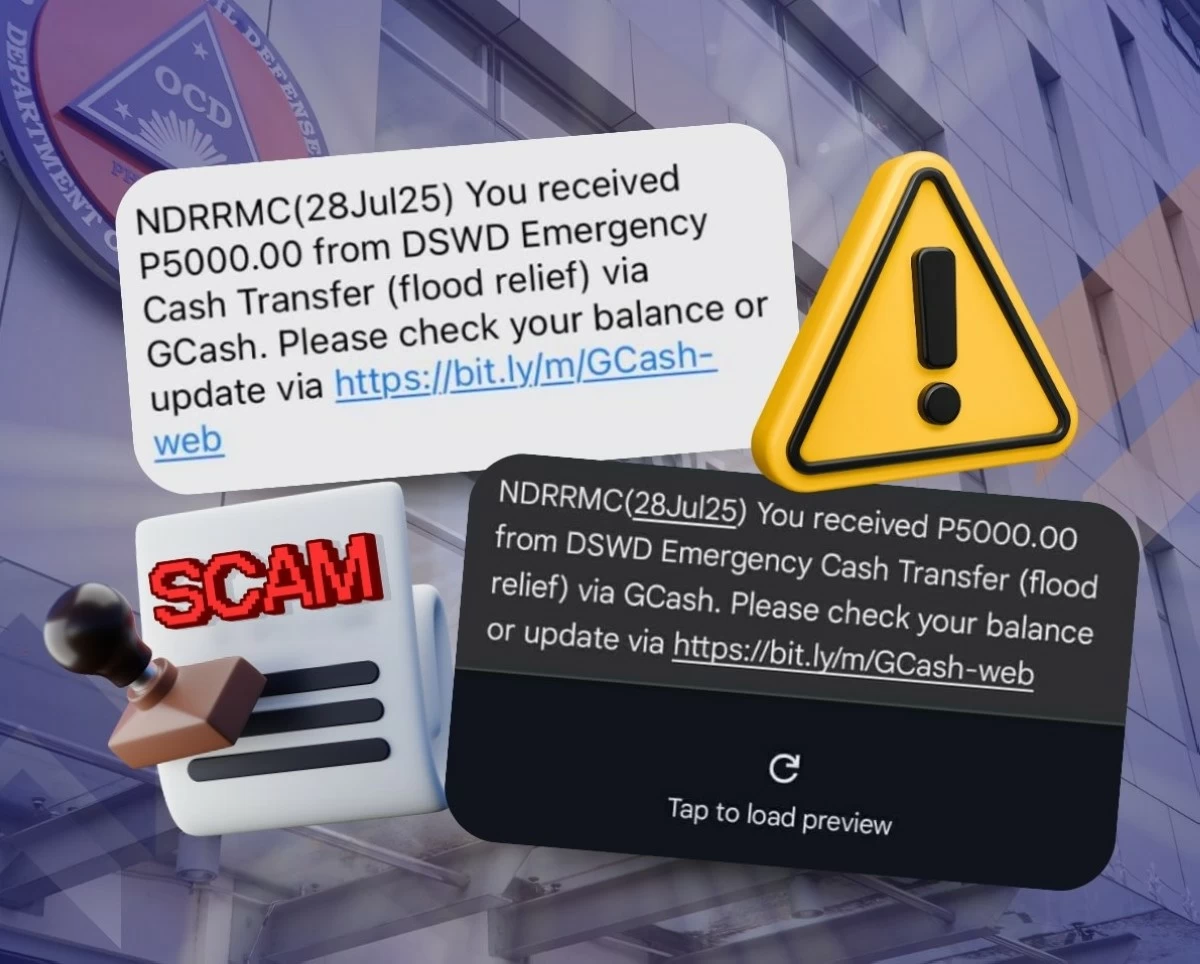
(Courtesy of Office of Civil Defense)
Imagine receiving a text message claiming you're eligible for government aid following the recent storms. It includes a link, and without a second thought, you click it. The site looks suspicious, so you exit quickly and forget about it. What you don’t realize is that by simply clicking that link, you may have unknowingly exposed your personal data and your hard-earned savings could soon vanish without warning.
The Office of Civil Defense (OCD) revealed that this is what could happen as it warned against the circulation of deceptive text messages falsely claiming that individuals may receive financial assistance and other forms of government aid.
In an advisory Tuesday night, July 29, the OCD said the fraudulent messages misuse the name or official short messaging service (SMS) number of the National Disaster Risk Reduction and Management Council (NDRRMC).
It said the NDRRMC SMS number is strictly used for disseminating disaster alerts and early warnings, and is not intended for the distribution of aid, cash transfers, or any personal transactions.
“Scammers often exploit heightened emotions and urgency during disasters by launching fake donation drives, phishing schemes, and fraudulent messages aimed at stealing personal information or financial resources. In some cases, they impersonate typhoon victims, volunteers, or government personnel, using fabricated stories and stolen images to solicit donations or sensitive data,” the OCD said.
“The OCD strongly condemns the actions of individuals or groups who exploit disasters and the suffering of affected communities for fraudulent or malicious purposes and urges everyone to exercise vigilance and caution,” it added.
The OCD said that scammers could collect an individual's personal information to open fraudulent accounts or commit other forms of identity fraud. They could also ask victims to pay a “processing fee” or give bank or e-wallet details, leading to direct theft.
It said clicking on the provided link could install spyware or malware on the phone, giving scammers access to data and the information gathered may be used for follow-up scams or even to target other family members.
Further, the OCD said that when people fall victim to fake aid messages, they may later ignore or mistrust real assistance efforts from the government.
To avoid being a victim of this type of scam, the OCD advised the public to verify before clicking on links or sharing any information, and only trust official government websites and verified platforms.
It said the public should also report suspicious messages to their telecommunications provider or the National Telecommunications Commission (NTC) via the One Stop Public Assistance Center (OSPAC) at (02) 8924-4010 or by email at [email protected].
They may also contact the Cybercrime Investigation and Coordinating Center (CICC) via their Inter-Agency Response Center (IARC) at 1326 or report online through [email protected].
The OCD said individuals seeking government assistance should refer only to the official channels of the Department of Social Welfare and Development (DSWD) or other authorized agencies. It said official updates, advisories, and announcements are published exclusively on the agencies’ verified websites and social media pages.
“In times of crisis, generosity and compassion are essential—but they must be paired with responsibility and discernment. By remaining alert and verifying information, we not only protect ourselves but also ensure that help reaches those who truly need it,” the OCD said.