

ADVERTISEMENT

Bridging the past and the future

Lisbon's modern EVs in vintage clothing

Published Jul 30, 2025 05:14 pm
The march of progress is difficult to halt, yet in some cases, the two can be made to work together in surprising harmony. Such is the case for Lisbon, the capital city of Portugal.
Founded as far back as 1200 BCE, this historic city is rich in architecture, boasting of Romanesque, Gothic, Manueline, Baroque, Modern and Postmodern buildings found all over the capital. With such a historic city center and skyline, it’s easy to understand how preserving as much of it as possible is important to the Portuguese government.
Picturesque Lisbon
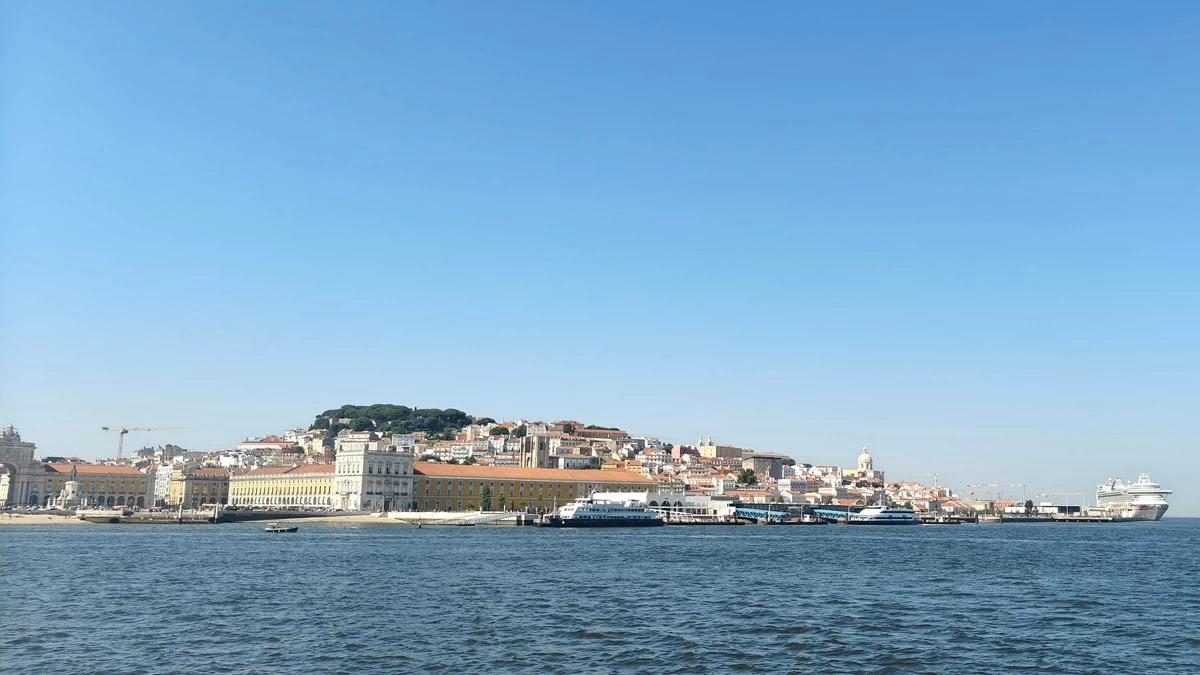
Lisbon as seen from the coast.
Few European cities paint a picture as beautiful as Lisbon does. Think San Francisco’s iconic hills, overlooking a bay area, but with a skyline dotted with mid-rise colonial buildings rather than modern skyscrapers. Much of the city is still composed of well-preserved colonial buildings with their distinct terra cotta tile roofs, cobblestone streets, and fully functioning street trams. Throw in a few tall cypress trees here and there and you’ve got the makings of a typical Lisbon postcard.
So how does this city take advantage of the burgeoning tourism boom while still preserving the unrivaled historic aura of its capital? With electrified vehicles that look just as historic as their backdrop.
One can imagine, a tour of this beautiful city and its many century old buildings is a very common itinerary for tourists. Classic trams still run up and down some streets, but not all the best sights are situated on the same streets as the tram.
Vintage car tours
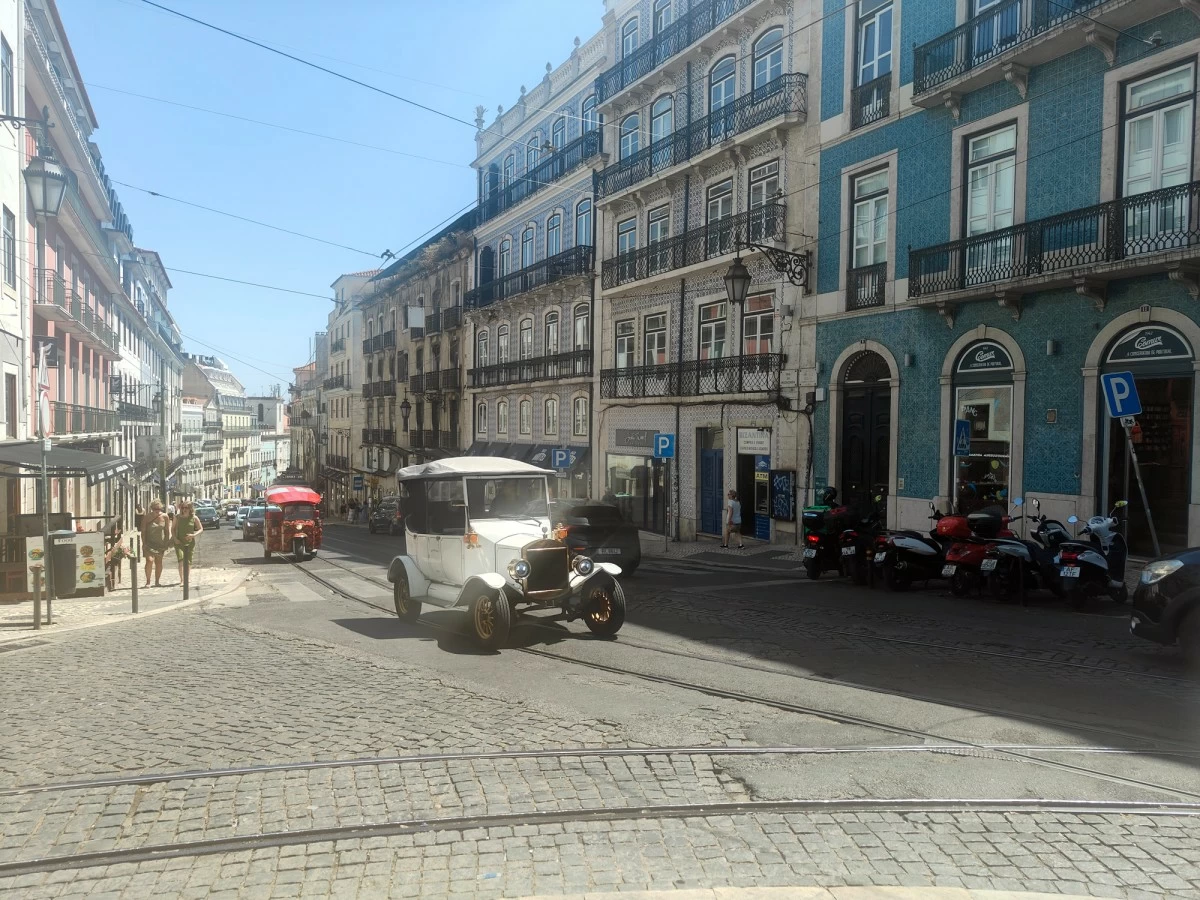
Electric vehicles designed to look like pre-war vehicles bring tourists around the city.
To get a truly personalized tour for your small group, there’s no shortage of classic pre-war style vehicles resembling a Ford Model T or Packard but powered by electricity. It's not hard to find these vehicles as they’re parked in every square, eagerly inviting any tourist to take a ride. The drivers / tour guides, many of who were women, proudly shared that they typically work just half a day. Granted, this is largely due to the limitations of their EV’s battery. Though they don’t seem too disappointed with that fact, as the tourist fare seems to be more than enough to cover a day’s work.
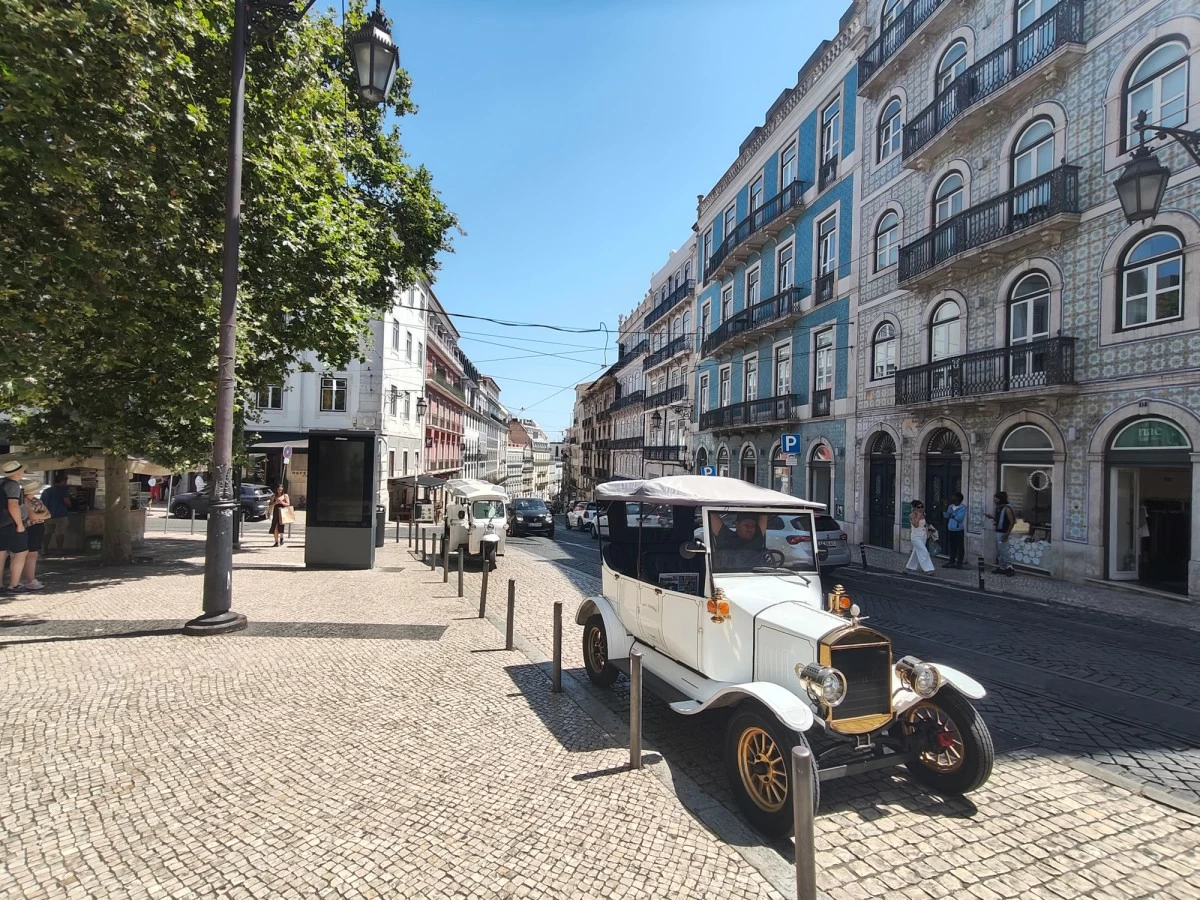
They come in a variety of forms from 5-seater to 11-seater.
These vehicles can fit anywhere from a group of four to as many as 10, depending on the vehicle rented out. The vintage car tour is not cheap at around €30 (₱2,000) per person OR €120 (₱8,000) for a group of four for an hour and a half. Nonetheless, many of the youth can’t deny that it definitely ‘passes the vibe check.’
Not surprisingly, these vehicles were made in and imported from China. Designed specifically for tourism or resort use, they’re highly configurable, coming in a variety of seating configurations, colors, and options. They’re powered by a choice of lead acid or lithium batteries, and propelled by a single electric motor in the rear wheels. They only boast a modest driving range of 80-km from a full charge and a top speed of 30-km/h. Nonetheless, I doubt that’s going to be an issue with their very specialized purpose. Finally, these vehicles tip the scales at just under a 1-ton; about as light as your average Mitsubishi Mirage or Toyota Wigo.
A perfect match
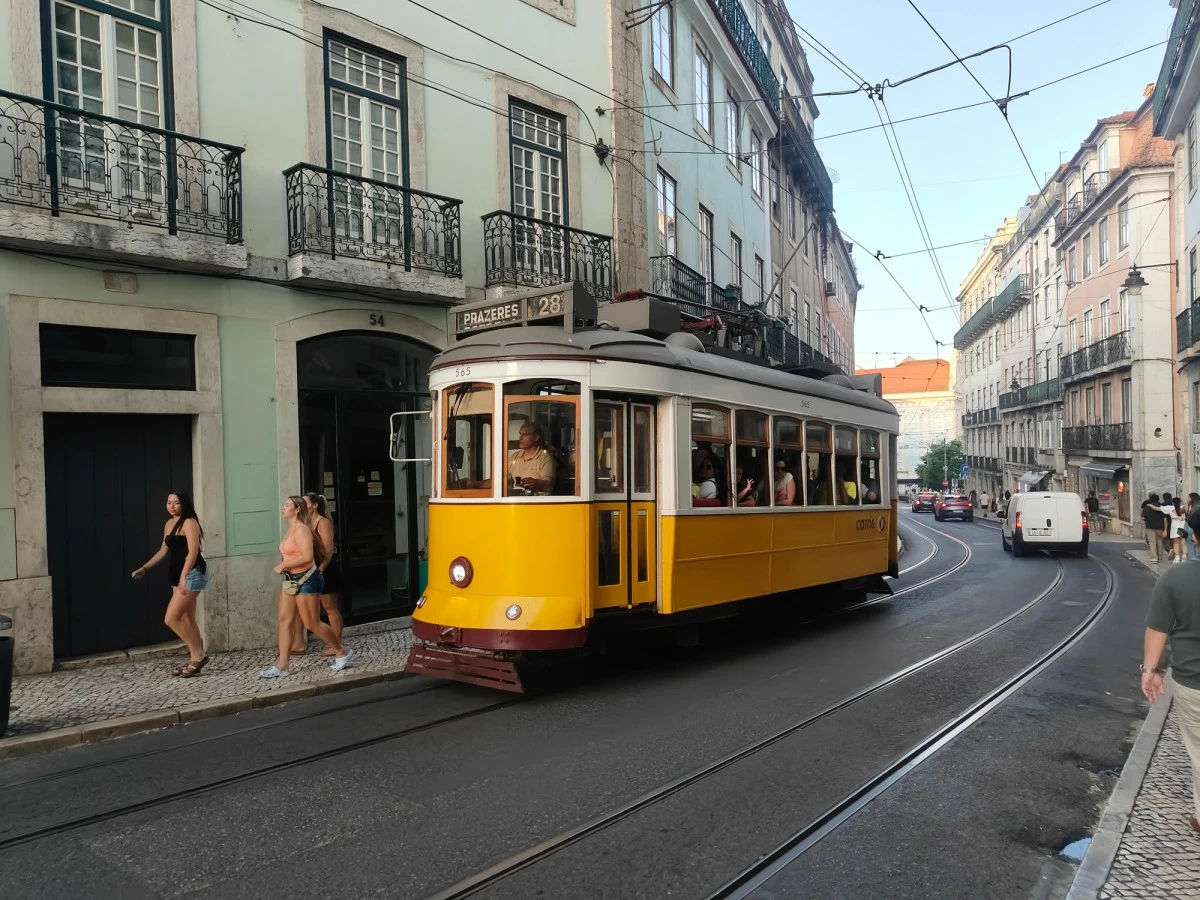
Lisbon's classic trams still operate around the city.
Having these EVs serve as public transport — particularly tourist transport — is a great way to integrate electrification in the transport sector. The lack of tailpipe emissions ensures these historic sites stay appealing to tourists. You can still get a whiff of the sea breeze from the nearby bay. The high initial torque from the electric motors ensures there’s more than enough power to shuttle a full load of tourists up the steep and narrow streets. And best of all, they’re not out of place with the classic architecture, making any photos taken seem like a time warp to a different time.
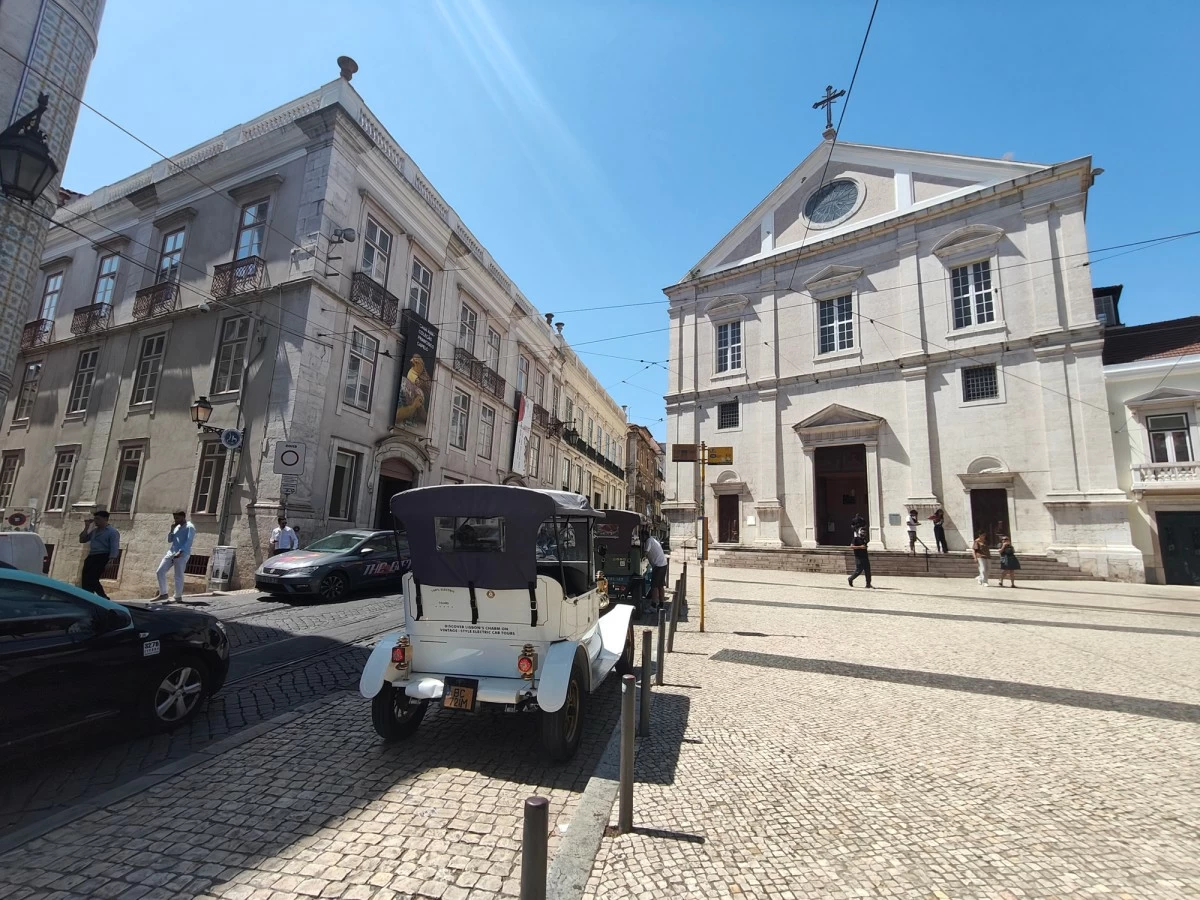
Vintage style EVs bring tourists to various notable spots around Lisbon.
Portugal is not the kind of country one expects to be leading in electrification. After all, with such historic cottage industries like tile making, pottery, and cork farming still thriving, it doesn’t seem like industrialization is high on the docket. Nonetheless, these unique vehicles present a smart solution to help the country capitalize on tourism while preserving their history.
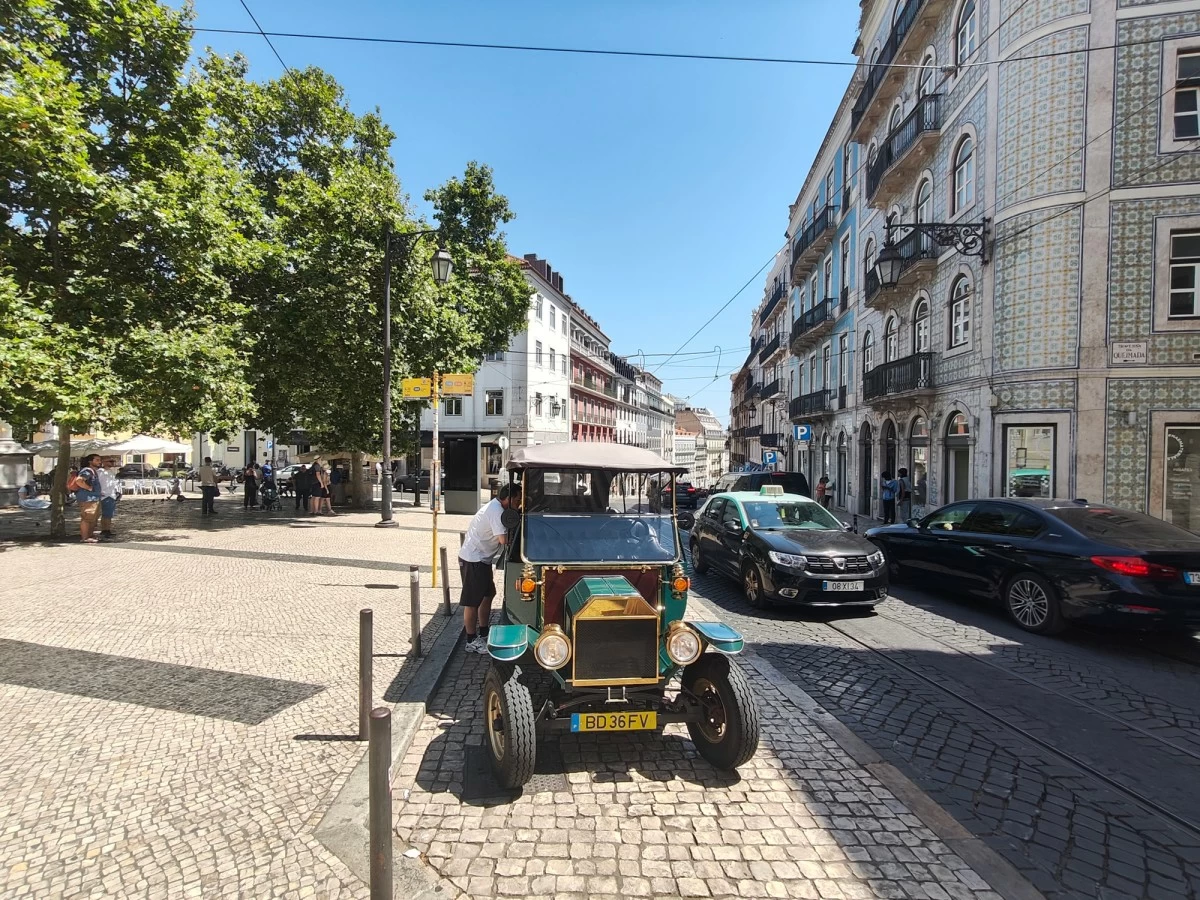
Vintage EVs can be reserved beforehand or booked on the spot.
One can’t help but imagine how such vehicles can do the same for tourism in the Philippines. In Intramuros or Vigan, this style of tourism can certainly revive or improve their tourism appeal. If the government were to come up with a program to accredit city tour drivers and operators and help them purchase these larger, classic-style EVs, I’m certain they’d be onboard.
Portugal’s solution to electrification is a unique one. It shows that transport electrification is not like some invasion or colonization that threatens to eliminate our time-honored values. It’s something that is malleable and can be integrated well, even into historic locations.

Related Tags

INIGO ROCES SPOTLIGHT FEATURES
ADVERTISEMENT
.most-popular .layout-ratio{ padding-bottom: 79.13%; } @media (min-width: 768px) and (max-width: 1024px) { .widget-title { font-size: 15px !important; } }

{{ articles_filter_1561_widget.title }}

.most-popular .layout-ratio{ padding-bottom: 79.13%; } @media (min-width: 768px) and (max-width: 1024px) { .widget-title { font-size: 15px !important; } }

{{ articles_filter_1562_widget.title }}

.most-popular .layout-ratio{ padding-bottom: 79.13%; } @media (min-width: 768px) and (max-width: 1024px) { .widget-title { font-size: 15px !important; } }

{{ articles_filter_1563_widget.title }}

{{ articles_filter_1564_widget.title }}

.mb-article-details { position: relative; } .mb-article-details .article-body-preview, .mb-article-details .article-body-summary{ font-size: 17px; line-height: 30px; font-family: "Libre Caslon Text", serif; color: #000; } .mb-article-details .article-body-preview iframe , .mb-article-details .article-body-summary iframe{ width: 100%; margin: auto; } .read-more-background { background: linear-gradient(180deg, color(display-p3 1.000 1.000 1.000 / 0) 13.75%, color(display-p3 1.000 1.000 1.000 / 0.8) 30.79%, color(display-p3 1.000 1.000 1.000) 72.5%); position: absolute; height: 200px; width: 100%; bottom: 0; display: flex; justify-content: center; align-items: center; padding: 0; } .read-more-background a{ color: #000; } .read-more-btn { padding: 17px 45px; font-family: Inter; font-weight: 700; font-size: 18px; line-height: 16px; text-align: center; vertical-align: middle; border: 1px solid black; background-color: white; } .hidden { display: none; }
function initializeAllSwipers() { // Get all hidden inputs with cms_article_id document.querySelectorAll('[id^="cms_article_id_"]').forEach(function (input) { const cmsArticleId = input.value; const articleSelector = '#article-' + cmsArticleId + ' .body_images'; const swiperElement = document.querySelector(articleSelector); if (swiperElement && !swiperElement.classList.contains('swiper-initialized')) { new Swiper(articleSelector, { loop: true, pagination: false, navigation: { nextEl: '#article-' + cmsArticleId + ' .swiper-button-next', prevEl: '#article-' + cmsArticleId + ' .swiper-button-prev', }, }); } }); } setTimeout(initializeAllSwipers, 3000); const intersectionObserver = new IntersectionObserver( (entries) => { entries.forEach((entry) => { if (entry.isIntersecting) { const newUrl = entry.target.getAttribute("data-url"); if (newUrl) { history.pushState(null, null, newUrl); let article = entry.target; // Extract metadata const author = article.querySelector('.author-section').textContent.replace('By', '').trim(); const section = article.querySelector('.section-info ').textContent.replace(' ', ' '); const title = article.querySelector('.article-title h1').textContent; // Parse URL for Chartbeat path format const parsedUrl = new URL(newUrl, window.location.origin); const cleanUrl = parsedUrl.host + parsedUrl.pathname; // Update Chartbeat configuration if (typeof window._sf_async_config !== 'undefined') { window._sf_async_config.path = cleanUrl; window._sf_async_config.sections = section; window._sf_async_config.authors = author; } // Track virtual page view with Chartbeat if (typeof pSUPERFLY !== 'undefined' && typeof pSUPERFLY.virtualPage === 'function') { try { pSUPERFLY.virtualPage({ path: cleanUrl, title: title, sections: section, authors: author }); } catch (error) { console.error('ping error', error); } } // Optional: Update document title if (title && title !== document.title) { document.title = title; } } } }); }, { threshold: 0.1 } ); function showArticleBody(button) { const article = button.closest("article"); const summary = article.querySelector(".article-body-summary"); const body = article.querySelector(".article-body-preview"); const readMoreSection = article.querySelector(".read-more-background"); // Hide summary and read-more section summary.style.display = "none"; readMoreSection.style.display = "none"; // Show the full article body body.classList.remove("hidden"); } document.addEventListener("DOMContentLoaded", () => { let loadCount = 0; // Track how many times articles are loaded const offset = [1, 2, 3, 4, 5, 6, 7, 8, 9, 10]; // Offset values const currentUrl = window.location.pathname.substring(1); let isLoading = false; // Prevent multiple calls if (!currentUrl) { console.log("Current URL is invalid."); return; } const sentinel = document.getElementById("load-more-sentinel"); if (!sentinel) { console.log("Sentinel element not found."); return; } function isSentinelVisible() { const rect = sentinel.getBoundingClientRect(); return ( rect.top < window.innerHeight && rect.bottom >= 0 ); } function onScroll() { if (isLoading) return; if (isSentinelVisible()) { if (loadCount >= offset.length) { console.log("Maximum load attempts reached."); window.removeEventListener("scroll", onScroll); return; } isLoading = true; const currentOffset = offset[loadCount]; window.loadMoreItems().then(() => { let article = document.querySelector('#widget_1690 > div:nth-last-of-type(2) article'); intersectionObserver.observe(article) loadCount++; }).catch(error => { console.error("Error loading more items:", error); }).finally(() => { isLoading = false; }); } } window.addEventListener("scroll", onScroll); });

Sign up by email to receive news.