







Power sector players back Marcos' energy security goals
Published Jul 29, 2025 11:43 am


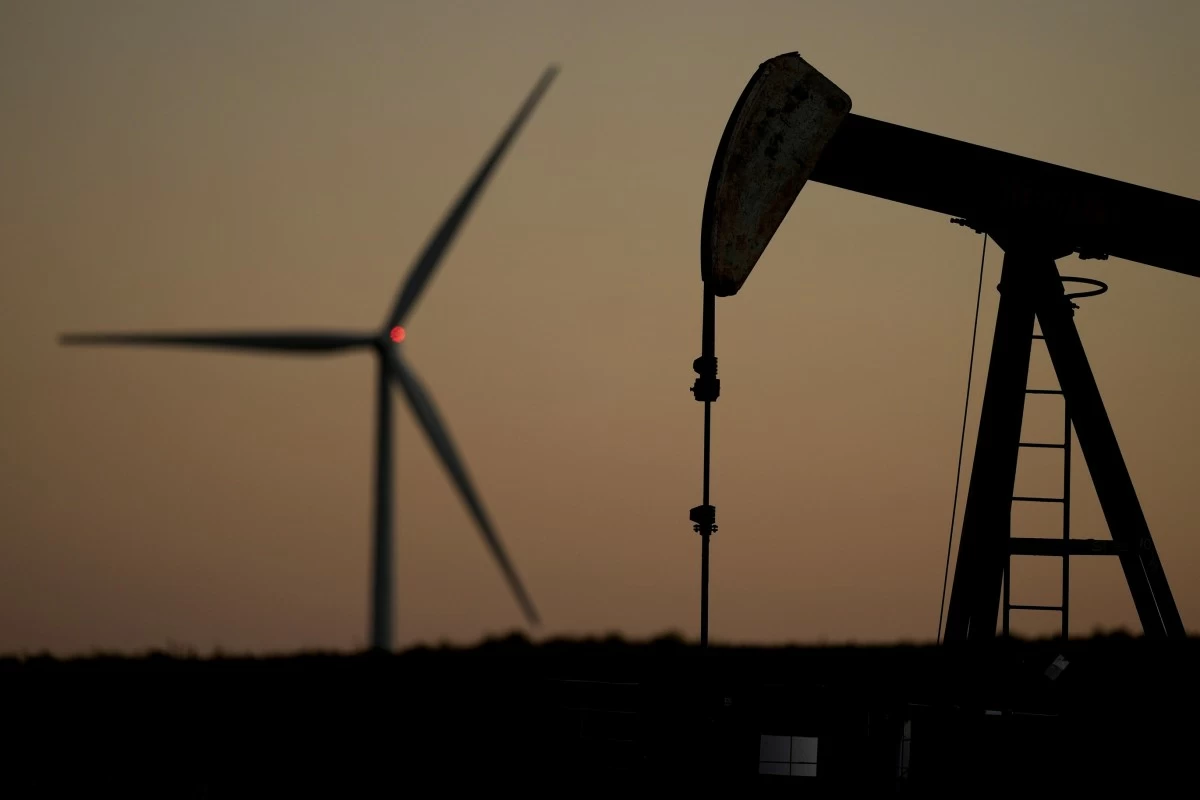
A pumpjack operates in the foreground while a wind turbine at the Buckeye Wind Energy wind farm rises in the distance, Sept. 30, 2024, near Hays, Kan. (AP Photo/Charlie Riedel, File)
The Philippine Independent Power Producers Association (PIPPA) reassured its commitment to collaborate with the energy sector to achieve the electrification and energy security goals mentioned by President Marcos in his fourth State of the Nation Address (SONA).
In a statement, PIPPA expressed its support for the President’s latest SONA, where he highlighted the goal of completing 200 power plants by 2028—an initiative aimed at addressing the country’s persistent power challenges.
“The members of PIPPA heed the mandate of the President, His Excellency, Ferdinand Marcos Jr., to establish additional capacity in the country to address the electrification goals of this administration,” it said.
PIPPA is a collective of private generation companies that build, own, and operate power plants in the Philippines, supplying electricity to the national grid.
“Rest assured, our power generators will work together with the DOE [Department of Energy], ERC [Energy Regulatory Commission], NGCP [National Grid Corp. of the Philippines], IEMOP [Independent Electricity Market Operator of the Philippines], and PEMC [Philippine Electricity Market Corp.] to achieve the objectives of energy security, reliability, affordability, and environmental sustainability.”
On Monday, July 28, Marcos highlighted that with the growing number of power plants coming online in the country, he is anticipating that this could solve the power crisis for around four million households, or 200,000 factories, or almost 7,000 offices and businesses.
Apart from this, the President also emphasized the need to secure electrification goals before the end of his term in 2028.
Philippine Solar and Storage Energy Alliance (PSSEA) backs this notion, as its founder and chairperson, Maria Theresa Capellan, elaborated on the importance of addressing rural and island electrification through renewable energy (RE) and storage solutions.
“Focusing on small islands’ electrification will improve the economy of the towns and communities, boost their tourism and improve agriculture potential, as well as uplift the living conditions of the Filipinos,” she said in a Viber message.
“Batteries with digital solutions offer efficient, clean, and reliable technologies that provide a way forward to small island electrification. What is needed is to include small islands like Mindoro, Palawan, Masbate, and Samar, including Zamboanga and Negros, in the Green Energy Auction (GEA) where tariffs and competition are transparent and orderly.”
In his fourth SONA, Marcos also highlighted the troubling Siquijor power outage in June, revealing issues such as expired permits, faulty generators, and a delayed government response to the situation.
“Rural and island electrification has been a perennial problem of the DOE. The President is amid the emerging technologies like solar and batteries with energy management systems that can provide long-term solutions. Removing subsidies from fossil fuel and shifting these to renewables will accelerate the electrification of small islands,” Capellan elaborated.
She further explained that full electrification will also be realized through the net metering program, which allows consumers to sell their power back to the grid.
“The net metering program has to roll out aggressively outside [of] Metro Manila. [The] government has to build the capacity of electric coops to assess their network and allow more solar rooftops in small businesses and homes.”
Jay Layug, president of Developers of Renewable Energy for AdvanceMent Inc. (DREAM), commended Marcos for highlighting the dire need to achieve electrification as well as the rollout of power plants in the country.
“We laud the thrust of the President’s speech on ensuring sufficiency of energy supply by building more power plants utilizing RE to meet the electricity demand. We also laud the President for ensuring that electrification of the entire country is achieved. His targets are pointed and specific. The private RE sector will fully support to efforts of the government for a more sustainable future,” he said.