






Manila Bulletin
 Philippines
National
Philippine education reform: DepEd unveils 10-year quality basic education plan
Philippines
National
Philippine education reform: DepEd unveils 10-year quality basic education plan
Philippines
National
Philippine education reform: DepEd unveils 10-year quality basic education plan
Philippine education reform: DepEd unveils 10-year quality basic education plan
Focusing on reforms, digital learning, and teacher support, QBEDP 2025–2035 backs Marcos' push to prioritize education
Published Jul 29, 2025 05:15 pm


At A Glance
- DepEd unveils the Quality Basic Education Development Plan (QBEDP) 2025–2035, a decade-long strategy aimed at overhauling the education system through reforms focused on foundational skills, digital learning, and teacher support
- Anchored in President Marcos' 2025 SONA priorities and the "Bagong Pilipinas" vision, the plan responds to calls for urgent reforms and national commitment to education
- QBEDP 2025-2035 reforms focus on decentralization, digitalization, and teacher empowerment
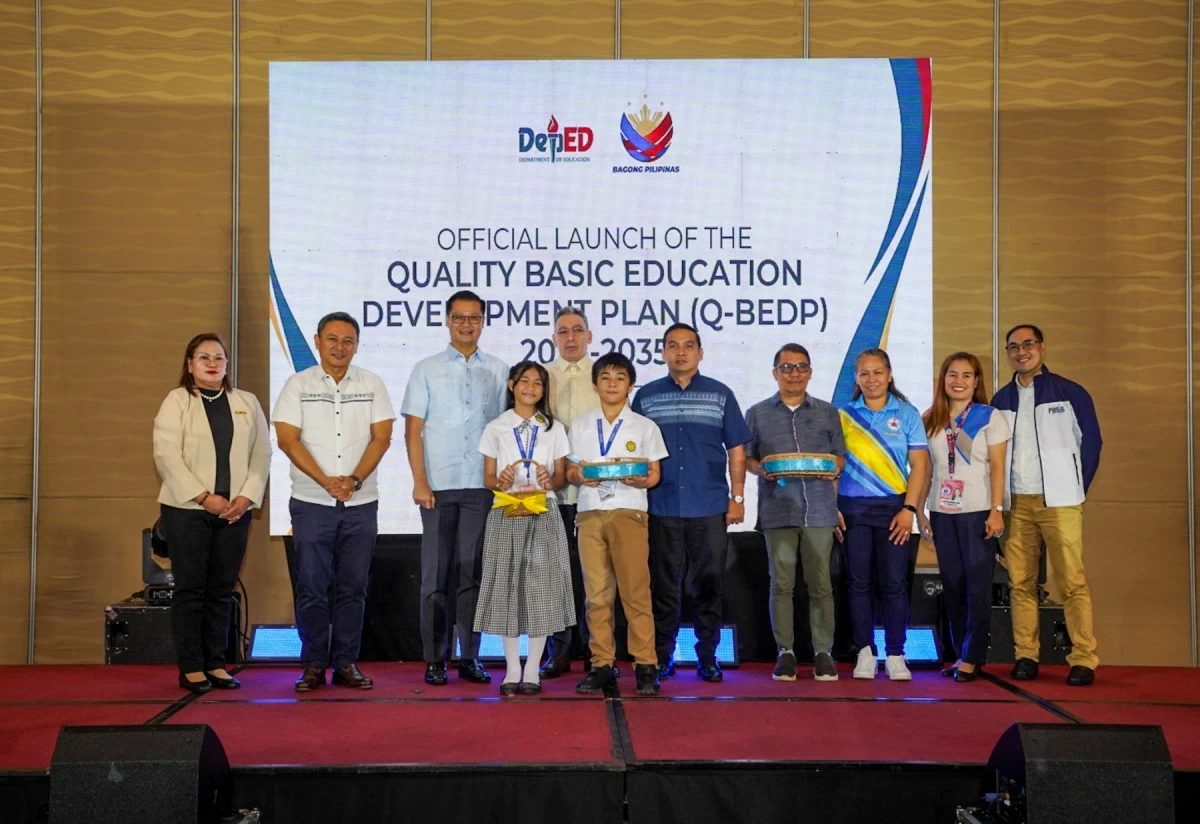
DepEd launches the Quality Basic Education Development Plan (QBEDP) 2025–2035, a 10-year strategy to transform Philippine education through reforms, innovation, and support for teachers and learners. (DepEd / Facebook)
In a landmark move to overhaul the country’s education system, the Department of Education (DepEd) on Tuesday, July 29, launched the Quality Basic Education Development Plan (QBEDP) 2025–2035—a comprehensive 10-year roadmap aimed at strengthening foundational skills, expanding digital learning, and enhancing teacher support.
DepEd, in a statement, said the initiative — unveiled just a day after President Marcos highlighted education reform as a central pillar in his fourth State of the Nation Address — aims to transform the country’s education system at its core.
Not just a promise
DepEd Secretary Sonny Angara described the QBEDP as a “national commitment” that embodies the “Bagong Pilipinas” vision and ensures no Filipino learner is left behind.
“The Quality Basic Education Development Plan is not just a document. It is a promise,” Angara said, adding that the QBEDP also represents a vow that no one will be left behind in the administration’s journey.
“Ito ay panata, hindi lamang ng DepEd, kundi ng buong sambayanan, na ihatid ang bawat batang Pilipino sa kaalaman at sa kinabukasan” (This is a vow—not just from DepEd, but from the entire nation—to bring every Filipino child to learning and to their future),” he added.
Long-term vision anchored on reforms
DepEd said the QBEDP builds on the 5-Point Reform Agenda launched in 2024 and the Basic Education Development Plan (BEDP) adopted in 2022.

The launch of DepEd’s QBEDP 2025–2035 signals a strategic, long-term push to ensure the Philippine education system is inclusive, future-ready, and globally competitive. (DepEd / Facebook)
The policy, DepEd explained, lays out strategic goals over a decade through three main levers of transformation: decentralization of education governance, digitalization of learning and administrative systems, and public-private partnerships to support innovation and access.
To measure progress, DepEd said the plan introduces milestone years—or “basecamps”—in 2028, 2031, and 2034, representing phases of catching up, innovating, and achieving global benchmarks in basic education.
Responding to the SONA agenda
DepEd said the plan’s rollout directly supports the Marcos administration’s urgent education agenda as outlined in the 2025 SONA—such as the expansion of the ARAL Program for learning recovery; increased investment in early childhood development; and healthier, tech-enabled learning environments.
DepEd’s Strategic Management Strand, which led the plan’s development, emphasized that the QBEDP is a “living strategy” designed to evolve with shifting national and global challenges, including climate change, labor market demands, and emerging technologies.
Support for teachers and learning infrastructure
DepEd said the Marcos administration also renewed its commitment to teachers, pledging better salaries, reduced workloads, and more support staff—initiatives reflected in the QBEDP’s governance reforms and revised budget strategies.
The plan outlines systems to prepare the sector for meaningful decentralization, introduce performance-based incentives for innovation, improve classroom and facility delivery, and boost learner achievement across all regions.
“Let’s build the tracks together,” Angara urged. “Let’s fuel the engine with our collective resolve,” he added, calling for a united effort to push forward education reform.