






Manila Bulletin
 Philippines
National
'Insertion agad?': Budget amendments not illegal, 'pork barrel' is--Escudero
Philippines
National
'Insertion agad?': Budget amendments not illegal, 'pork barrel' is--Escudero
Philippines
National
'Insertion agad?': Budget amendments not illegal, 'pork barrel' is--Escudero
'Insertion agad?': Budget amendments not illegal, 'pork barrel' is--Escudero
By Dhel Nazario
Published Jul 29, 2025 02:30 pm


At A Glance
- Senate President Francis "Chiz" Escudero defended Congress' authority to amend the national budget, as he branded allegations of illegal insertions as being politically-motivated. He clarified that only post-enactment interventions—defined as "pork barrel" by the Supreme Court (SC)—were unlawful.
Senate President Francis "Chiz" Escudero on Tuesday, July 29, pushed back against what he described as unfair and politically-motivated accusations against him on the subject of national budget amendments.
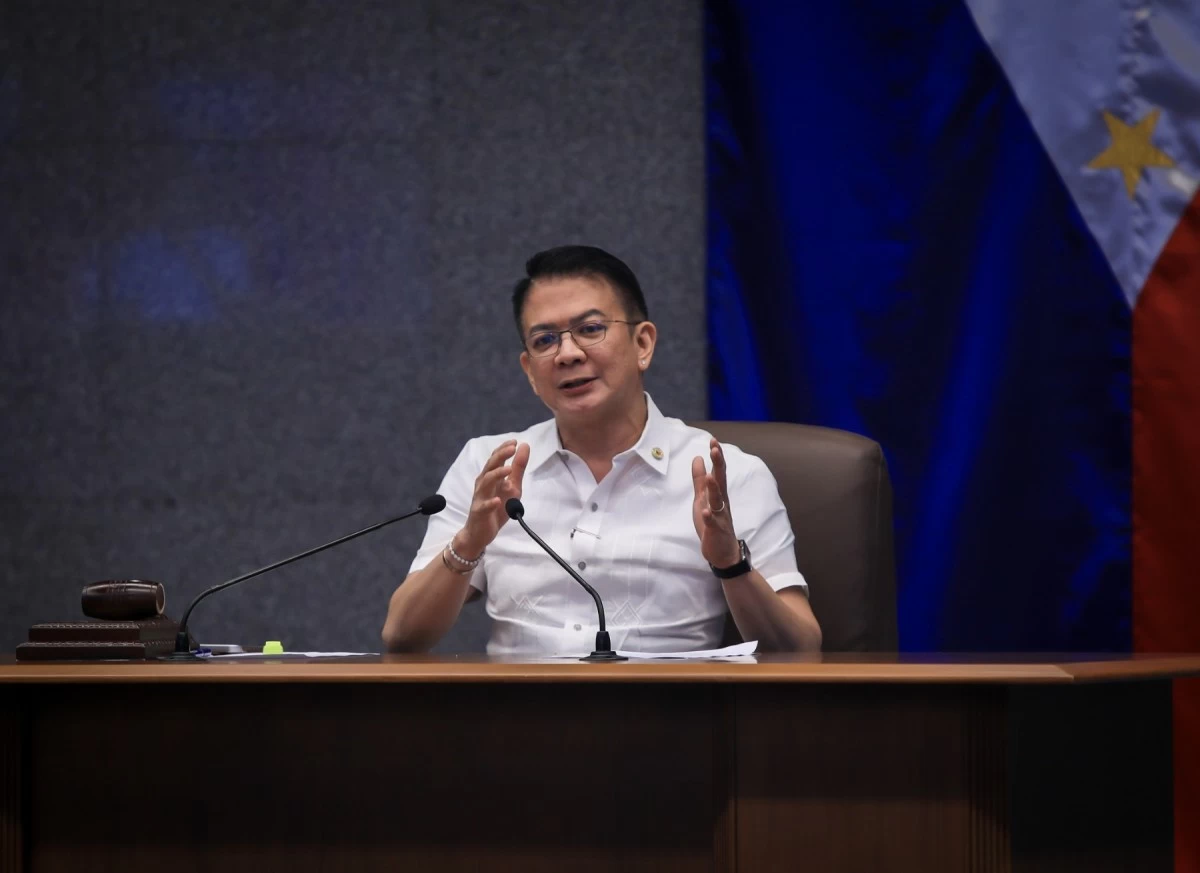
Senate President Francis "Chiz" Escudero (Senate PRIB photo)
In a press conference, Escudero said that these allegations wrongly equate the process of revising the proposed budget with "illegal insertions".
"Grabe naman kasi yung insinuation ng mga naninira, pag nag-amend ng budget, insert na agad, illegal na agad, bawal na agad, may kita na agad. Hindi naman siguro tama yun. Mali naman yata 'yun (The insinuations of critics are excessive; just because the budget is amended doesn’t automatically mean it’s an insertion, illegal, prohibited, or involves kickbacks. That’s not fair, and it’s wrong)," Escudero said.
"So anong gusto nyong sabihin sa amin, wala kaming karapatang baguhin yung isinasubmit na panukalang budget ng DBM? Ganun ba yun? Kung ano yung isinumite, bakit pa kami maghehearing? Bakit pa nakalagay sa Saligang Batas ang power of the purse ay nasa kongreso? (So what are you trying to say—that we in Congress have no right to amend the proposed budget submitted by the DBM? Is that it? If what’s submitted is already final, then why do we even hold hearings? Why does the Constitution say that the power of the purse belongs to Congress?)" he pointed out.
The Senate leader questioned the logic of those criticizing Congress’ role in the budget process, and stressed that lawmakers are well within their constitutional mandate to make changes to the General Appropriations Bill (GAB).
Escudero clarified that what is illegal is not the act of amending the budget, but the "pork barrel" system, which the Supreme Court (SC) had already struck down for involving post-enactment intervention.
"Yun ba yung ibig sabihin, na illegal magbago ng budget? I don't think so. Ang illegal ay pork barrel, which was defined by the [SC] as post-enactment intervention (Is that what they mean, that amending the budget is illegal? I don't think so. What’s illegal is the pork barrel system, which the SC defined as post-enactment intervention—interfering with how funds are used after the budget has been approved)," he said.
"Pakikialam kung paano gagastusin, saan gagastusin ang pondo matapos itong aprubahan (Interfering with how funds are spent and where they are allocated after the budget has already been approved)," he added.
For Escudero, the recent criticisms are not only misplaced but also politically charged.
"Di marapat at di makatarungan para sa akin at bahagi lang ng pamumulitika ang mga akusasyong binabato ngayon (For me, the accusations being thrown around now are neither appropriate nor fair, they're simply part of political maneuvering)," he said.
The Bicolano addressed recent allegations surrounding the supposed insertion of P142.7 billion in the 2025 national budget. He called the accusations politically-motivated.
Media reports came out citing a 103-page document allegedly showing that Escudero inserted P142.7 billion into the P6.3-trillion national budget for 2025, with Bulacan—considered the stronghold of Senator Joel Villanueva—allegedly receiving the largest allocation of over P12 billion.
Escudero questioned the framing of the issue, pointing out that even if the cited figure were accurate, it only amounts to 2 percent of the total budget. He described the controversy as part of the “ingay sa politika (political noise)” brought on by the upcoming election for Senate President.
He stated that a demolition job was behind malicious and baseless allegations linking him to questionable infrastructure projects days ahead of the opening of the 20th Regular Session of Congress and was meant to stop his reelection as head of the upper chamber.
He stated that the so-called report connecting him and Majority Leader Joel Villanueva to these projects was part and parcel of a well-funded smear campaign and a failed attempt to dislodge him and derail the latter’s bid for the post.