






Manila Bulletin
 Philippines
National
House spox responds to Tiangco on budget abuse issue; denies shenanigans
Philippines
National
House spox responds to Tiangco on budget abuse issue; denies shenanigans
Philippines
National
House spox responds to Tiangco on budget abuse issue; denies shenanigans
House spox responds to Tiangco on budget abuse issue; denies shenanigans
Published Jul 29, 2025 04:33 pm


At A Glance
- House of Representatives spokesperson, lawyer Princess Abante has denied Navotas City lone district Rep. Toby Tiangco's allegation that the Office of the Speaker is carrying out shenanigans with the government's ayuda or aid programs.
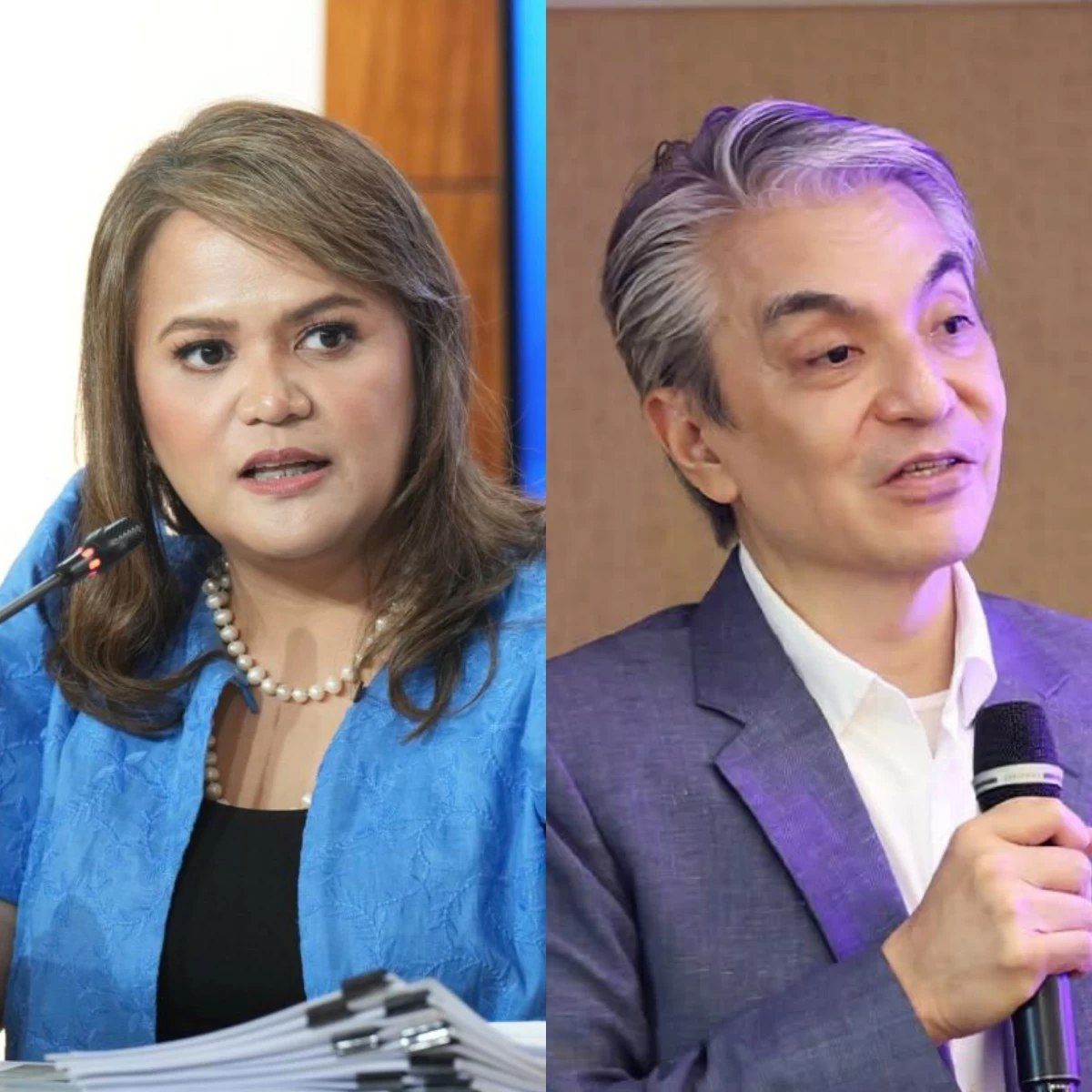
House Spokesperson Princess Abante (left), Navotas City lone district Rep. Toby Tiangco (PPAB, Facebook)
House of Representatives spokesperson, lawyer Princess Abante has denied Navotas City lone district Rep. Toby Tiangco's allegation that the Office of the Speaker is carrying out shenanigans with the government’s ayuda or aid programs.
"The Office of the Speaker firmly denies the baseless accusation that it exercises post-appropriation control over programs such as AICS, AKAP, TUPAD, and MAIP," Abante said in a statement Tuesday afternoon, July 29.
The lawyer-spokesperson was referring to the Assistance to Individuals in Crisis Situation, Ayuda sa Kapos sa Kita Program, Tulong Panghanapbuhay sa Ating Disadvantaged/Displaced workers, and Medical Assistance for Indigent Patients, respectively.
"These programs are implemented solely by executive agencies such as the DSWD (Department of Social Welfare and Developmen), DOLE (Department of Labor and Employment), and DOH (Department of Health). These agencies retain full authority over the approval, funding, and implementation of their respective programs, in accordance with law and internal procedures," Abante said.
"Like all congressional offices, the Office of the Speaker may issue endorsements or referrals in response to constituent requests from lawmakers or local leaders. These are strictly facilitative and do not guarantee or influence approval. Final decisions rest entirely with the implementing agencies, which assess each request based on program guidelines, fund availability, and internal controls," she said.
Leyte 1st district Rep. Martin Romualdez was elected in plenary Monday as House Speaker in the 20th Congress. He held the same position in the previous 19th Congress.
On Tuesday--a day after President Marcos delivered his fourth SONA--Tiangco issued a statement assailing the Office of the Speaker.
"The Speaker's office must stop controlling AICS, AKAP, TUPAD, and MAIP. What's happening now, Congressmen are forced to request allocations from the Office of the Speaker. Dapat ang ahensiya lang ng DSWD, DOLE, at DOH ang may kontrol dito (The DSWD, DOLE, and DOH should be the only agencies that can control these)," he said.
"Kapag kailangan hingin sa Office of the Speaker, lumalabas itong pork barrel ng office niya dahil sa kapangyarihang mag-apruba, mag-disapprove, o magdesisyon kung magkano ang ibibigay," Tiangco said.
(When it needs to be requested from the Office of the Speaker, it starts to resemble that office’s pork barrel because of the authority to approve, disapprove, or decide how much will be given.)
In response to this, Abante said the House of Representatives, under Romualdez, "fully upholds" the Supreme Court’s (SC) landmark ruling in Belgica v. Executive Secretary that prohibits legislators from exercising post-enactment discretion over public funds. This is the so-called Priority Development Assistance Fund (PDAF) or pork barrel case.
Why only now?
In a subsequent chance interview Tuesday, the House spokesperson highlighted that this was the first time that Tiangco, a House veteran, ever made such complaints.
"I think naka-ilang terms na po siya, ngayon lang din po niya yan nabanggit no, so siya lang din po ang makakasagot niyan (it's the first time that he has mentioned this, so only he can answer that)," she said.
Abante also responded to Tiangco's criticism on the practice of the "small committee", which traditional incorporates House members' individual amendments to the General Appropriations Bill (GAB) or proposed national budget.
"As to the issue of the small committee used during the budget process, this mechanism is a longstanding parliamentary practice that allows the efficient consolidation of individual amendments after plenary debates. It has been used across many Congresses, including those in which Congressman Toby Tiangco held leadership roles—and never objected to its use," she said.
According to Abante, the small committee neither overrides nor replaces the plenary. Its outputs, she says, are reported and become part of the final GAB. "To characterize it as a 'secret meeting' is misleading and undermines the institutional memory and processes of the House," she reckoned.
Abante ended her statement with a call to the Navotas solon.
"Nonetheless, if Congressman Tiangco believes the rules must be changed, he is free—and encouraged—to raise the matter formally before the plenary. The Speaker will respect the decision of the majority.
"If the House decides, through its rules and votes, to revise the budget process or abolish the small committee, then so be it. That is the democratic process in action," she said.