ADVERTISEMENT

DA: Farmers can also buy ₱20/kilo rice starting August

Published Jul 29, 2025 01:37 pm
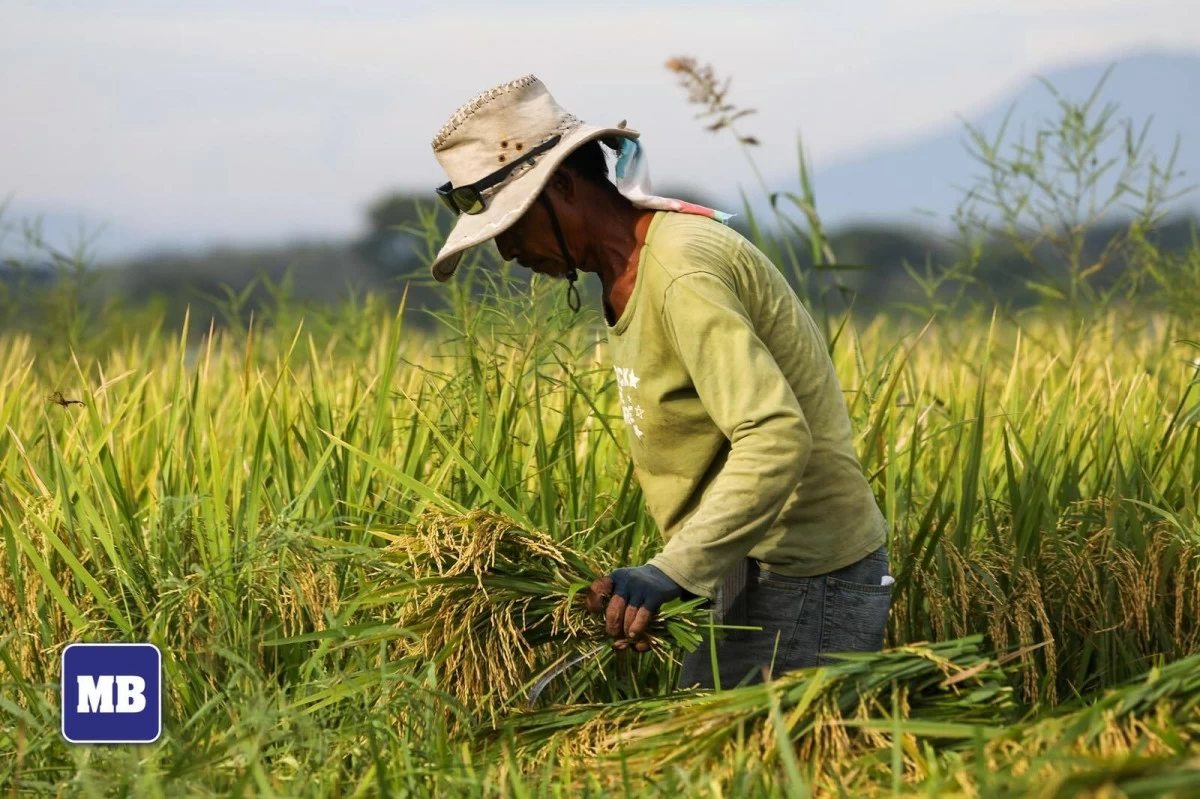
A farmer harvests rice crops in a field in Kalayaan, Laguna on Thursday, May 29. Photo by John Louie Abrina | MB
The Department of Agriculture (DA) will expand the government’s ₱20-per-kilo rice program to include farmers of the staple beginning next month, expanding access to cheaper rice for one of the country’s poorest sectors.
Agriculture Secretary Francisco Tiu Laurel said the government will incorporate rice farmers into the program starting Aug. 13, set to be implemented nationwide.
Tiu Laurel said this is the DA’s move to allow local farmers to also enjoy the steadily declining price of the commodity as consumers.
“At least maka-avail naman sila ng murang bigas (At least they can avail of cheaper rice),” he said on the sidelines of the 2025 post-State of the Nation Address (SONA) discussions with Cabinet Secretaries on Tuesday, July 29.
Based on data from the Philippine Statistics Authority (PSA), the farmers sector had one of the highest poverty incidences in the country in 2023, only behind fisherfolk and indigenous peoples (IPs).
Currently, the ₱20-per-kilo rice is available for underprivileged sectors such as senior citizens, persons with disabilities (PWDs), solo parents, Pantawid Pamilyang Pilipino Program (4Ps) beneficiaries, and minimum wage workers.
Unlike other beneficiaries of the program, rice farmers can avail of the ₱20 rice directly through booths of state-run Food Terminal Inc. (FTI).
These FTI booths will be available inside the warehouses of also state-run National Food Authority (NFA).
Meanwhile, Tiu Laurel said the DA is still finalizing details of the government’s plan to expand the ₱20-per-kilo rice program to also include lower-middle-income families.
He said that by October, the department will launch an application for households to register and check if they meet the criteria to benefit from the program.
The DA chief added that they are also working on tapping schools under the Department of Education (DepEd) as additional sites to further expand the access to the cheap rice.
The ₱20-per-kilo rice program, which was the realization of President Ferdinand Marcos Jr.’s campaign promise, is being planned to be sustained until 2028.
Tiu Laurel said the program’s goal is to ultimately cover up to 15 million households or approximately 60 million Filipinos.
He said the DA is setting aside ₱18 billion under next year’s national budget—a significant improvement from its current allocation of ₱5 billion—to sustain this program.
Of the 2026 program funding, about ₱8 billion is already secured through existing rice stocks managed by NFA, while ₱10 billion has been earmarked for palay (unmilled rice) procurement from local farmers.
Currently, the government subsidizes the program by bridging the gap between the selling price of ₱20 per kilo and the current market price through FTI.
For instance, for a rice variant with a market price of ₱33 per kilo, FTI will shoulder ₱6.50, while the program partner will cover the remaining ₱6.50.
Given this additional cost to the government, Tiu Laurel said the DA is planning to make the program more sustainable by tapping NFA’s not-yet-available capacity to sell rice directly to the public.
The Secretary explained that the agency will increase its rice procurement from local farmers, selling approximately 80 percent of the purchased rice at a marked-up price for profit.
He said the generated earnings will then be redirected to help subsidize the ₱20-per-kilo rice program for eligible recipients.
This plan, according to Tiu Laurel, hinges on the passage of the proposed Rice Industry and Consumer Empowerment (RICE) Act, which aims to reinstate NFA’s regulatory powers.
The RICE Act aims to once again amend the Rice Tariffication Law (RTL) to restore NFA’s powers to intervene in the rice market and prevent hoarding, profiteering, and price manipulation.
With the RTL’s implementation and subsequent amendment last year, the grains agency has been reduced to buffer-stocking and buying rice from local farmers for emergency use.
“I really feel that RTL, as it is written today, will kill our rice industry if it is not amended,” said Tiu Laurel.
Through the proposed RICE Act, NFA will also regain authority to register and license grain warehouses, conduct inspections, and sell rice directly to the public.

Related Tags

Department of Agriculture (DA) Francisco Tiu Laurel National Food Authority (NFA) Rice Tariffication Law (RTL) Rice Industry and Consumer Empowerment (RICE) Act P20-per-kilo rice program
ADVERTISEMENT
.most-popular .layout-ratio{ padding-bottom: 79.13%; } @media (min-width: 768px) and (max-width: 1024px) { .widget-title { font-size: 15px !important; } }

{{ articles_filter_1561_widget.title }}

.most-popular .layout-ratio{ padding-bottom: 79.13%; } @media (min-width: 768px) and (max-width: 1024px) { .widget-title { font-size: 15px !important; } }

{{ articles_filter_1562_widget.title }}

.most-popular .layout-ratio{ padding-bottom: 79.13%; } @media (min-width: 768px) and (max-width: 1024px) { .widget-title { font-size: 15px !important; } }

{{ articles_filter_1563_widget.title }}

{{ articles_filter_1564_widget.title }}

.mb-article-details { position: relative; } .mb-article-details .article-body-preview, .mb-article-details .article-body-summary{ font-size: 17px; line-height: 30px; font-family: "Libre Caslon Text", serif; color: #000; } .mb-article-details .article-body-preview iframe , .mb-article-details .article-body-summary iframe{ width: 100%; margin: auto; } .read-more-background { background: linear-gradient(180deg, color(display-p3 1.000 1.000 1.000 / 0) 13.75%, color(display-p3 1.000 1.000 1.000 / 0.8) 30.79%, color(display-p3 1.000 1.000 1.000) 72.5%); position: absolute; height: 200px; width: 100%; bottom: 0; display: flex; justify-content: center; align-items: center; padding: 0; } .read-more-background a{ color: #000; } .read-more-btn { padding: 17px 45px; font-family: Inter; font-weight: 700; font-size: 18px; line-height: 16px; text-align: center; vertical-align: middle; border: 1px solid black; background-color: white; } .hidden { display: none; }
function initializeAllSwipers() { // Get all hidden inputs with cms_article_id document.querySelectorAll('[id^="cms_article_id_"]').forEach(function (input) { const cmsArticleId = input.value; const articleSelector = '#article-' + cmsArticleId + ' .body_images'; const swiperElement = document.querySelector(articleSelector); if (swiperElement && !swiperElement.classList.contains('swiper-initialized')) { new Swiper(articleSelector, { loop: true, pagination: false, navigation: { nextEl: '#article-' + cmsArticleId + ' .swiper-button-next', prevEl: '#article-' + cmsArticleId + ' .swiper-button-prev', }, }); } }); } setTimeout(initializeAllSwipers, 3000); const intersectionObserver = new IntersectionObserver( (entries) => { entries.forEach((entry) => { if (entry.isIntersecting) { const newUrl = entry.target.getAttribute("data-url"); if (newUrl) { history.pushState(null, null, newUrl); let article = entry.target; // Extract metadata const author = article.querySelector('.author-section').textContent.replace('By', '').trim(); const section = article.querySelector('.section-info ').textContent.replace(' ', ' '); const title = article.querySelector('.article-title h1').textContent; // Parse URL for Chartbeat path format const parsedUrl = new URL(newUrl, window.location.origin); const cleanUrl = parsedUrl.host + parsedUrl.pathname; // Update Chartbeat configuration if (typeof window._sf_async_config !== 'undefined') { window._sf_async_config.path = cleanUrl; window._sf_async_config.sections = section; window._sf_async_config.authors = author; } // Track virtual page view with Chartbeat if (typeof pSUPERFLY !== 'undefined' && typeof pSUPERFLY.virtualPage === 'function') { try { pSUPERFLY.virtualPage({ path: cleanUrl, title: title, sections: section, authors: author }); } catch (error) { console.error('ping error', error); } } // Optional: Update document title if (title && title !== document.title) { document.title = title; } } } }); }, { threshold: 0.1 } ); function showArticleBody(button) { const article = button.closest("article"); const summary = article.querySelector(".article-body-summary"); const body = article.querySelector(".article-body-preview"); const readMoreSection = article.querySelector(".read-more-background"); // Hide summary and read-more section summary.style.display = "none"; readMoreSection.style.display = "none"; // Show the full article body body.classList.remove("hidden"); } document.addEventListener("DOMContentLoaded", () => { let loadCount = 0; // Track how many times articles are loaded const offset = [1, 2, 3, 4, 5, 6, 7, 8, 9, 10]; // Offset values const currentUrl = window.location.pathname.substring(1); let isLoading = false; // Prevent multiple calls if (!currentUrl) { console.log("Current URL is invalid."); return; } const sentinel = document.getElementById("load-more-sentinel"); if (!sentinel) { console.log("Sentinel element not found."); return; } function isSentinelVisible() { const rect = sentinel.getBoundingClientRect(); return ( rect.top < window.innerHeight && rect.bottom >= 0 ); } function onScroll() { if (isLoading) return; if (isSentinelVisible()) { if (loadCount >= offset.length) { console.log("Maximum load attempts reached."); window.removeEventListener("scroll", onScroll); return; } isLoading = true; const currentOffset = offset[loadCount]; window.loadMoreItems().then(() => { let article = document.querySelector('#widget_1690 > div:nth-last-of-type(2) article'); intersectionObserver.observe(article) loadCount++; }).catch(error => { console.error("Error loading more items:", error); }).finally(() => { isLoading = false; }); } } window.addEventListener("scroll", onScroll); });

Sign up by email to receive news.