






Manila Bulletin
 Business
The Economy
Budget chief: Marcos' veto power could freeze 2026 gov't projects
Business
The Economy
Budget chief: Marcos' veto power could freeze 2026 gov't projects
Business
The Economy
Budget chief: Marcos' veto power could freeze 2026 gov't projects
Budget chief: Marcos' veto power could freeze 2026 gov't projects
By Derco Rosal
Published Jul 29, 2025 03:15 pm
|
Updated Jul 29, 2025 02:54 pm



Budget Secretary Amenah Pangandaman cautioned on Tuesday, July 29, that government projects may face paralysis next year should President Ferdinand Marcos Jr. veto a Congress-approved national budget that deviates from his administration's priorities.
While Finance Secretary Ralph G. Recto does not expect a reenacted budget for 2026, Pangandaman warned that a misalignment between Congress’ and the President’s approved budget may delay the implementation of government projects.
“The President and the executive have deliberated on how to frame our budget. If that changes and does not align with what our cabinet initially planned, the implementation of projects will slow down first and foremost. Because we are not ready for that,” Pangandaman told attendees of the post-SONA discussions on Tuesday, July 29.
According to Pangandaman, the discussions held over the past six months during the budget process served as their basis for how to implement and carry out the projects. Any inconsistency between the final proposed budget and what was approved by the executive could lead to delays in project implementation.
This came after President Marcos declared during his fourth State of the Nation Address (SONA) on Monday, July 28, that he would return bills that do not align with the administration's priorities.
“For the 2026 national budget, I will return any proposed General Appropriations Bill [GAB] that is not fully aligned with the National Expenditures Program [NEP]. And further, I am willing to do this even if we end up with a reenacted budget,” Marcos said.
He added that any proposed budget not aligned with the administration’s plan for the Filipino people would be rejected.
On the sidelines of the post-SONA event, Recto told reporters that he does not see a reenacted budget materializing.
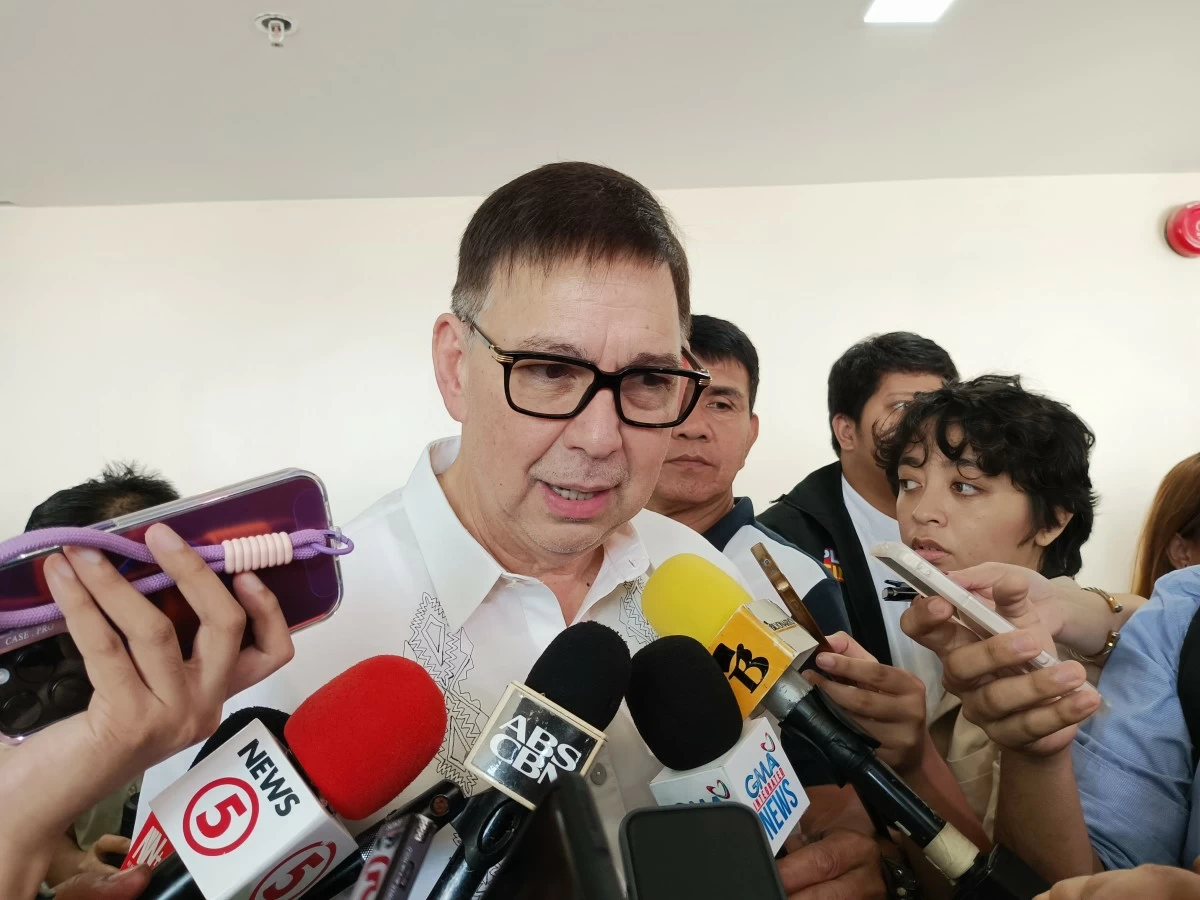
Finance Secretary Ralph G. Recto
“I don’t expect a reenacted budget. I expect cooperation from Congress. So, in effect, that’s what the President is saying. As much as possible, you can amend the budget, but let's make sure that we have the same priorities spelled out in the NEP,” Recto told reporters.
He noted that the President had already warned of the worst possible scenario for next year’s national budget, but the finance chief reiterated that he does not expect it to happen. He said refining the budget now falls under the responsibility of Congress.
For her part, Department of Planning, Economy, and Development (DEPDev) Undersecretary Rosemarie Edillon said: “What we still prefer is the carefully thought-out and well-planned NEP, and we hope that it will be the one followed as the budget.”
“If that doesn’t happen, we will, of course, have to make some adjustments. But our priorities remain clear—social development is still the top priority, which includes education, health, nutrition, food security, and infrastructure,” Edillon said.
As for the several projects promised by Marcos for 2026, Recto said, without mentioning additional borrowings, that those are expected to be funded as their estimated costs have already been discussed during budget deliberations and incorporated into the Cabinet-level Development Budget Coordination Committee’s (DBCC) revenue plan.
Instead of introducing new taxes, Recto said the national government is prioritizing more efficient tax administration.
“We’re not expecting any new taxes since there are no proposed laws that would generate substantial revenues. So, we’re really prioritizing efficient tax administration,” Recto said.
To recall, the Marcos administration surpassed its budget deficit ceiling for the first half of the year, as the actual shortfall grew considerably compared to the same period last year, primarily due to revenues falling short of expectations.
Last week, the Bureau of the Treasury (BTr) reported that the national government incurred a ₱765.5 billion fiscal deficit from January to June this year, a 25 percent increase compared to ₱613.9 billion in the same period last year, and it exceeded the ₱760.7 billion program for the period.
Gross borrowings stood at ₱1.59 trillion as of end-June, slightly higher than last year’s ₱1.57 trillion. These already accounted for 62.5 percent of the government’s total planned borrowings of ₱2.55 trillion for the year.
While the borrowings have already gone past the 50-percent mark in the first half, Recto assured this is not an early sign of exceeding the full-year borrowing target. The Philippines, he said, remains on track with its borrowing and fiscal targets.
National Treasurer Almanza also told the Manila Bulletin last week that, indeed, “we are on track with our borrowing program for the year. It was slightly higher because we raised most of our commercial issuance in the first quarter.”