






Manila Bulletin
 Business
Trade & Industry
Philippine exports, FDI at risk in Marcos-Trump tariff deal—EIU
Business
Trade & Industry
Philippine exports, FDI at risk in Marcos-Trump tariff deal—EIU
Business
Trade & Industry
Philippine exports, FDI at risk in Marcos-Trump tariff deal—EIU
Philippine exports, FDI at risk in Marcos-Trump tariff deal—EIU
Published Jul 28, 2025 12:00 am
|
Updated Jul 26, 2025 01:34 pm


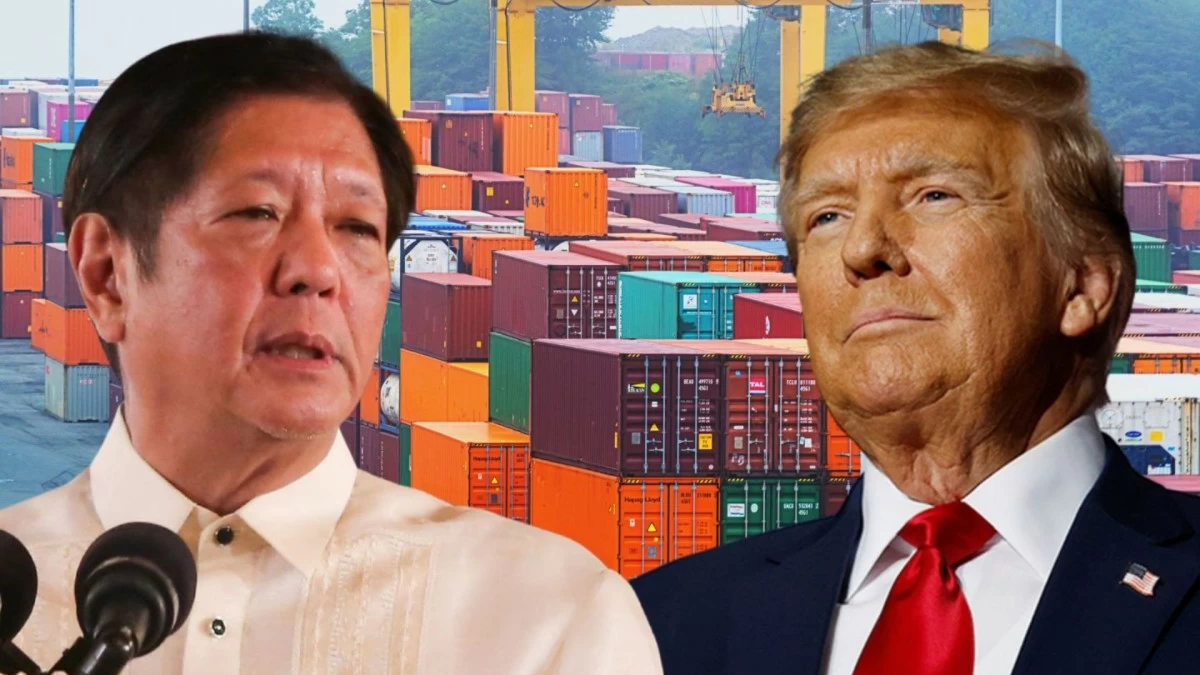
President Marcos and US President Donald Trump
With a soon-to-be-finalized trade deal that benefits the United States (US) more than the Philippines, the latter’s exports and foreign direct investments (FDIs) would take a hit and lose out to its Southeast Asian neighbors, according to the Economist Intelligence Unit (EIU).
“The US-Philippines trade deal is lop-sided, with only a one-percentage-point (ppt) reduction in the tariff rate for the Philippines, while many US exports enjoy zero tariffs. As the Philippines’ tariffs are in line with those imposed on its regional peers, any boost to the country’s exports will be minimal,” EIU Asia analyst Kalyani Honrao and Asia-Pacific regional director Alex Holmes said in a July 24 report titled “No big prize for the Philippines from the US trade deal.”
A hastily made visit to Washington made by President Ferdinand Marcos Jr. last week to negotiate the 20-percent tariffs threated by US President Donald Trump managed to lower the rate to be slapped on Philippine exports to just 19 percent.
“The new terms barely reduce the US import tariffs for the Philippines. By contrast, many US exports, including cars, will enjoy zero import tariffs. The revised 19-percent tariff rate will not help Philippine exports gain competitiveness in the US market, as it is on par with the US reciprocal tariff for Indonesia and barely lower than Vietnam’s 20-percent tariff rate,” EIU said in the report, a copy of which was obtained by Manila Bulletin.
EIU warned that with such a tariff rate taking effect by Aug. 1, “the lack of a boost to competitiveness will have a negative effect on FDI flows” to the Philippines.
It noted that the US remained a major export destination for Philippine-made goods—cornering 16 percent of total exports from January to May 2025—but policy uncertainty over reciprocal tariffs may have dampened FDIs, which dropped by about 34 percent year-on-year in the January-to-April period given the country’s export-oriented manufacturing base.
“Marcos’ failure to secure a competitive tariff reduction means that there is no obvious advantage to be gained for the Philippines’ exports and FDI. A prolonged period of export-frontloading, as exporters rushed to get shipments out of the country to avert steep reciprocal tariffs in the early part of 2025, poses near-term risks for the outlook of the export-oriented manufacturing sector,” EIU said.
“We believe that the Philippines’ exports will taper off in the later months of 2025 as a payback as US customers have accumulated high inventories and will cut back their orders, a prospect that will last into 2026,” it added.
Back in June, the Cabinet-level Development Budget Coordinating Committee (DBCC) conceded that goods exports would likely decline by two percent this year, “largely due to slower global demand and heightened trade policy uncertainties”—reversing the government’s previous six-percent growth expectations prior to the world trade tensions started by Trump at the start of the year when he returned to office for a second term.
According to EIU, “there is a crucial aspect of the US-Philippines trade relationship that was not addressed during the Trump-Marcos meeting.”
“During Trump’s first presidential term, he discussed the possibility of using tariffs to encourage the return of business process outsourcing (BPO) work to the US. Ambiguity over the agreement on BPO services poses risks to the Philippines’ export revenue, as the BPO segment is a key contributor to Philippine services trade,” it pointed out, citing that the $40 billion earned by BPOs last year—the majority of which came from US clients—was equivalent to over half of Philippine revenues from merchandise exports.
Even as it described the looming Philippine-US tariff deal as “disappointing,” EIU said that “we do not expect it to disrupt strategic ties between the US and the Philippines.”
It explained that the deployment of advanced F-35 jets in joint drills and the proposed ammunition hub in Subic highlight “rapidly strengthening” Philippine-US defense ties, which are expected to remain robust despite the absence of a favorable tariff rate for the Philippines.
However, EIU warned that “the inability of Marcos to leverage the Philippines’ strategic importance to the US with regard to the US-China South China Sea rivalry to secure a better outcome from the trade talks will invite domestic criticism,” making the President vulnerable to a backlash.
“Prior to Marcos’ US visit, hopes for preferential tariff treatment were pinned on the Philippines’ important strategic position in the context of the US-China rivalry, which failed to materialize. In addition, domestic criticism has to date centered on the notion that the gap between the US’ 19-percent tariffs and the Philippines’ zero tariffs on US goods is unfair,” it noted.
“Another point of contention is the proposed ammunition manufacturing hub, which has sparked concerns among local groups over environmental impacts and suspicion that the US is setting the stage for provocative operations against China, which will drag the Philippines into a conflict,” it added.
But for EIU, “one minor consolation for Marcos came from a negative comment Trump made about Marcos’ predecessor and rival, former president, Rodrigo Duterte.”