






Manila Bulletin
 Philippines
National
One year later: What has changed at DepEd under the new reforms?
Philippines
National
One year later: What has changed at DepEd under the new reforms?
Philippines
National
One year later: What has changed at DepEd under the new reforms?
One year later: What has changed at DepEd under the new reforms?
From expanded feeding programs to a revised curriculum and enhanced teacher support, DepEd marks significant milestones in its first year of reforms under the Marcos administration
Published Jul 26, 2025 11:46 am
|
Updated Jul 26, 2025 02:10 pm


At A Glance
- DepEd has expanded early childhood care, improved teacher welfare, modernized the curriculum, and addressed infrastructure gaps
- It scaled up feeding for all Kindergarten learners, built new Child Development Centers, filled most teaching posts, and reduced teacher workloads
- DepEd also launched a revised K–10 curriculum, embedded TVET in Senior High School, and rolled out recovery and digital connectivity programs—all in line with President Marcos' directives for a more inclusive and future-ready education system
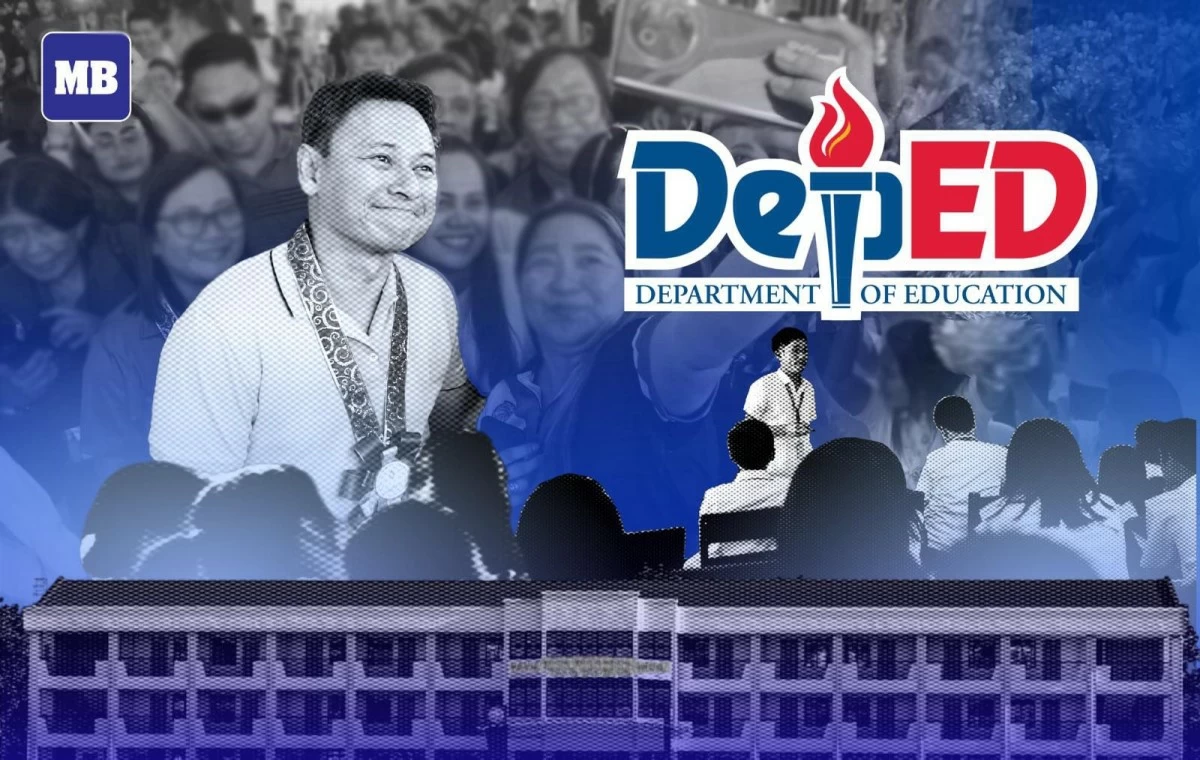
One year into DepEd's reform agenda, major strides were made in early childhood care, teacher welfare, curriculum, infrastructure, and transparency. (DepEd / MB Visual Content Group)
A year into its education reform agenda, the Department of Education (DepEd) has unveiled major accomplishments across early childhood care, teacher welfare, curriculum reform, infrastructure development, and digital innovation.
These changes, outlined in a DepEd release on Saturday, July 26, align with the directives of President Marcos.

Acting on the President Marco's (right) directive, the DepEd — under the leadership of Secretary Sonny Angara (left) — affirmed that the reforms embody its commitment to building a more inclusive, responsive, and resilient education system. (DepEd file photo)
Under the President’s instruction, DepEd --- led by Secretary Sonny Angara --- said these reforms reflect the agency’s push toward a more inclusive, responsive, and resilient education system.
Strengthening early childhood care and nutrition
DepEd said it has ramped up efforts to strengthen early childhood care and nutrition by expanding key programs aimed at supporting the country’s youngest learners.
Its School-Based Feeding Program (SBFP), for instance, has been expanded to benefit all 1.4 million Kindergarten learners starting this school year—a nearly fivefold increase.

DepEd's expanded School-Based Feeding Program (SBFP) has been significantly scaled up to include all 1.4 million Kindergarten learners this school year. (DepEd photo)
In addition, DepEd said at least 328 new Child Development Centers are being built in the poorest municipalities. Enrollment processes for early learners have also been simplified to encourage participation, the agency added.
Improving teacher welfare and solving staffing gaps
To improve teacher welfare and address persistent staffing gaps, DepEd said it has rolled out key reforms aimed at easing workloads, filling vacancies, and boosting support for educators.
“We have successfully filled over 97 percent of the 22,000 new teaching positions and 99 percent of the 5,000 administrative staff positions created last year, with thousands more on the way,” DepEd said.
Moreover, career growth is being supported through the creation of new teaching levels (Teacher IV to VII) and accelerated promotions for over 2,100 school leaders.
Teachers are also benefiting from improved compensation: the non-taxable teaching supplies allowance has doubled to P10,000, the Teachers' Salary Subsidy has increased, and for the first time, guidelines for medical allowances have been issued.
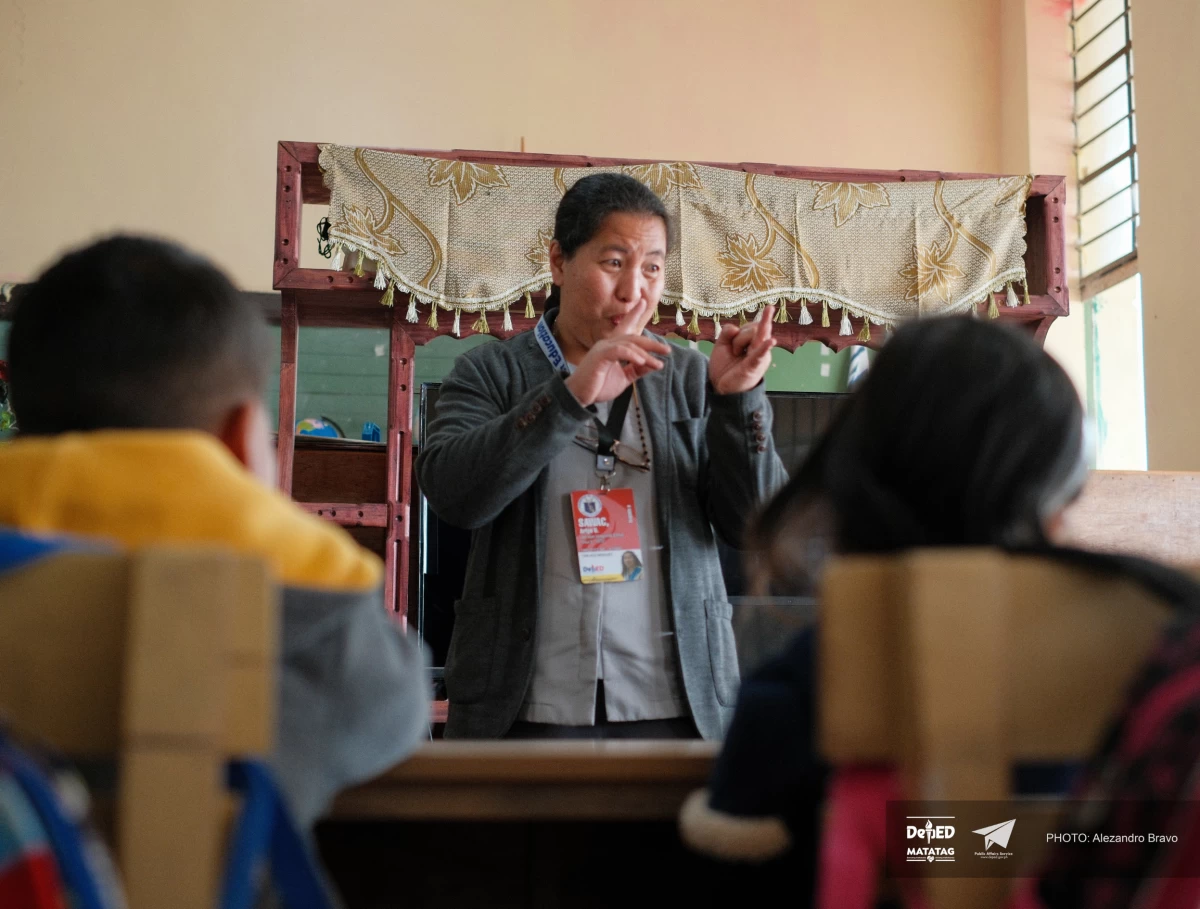
To uplift teacher welfare and close persistent staffing gaps, DepEd announced key reforms designed to ease workloads, accelerate hiring, and enhance support systems for educators. (DepEd photo)
Reforming the curriculum for job-readiness
To better prepare students for the demands of the modern workforce, DepEd is overhauling the basic education curriculum with a sharper focus on job-readiness and essential life skills.
The revised curriculum emphasizes foundational competencies, career guidance, and practical learning to ensure that graduates are not only academically equipped but also work-ready in today’s evolving labor market.
DepEd said it has begun rolling out a revised K–10 curriculum centered on foundational learning. The Senior High School (SHS) program has also been strengthened with enhanced Academic and Technical-Vocational tracks.
To combat learning loss, the Academic Recovery and Accessible Learning (ARAL) Program will pilot next school year.
In partnership with the Technical Education and Skills Development Authority (TESDA), DepEd has embedded Technical and Vocational Education and Training (TVET) qualifications directly into the SHS curriculum.
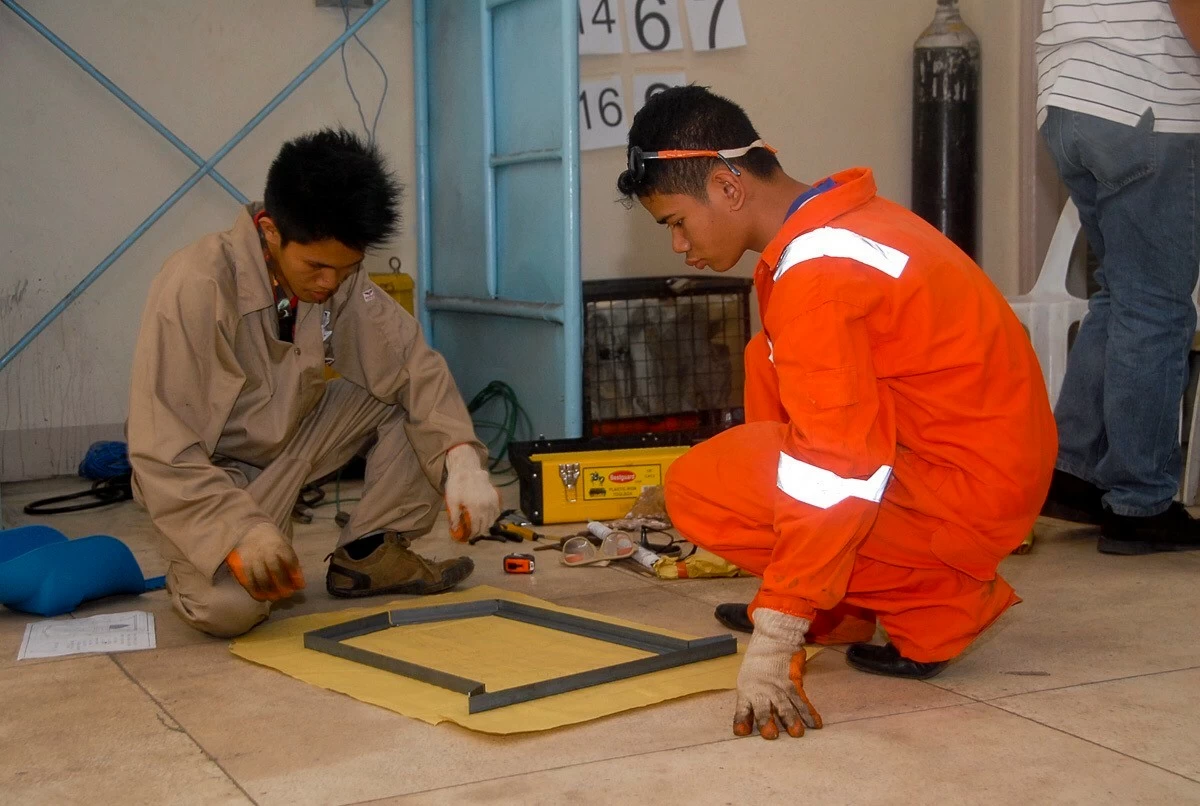
Through its partnership with TESDA, DepEd has seamlessly integrated TVET qualifications into the Senior High School curriculum—equipping learners with industry-relevant skills even before graduation. (DepEd photo)
Through this, more students now have access to free certification assessments, improving job readiness at no cost.
Reducing the administrative burden on teachers
To allow teachers to focus more on teaching and less on paperwork, DepEd is implementing reforms to significantly reduce their administrative workload.
By streamlining reporting requirements, automating processes, and hiring additional non-teaching personnel, DepEd aims to give educators more time and energy to deliver quality instruction in the classroom.
“We have significantly reduced the administrative burden on our teachers by cutting 57 percent of required forms and simplifying performance evaluations,” DepEd said.
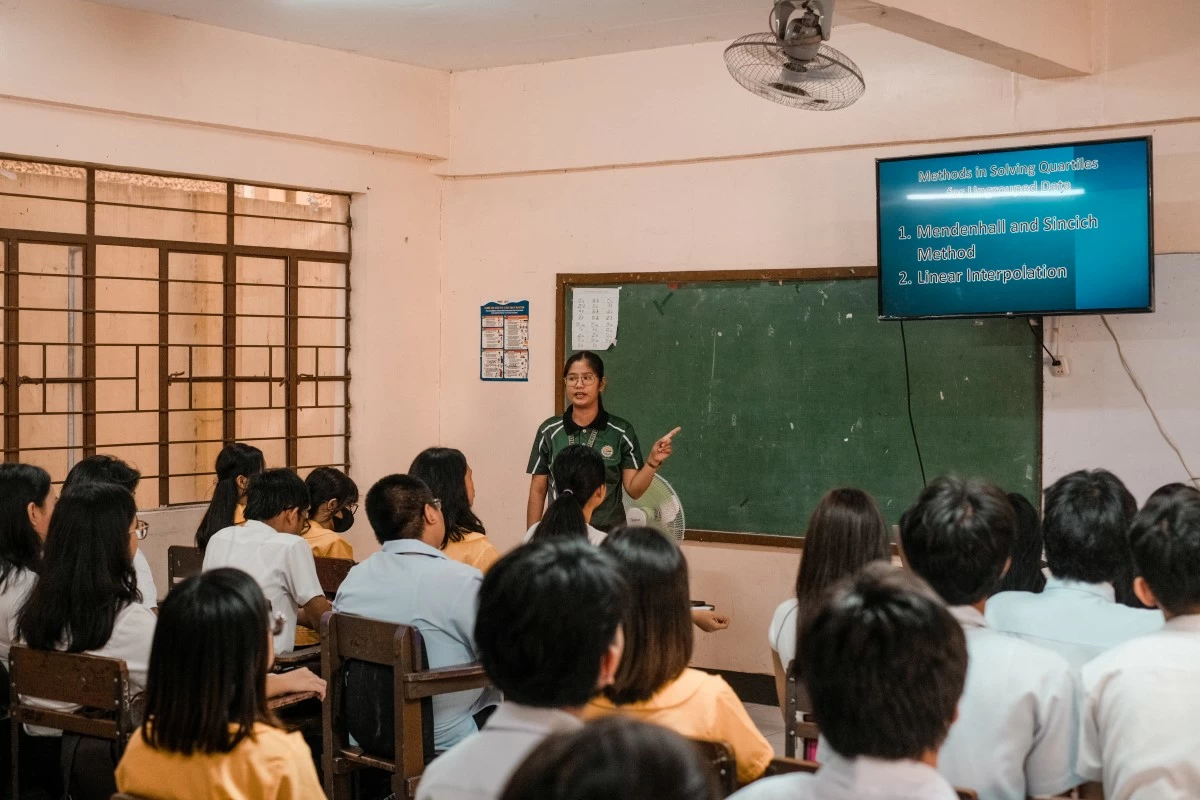
To refocus teachers' energy on instruction rather than paperwork, DepEd is rolling out reforms that will substantially lighten their administrative burden. (DepEd photo)
The upcoming Teacher Education Excellence Center (TEEC), to launch in late 2025, also aims to provide research-based, high-quality training for educators.
Boosting transparency and public trust
To strengthen accountability and restore public confidence in the education sector, DepEd is ramping up efforts to boost transparency across its programs and operations.
This includes enhancing budget disclosure, improving procurement processes, and engaging stakeholders in decision-making to ensure that resources are used efficiently and reforms reflect the needs of learners and educators.
To enhance accountability, DepEd will launch Project Bukas in August 2025. The initiative is an “open data” platform featuring enrollment statistics and performance indicators.
DepEd has also digitized procurement processes, hosted its first Suppliers' Summit, and revitalized the Adopt-a-School Program via an online matching system for donors and schools.
Accelerating textbook procurement
DepEd said it is fast-tracking textbook procurement and delivery to ensure that students across the country have timely access to quality learning materials.
By streamlining bidding processes, strengthening oversight, and adopting digital solutions, DepEd aims to close long-standing gaps in textbook availability and improve learning outcomes in public schools.
“We have slashed the procurement timeline for textbooks from as long as 451 days down to just 60 days,” DepEd said. “Where only 31 percent of required titles were procured over 12 years, our administration has already procured 75 percent of the needed titles since July 2022,” the agency added.
Addressing infrastructure and connectivity gaps
To create more inclusive and resilient learning environments, DepEd is also taking bold steps to address persistent infrastructure and connectivity gaps in public schools.
This includes building and repairing classrooms, expanding access to electricity and water, and improving internet connectivity—particularly in remote and underserved areas—to ensure that no learner is left behind.
DepEd plans to construct 105,000 classrooms through Public-Private Partnerships.
By the end of 2025, all public schools are expected to be online, thanks to the PSIP Connect Project, which will deliver internet connectivity, digital devices, and solar-powered solutions nationwide.

DepEd is set to build 105,000 classrooms nationwide through strategic Public-Private Partnerships—an ambitious move to bridge infrastructure gaps and support growing learner populations. (DepEd photo)
Using AI to solve education challenges
DepEd is exploring the use of artificial intelligence (AI) to help address key challenges in the education sector—from enhancing learning outcomes to easing teacher workloads.
By leveraging AI-powered tools for personalized learning, data analysis, and administrative efficiency, DepEd aims to modernize classrooms and improve the delivery of quality education nationwide.
DepEd said it has launched the Education Center for Artificial Intelligence Research (ECAIR) to explore tech-based solutions, such as:
- Project SIGLA: A mobile app for real-time nutrition tracking
- Project TALINO: A geospatial platform for identifying under-resourced schools
- Project LIGTAS: Hazard mapping for safer school environments
Building disaster-resilient learning systems
In response to the growing impact of natural disasters on education, DepEd is strengthening efforts to build disaster-resilient learning systems.
This includes constructing climate-adaptive classrooms, integrating disaster preparedness into the curriculum, and ensuring learning continuity through flexible delivery modes in times of crisis.

Recognizing the escalating impact of natural disasters on education, DepEd is intensifying initiatives to fortify disaster-resilient learning systems—ensuring continuity of learning even in times of crisis. (DepEd photo)
“We are building a more resilient education system capable of ensuring learning continuity amid disruptions,” DepEd said.
To this end, DepEd is rolling out modular disaster response packages that serve as mobile learning spaces. The first units will be deployed by August 2025 in high-risk areas.