







Between gold and a life, who would "Sunshine" choose?
Antoinette Jadaone's sports drama questions society's norms
By Rica Arevalo
Published Jul 26, 2025 12:31 am
|
Updated Jul 26, 2025 12:17 pm


At A Glance
- For a predominantly Catholic religion, the 92-minute film takes a stand and captures a young lady's perspective on giving or not giving a life to an unborn baby.
“Ayoko maging nanay (I do not want to be a mom),” insists Sunshine (Maris Racal) when confronted by the pastor father of her boyfriend. Strong words from a tough woman who dreams of competing in the SEA Games, World Artistic Gymnastics Competitions, and the Olympics.
Time is running out for this rhythmic gymnast that even her coach (Meryll Soriano) informs her that this might be her last chance at the Olympics. Her weight is being scrutinized. Her focus is being questioned.
“Iwan sa labas ang problema (Leave your problems out of this training),” blurts coach. Deep inside, emotionally and physically, Sunshine is a mess. Her boyfriend (Elijah Canlas) refuses to take responsibility. Her unplanned pregnancy is causing her stress. This would interrupt her life goal, which is to stay on the national team and compete abroad.
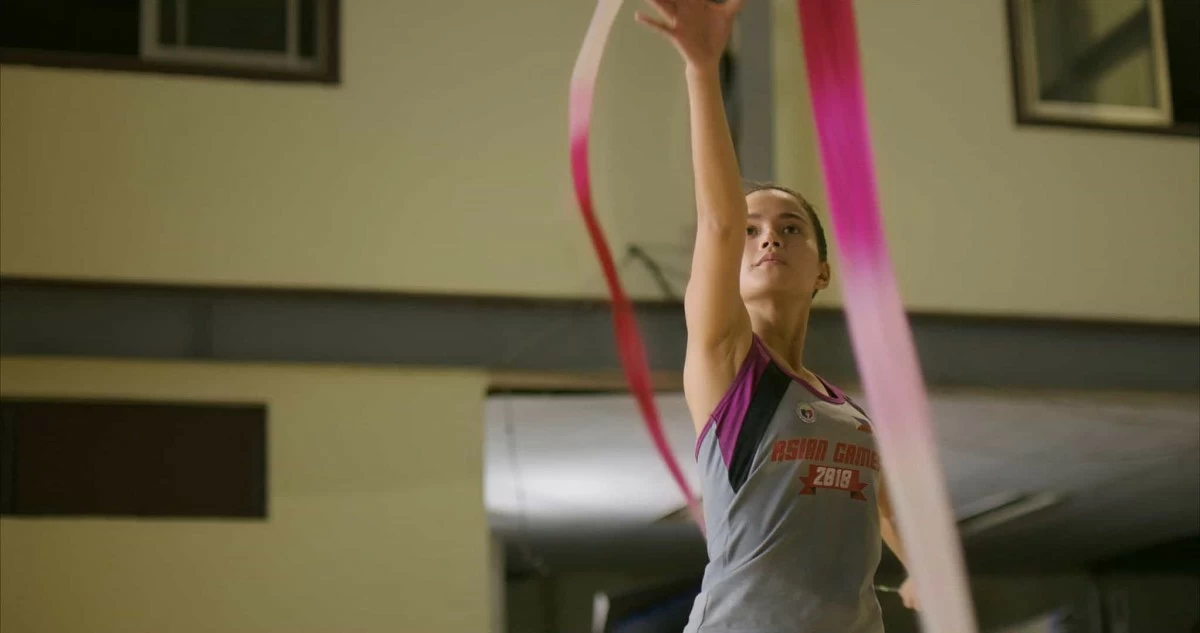
EYEING FOR GOLD Maris Racal plays a gymnast on the national team.
Sunshine goes to church, pleads with her God to get rid of her pregnancy, and in return, she will return any favor.
A young child (Annika Co) follows Sunshine everywhere she goes. “Bakit gagawa ka ba ng masama (Are you doing something illegal)?” accuses the child.
The mind and words of the child were from an adult. We remember the late film critic Nestor U. Torre panning films with children blurting out dialogues that are not childlike and genuine for a child’s age.
But “Sunshine” slams it in-your-face. It is deliberate. It is a statement. For a predominantly Catholic religion, the 92-minute film takes a stand and captures a young lady’s perspective on giving or not giving a life to an unborn baby.

MEET THE TEAM 'Sunshine' producer Dan Villegas, Elijah Canlas, director Antoinette Jadaone, and Maris Racal
The lens of cinematographer Pao Orendain shoots the streets of Manila, particularly Quiapo, Avenida, and its district, with filth and poverty.
Working hand in hand with production designer Eero Yves Francisco, the visual look of “Sunshine” is naturally impressive with its set locale, and even the Rizal Memorial Coliseum scene appeared credible, hosting an international competition.
There are interesting but troubling characters like the 13-year-old Mary Grace (Rhed Bustamante), a “tomboy” who was impregnated by a relative, and Ariana (JM Garcia), a first-time actor, who proudly escapes her family’s deprived situation.
Sunshine’s Ate (Jennica Garcia) is one sister that we would all want to have — supportive and gives unconditional love. “Kakampi mo 'ko (I am with you),” the single mother confesses.
Director Antoinette Jadaone never disappoints with her creative skills. Using imaginary characters embedded in a conservative country, she awakens one’s senses to be compassionate in Sunshine’s decision, even if it is against the society’s norms.
“Naiintindihan mo ba ako (Do you respect my decision)?” as Sunshine asks for a quiet validation. A very brave woman until the end, her quest for the gold medal continues.
The 2025 Generation 14plus Best Film Crystal Bear winner in Berlinale is showing in SM cinemas nationwide. "Sunshine" is produced by Project 8 Projects, Anima Studios, Cloudy Duck Pictures, and Happy Infinite Production with the support of the Film Development Council of the Philippines and CreatePHFilms.