







Resisting environmental jeopardy, remembering history
In San Juan, Batangas, conservation book-turned-educational module 'Barako 77' finds new home in school libraries
By Mat Richter


The youth shall inherit the planet. But it appears they are more informed about the latest influencer gossip and dance trends than climate warming that’s stripping away our only home. This lack of initiative to combat the impending doom worsens when there are what look like limits on storytelling, lest we forget the harm hurled at truth-tellers. But at a school in San Juan, Batangas, students aren’t threatened by the limits, but moved, choosing to chronicle today the history of the town that once resisted environmental jeopardy.
Learners at Sico 1.0 National High School drew, wrote, and studied about the supposed construction of a copper smelter plant in the area, which would’ve plagued its rich biodiversity. Through a workshop and a proposed learning material by Barako Publishing, World Wide Fund for Nature (WWF) Philippines, and the local government, the youth saw fragments of their identity by remembering history, one that allows them to enjoy what was fought for: flora and fauna, livelihood, and the right to dissent.
These efforts have helped create the "Barako 77" educational module, which tackles the town’s conservation initiatives. Once approved, it will be included in the local curriculum in public and private schools. Here’s a look at how San Juaneños resist and remember.
It starts within the walls
Publisher Ciara Serumgard told Manila Bulletin (MB) that in the town, youth must be prepared to face challenges, including waste management, plastic pollution, limited access to clean water sources, and mitigating climate change impacts.
“Barako Publishing wants to inspire a new generation of eco-champions with the values, education, and skills to chart a path toward conservation and progress. We hope that one day, each San Juaneño student has his or her very own copy of 'Barako 77: The Story of Environmental Activism in San Juan, Batangas,'” she said.
Currently, the module is being designed for teachers and students in the municipality, which would formalize learning on conservation and local history.
“The inclusion of the San Juan education sector as a co-creator of the "Barako 77" module marks a significant step toward developing a tailor-made curriculum that not only addresses the unique context and needs of San Juaneño students but also honors local memory of the heritage town,” the publisher explained to MB. “It aims to foster local pride and environmental stewardship by teaching lessons from the almost forgotten chapter in San Juan’s environmental history.”
Some private and public schools have started ordering copies for use in libraries, executive director Farrah Rodriguez told MB.
“Our barako trio: the book, the ordinance, and the alliance, is continuous work for us. There’s no stopping from here on,” she said, recalling last year when they filed an ordinance proclaiming every October 22 as “Araw ng Pagkakaisa para sa Kalikasan ng Bayan ng San Juan” (Day of Unity for Nature in San Juan Town).
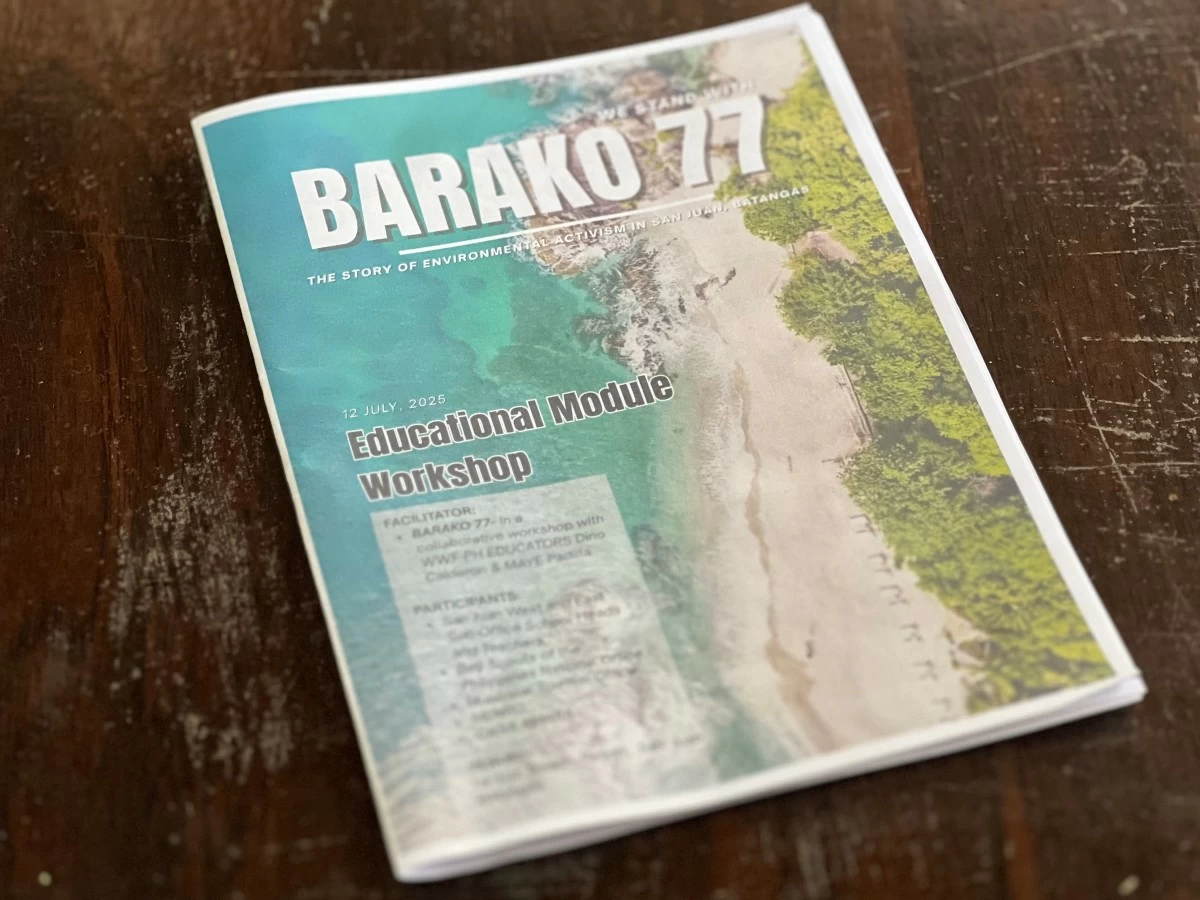
At the workshop, participants engaged in publishing a pamphlet on the same day to document the activity, which aimed to co-create learning materials for the San Juan community.
Faith in the youth
Educating young people about relevant matters like climate change and environmental conservation may look like waiting for saplings to grow into trees so that fruits are finally borne, but this is not the case. We don’t have to wait. Dig deeper, and you’ll recognize that the former can produce oxygen all this time—that the youth are just as capable all along.
WWF then told MB that, altogether, it's possible to change the “ending” by knowing and caring for nature and mobilizing young individuals to effect change.
“We cannot always build the future for our youth, but we can build the future with our youth. We see the youth as our inspiration. We hope to be better stewards and better role models so that they can live a good life too,” the organization expressed to MB. “The youth of today hold so much potential in steering change, now and in the future.”
Education plays an important role, WWF said, in helping bridge the gap between where we are now to where we want to be.
“Because young people are partners, a possible next step would be to also hold an inception meeting with youth representatives. Their insights and inputs can add to the data that we were able to gather from our education leaders,” the group told MB. “Recognizing that we are part of nature, and not apart from nature, may we be inspired to care for our home, each other, and future generations.”
From bookstores to libraries
A decade in the making—before it was an educational module, "Barako 77" was first a book that involved historians, researchers, writers, and illustrators who shed light on San Juan's history, social realities, and opposition to the copper smelter.
It was written for three audiences: San Juaneños who are unfamiliar with their heritage and history, economic and environmental researchers, and general readers who wish to know the country’s past.
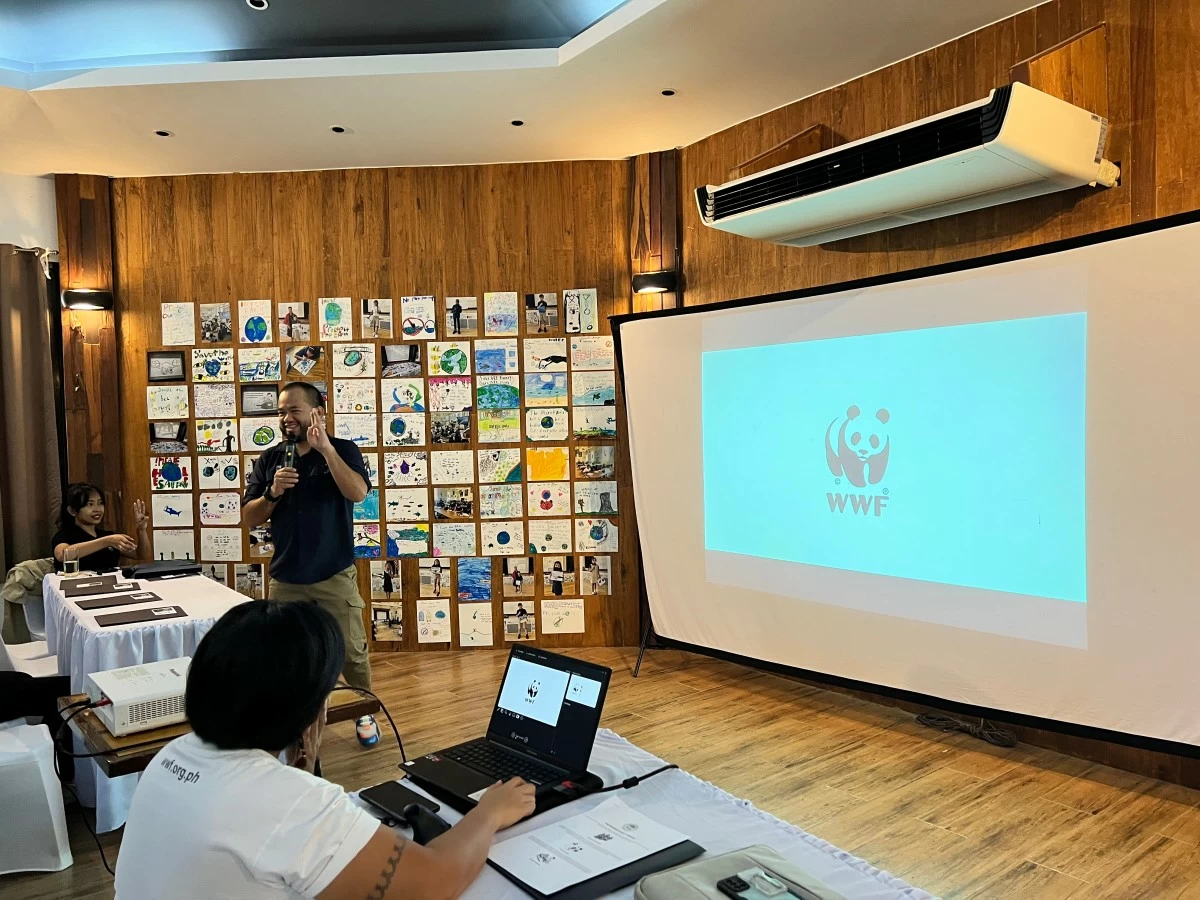
“We would always happily marvel at the richness of the stories shared by our readers and participants. Aside from learning more about what can be seen in their town, our intention as well is to remind them why they love their town,” WWF PH told MB.
Serumgard envisioned it for a wider readership when she founded women-led Barako Publishing in 2023, then published the book in April 2024 on Earth Day.
To resist environmental jeopardy, we must remember history and learn from our ancestors, the indigenous and the eco-warriors, whose success depended on the purpose and passion of their communities. Polluters only look powerful until we organize partnerships. Soon enough, the book will find its way home from bookstores to school shelves, from museums to libraries, its cover collecting fingerprints of students.