






Manila Bulletin
 Philippines
Visayas
Negros Occidental under state of calamity due to 'Crising,' soft scale insect infestation
Philippines
Visayas
Negros Occidental under state of calamity due to 'Crising,' soft scale insect infestation
Philippines
Visayas
Negros Occidental under state of calamity due to 'Crising,' soft scale insect infestation
Negros Occidental under state of calamity due to 'Crising,' soft scale insect infestation
Published Jul 25, 2025 02:00 pm


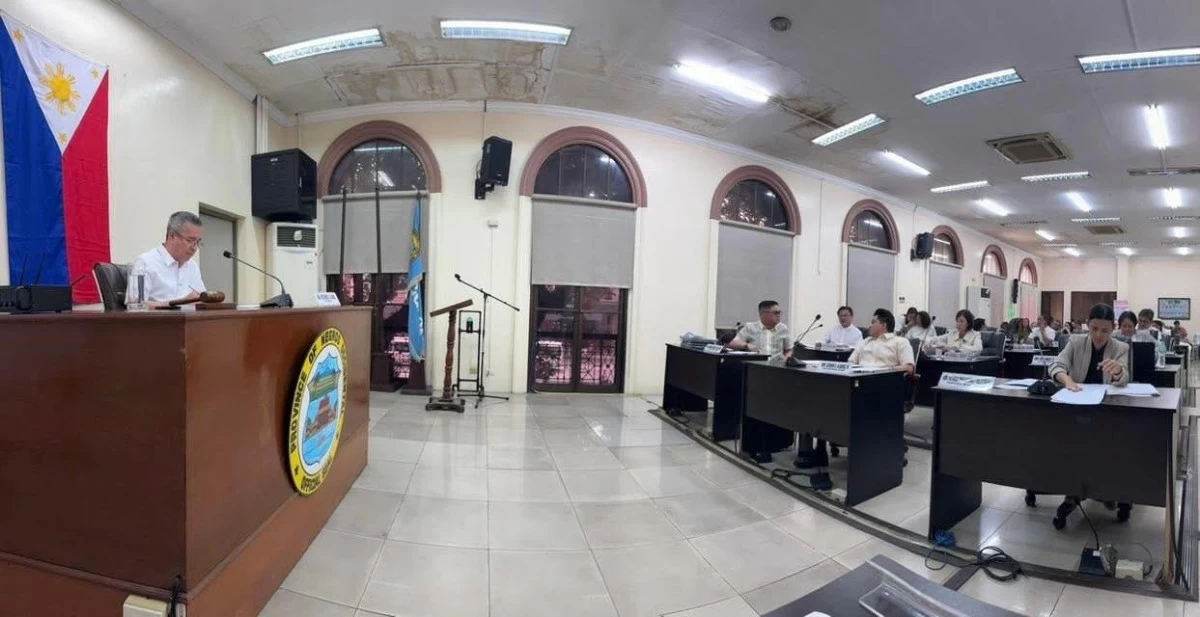
THE Sangguniang Panlalawigan of Negros Occidental holds a session at the Provincial Capitol in Bacolod City presided over by Vice Gov. Jose Benito Alonso. (Sangguniang Panlalawigan of Negros Occidental FB)
BACOLOD CITY – Negros Occidental is under a state of calamity due to tropical cyclone “Crising” and outbreak of the red-striped soft scale insect (RSSI) affecting sugarcane plantations in the province.
The Sangguniang Panlalawigan approved Resolution No. 771, Series of 2025, on Thursday, July 24, upon the recommendation of the Provincial Disaster Risk Reduction Management Council (PDRRMC).
The resolution stated that the province experienced heavy rainfall due to the southwest monsoon or ‘‘habagat’’ enhanced by Crising, causing severe damage to property, displacement of families, and disruption of livelihood.
Twenty-one out of 31 local government units (LGUs) were severely affected, comprising 184 barangays and 35,312 families, with extensive damage to agriculture, infrastructure, and local economies, the resolution said.
Concurrent with the storm's aftermath, there is an alarming outbreak of the RSSI, Pulvinaria tenuivalvata, a highly destructive and invasive pest that attacks sugarcane crops, which are vital to the province's agricultural economy, it said.
The resolution noted that the RSSI outbreak rapidly infested 2,876.28 hectares of sugarcane plantations adversely affecting 1,574 farmers across 113 barangays in the province.
The simultaneous occurrence of both natural and biological calamities has caused massive agricultural losses, endangering food security, employment, and overall economic stability in the province, it added.
The declaration of a state of calamity was imperative to enable the immediate release of emergency funds, stabilize process of basic goods, and facilitate swift rescue, relief, recovery, and rehabilitation interventions.
In a media interview Friday, Gov. Eugenio Jose Lacson said that the declaration seeks to address the effects of the recent typhoon and other typhoons coming in.
“We’re very fortunate that the typhoon did not directly hit us in the Visayas, but bringing us more rain,” he added.
Lacson said that affected LGUs can come up with their respective declarations but the province’s is sufficient to enable them to tap their LDRRM funds.
“We just have to continuously be prepared, as the province is really typhoon prone,” he said.
He added that local chief executives are responsible enough to prepare their funds if more tropical cyclones will hit the province.
Crising caused massive flooding and damage to agriculture totaling P45 million in the province.
Lacson said the declaration will support the request of the Sugar Regulatory Administration (SRA) for a state of calamity regarding RSSI infestation to enable them to fast-track the purchase of necessary insecticides.
The national government has approved the SRA’s P10-million budget request to contain the spread of RSSI that hit several areas in the Visayas.
“It answers the need of the SRA and I think they are happy as they would be able to address the situation of the sugar industry faster,” Lacson said.
The effects of RSSI were not massive but Lacson noted that has reached P350 million.
“If they don’t address that, it can just increase. If it increases, more areas are affected,” he said.