ADVERTISEMENT

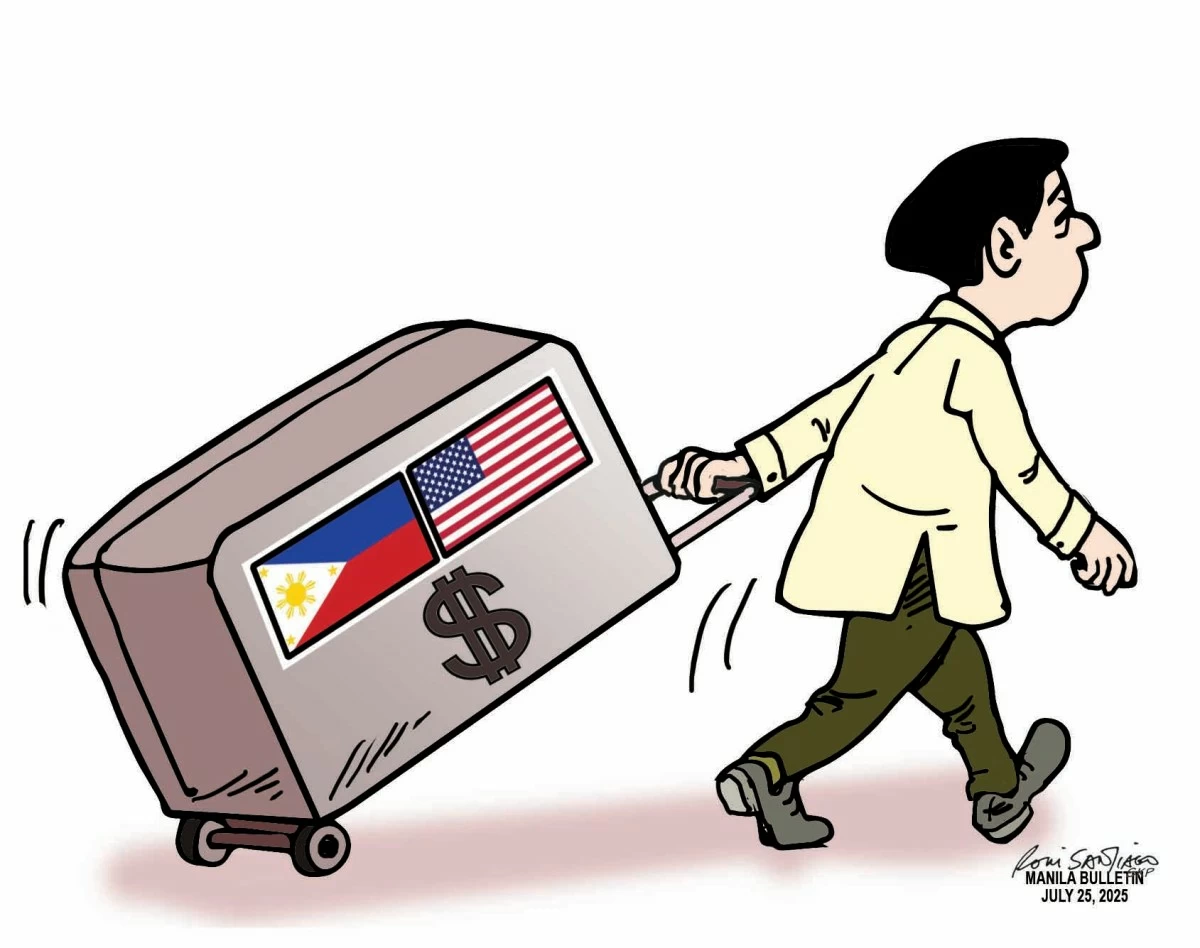
Gains of Marcos' US trip beyond the numbers

Published Jul 25, 2025 12:05 am  |  Updated Jul 24, 2025 05:49 pm
At first glance, President Ferdinand Marcos Jr.’s recent trip to the United States might appear as a diplomatic endeavor that fell short—especially in the realm of tariffs and trade concessions. Critics are quick to decry that the Philippines did not extract tangible, quantifiable economic wins at the negotiation table. But to measure the success of an official visit purely by tariff cuts or economic figures is to profoundly misunderstand the complex web of diplomacy, alliances, and national interest.
Beyond dollars and cents, we should view the much bigger picture of President Marcos’ trip—positioning the Philippines in a shifting geopolitical landscape, asserting the country’s sovereignty, deepening old alliances, and securing a future not just built on trade, but on trust, shared values, and mutual security.
We should look beyond the realm of economic gains. Crucial here is the strategic recalibration of our role in the Indo-Pacific. During his visit, Marcos received from US President Donald Trump—not just symbolic nods—but significant, though often unquantifiable, assurances that will resonate long beyond the news headlines.
Among these were a renewed commitment to the ironclad mutual defense, a critical message of deterrence amid heightened aggressions in the West Philippine Sea and a reminder that the Philippines is not alone in asserting its rightful claims; investment commitments in critical sectors such as infrastructure, semiconductors, clean energy, digital technology, and healthcare; expanded educational and technological exchanges, including potential scholarships, research partnerships, and workforce development programs that will empower a new generation of Filipinos; heightened interest in manufacturing expansion, with American companies expressing intent to explore Philippine talent and logistics hubs as viable alternatives to over-concentrated Asian supply chains.
While these may not be easily plotted on a spreadsheet, they are real. They direct the flow of future investments, and enhance our negotiating power not just with the United States, but globally. While exact figures are still evolving, the mood among US investors was unmistakably warm and enthusiastic—a promising signal for long-term economic growth.
Among the quantifiable gains of Marcos’ trip are the commitment of $15 million to support private sector development under the Luzon Economic Corridor Initiative, $48 million more in foreign-assisted projects for national development, and the much-criticized one-percent reduction on tariff.
With these developments, President Marcos was not negotiating as a mere economic actor. He was representing a sovereign nation seeking dignity, stability, and relevance in an increasingly polarized world. What he gained was a reaffirmation that the Philippines matters—not just as a trading partner, but as a strategic ally, a friend, and a people with shared democratic aspirations.
Critics who lament the lack of quantifiable tariff relief are right in demanding vigilance. Scrutiny is essential in a democracy. But we must also learn to measure diplomatic success by broader standards—by the strength of alliances, the clarity of vision, and the courage to engage the world not from a place of desperation, but of determination.
In a world where our sovereignty is constantly tested and our people seeking hope and opportunity, Marcos’ US trip was not a loss. It may not have attained public expectations, but his trip was a calculated investment in our national future. And like all good investments, its dividends will come—not immediately, but inevitably.
ADVERTISEMENT
.most-popular .layout-ratio{ padding-bottom: 79.13%; } @media (min-width: 768px) and (max-width: 1024px) { .widget-title { font-size: 15px !important; } }

{{ articles_filter_1561_widget.title }}

.most-popular .layout-ratio{ padding-bottom: 79.13%; } @media (min-width: 768px) and (max-width: 1024px) { .widget-title { font-size: 15px !important; } }

{{ articles_filter_1562_widget.title }}

.most-popular .layout-ratio{ padding-bottom: 79.13%; } @media (min-width: 768px) and (max-width: 1024px) { .widget-title { font-size: 15px !important; } }

{{ articles_filter_1563_widget.title }}

{{ articles_filter_1564_widget.title }}

.mb-article-details { position: relative; } .mb-article-details .article-body-preview, .mb-article-details .article-body-summary{ font-size: 17px; line-height: 30px; font-family: "Libre Caslon Text", serif; color: #000; } .mb-article-details .article-body-preview iframe , .mb-article-details .article-body-summary iframe{ width: 100%; margin: auto; } .read-more-background { background: linear-gradient(180deg, color(display-p3 1.000 1.000 1.000 / 0) 13.75%, color(display-p3 1.000 1.000 1.000 / 0.8) 30.79%, color(display-p3 1.000 1.000 1.000) 72.5%); position: absolute; height: 200px; width: 100%; bottom: 0; display: flex; justify-content: center; align-items: center; padding: 0; } .read-more-background a{ color: #000; } .read-more-btn { padding: 17px 45px; font-family: Inter; font-weight: 700; font-size: 18px; line-height: 16px; text-align: center; vertical-align: middle; border: 1px solid black; background-color: white; } .hidden { display: none; }
function initializeAllSwipers() { // Get all hidden inputs with cms_article_id document.querySelectorAll('[id^="cms_article_id_"]').forEach(function (input) { const cmsArticleId = input.value; const articleSelector = '#article-' + cmsArticleId + ' .body_images'; const swiperElement = document.querySelector(articleSelector); if (swiperElement && !swiperElement.classList.contains('swiper-initialized')) { new Swiper(articleSelector, { loop: true, pagination: false, navigation: { nextEl: '#article-' + cmsArticleId + ' .swiper-button-next', prevEl: '#article-' + cmsArticleId + ' .swiper-button-prev', }, }); } }); } setTimeout(initializeAllSwipers, 3000); const intersectionObserver = new IntersectionObserver( (entries) => { entries.forEach((entry) => { if (entry.isIntersecting) { const newUrl = entry.target.getAttribute("data-url"); if (newUrl) { history.pushState(null, null, newUrl); let article = entry.target; // Extract metadata const author = article.querySelector('.author-section').textContent.replace('By', '').trim(); const section = article.querySelector('.section-info ').textContent.replace(' ', ' '); const title = article.querySelector('.article-title h1').textContent; // Parse URL for Chartbeat path format const parsedUrl = new URL(newUrl, window.location.origin); const cleanUrl = parsedUrl.host + parsedUrl.pathname; // Update Chartbeat configuration if (typeof window._sf_async_config !== 'undefined') { window._sf_async_config.path = cleanUrl; window._sf_async_config.sections = section; window._sf_async_config.authors = author; } // Track virtual page view with Chartbeat if (typeof pSUPERFLY !== 'undefined' && typeof pSUPERFLY.virtualPage === 'function') { try { pSUPERFLY.virtualPage({ path: cleanUrl, title: title, sections: section, authors: author }); } catch (error) { console.error('ping error', error); } } // Optional: Update document title if (title && title !== document.title) { document.title = title; } } } }); }, { threshold: 0.1 } ); function showArticleBody(button) { const article = button.closest("article"); const summary = article.querySelector(".article-body-summary"); const body = article.querySelector(".article-body-preview"); const readMoreSection = article.querySelector(".read-more-background"); // Hide summary and read-more section summary.style.display = "none"; readMoreSection.style.display = "none"; // Show the full article body body.classList.remove("hidden"); } document.addEventListener("DOMContentLoaded", () => { let loadCount = 0; // Track how many times articles are loaded const offset = [1, 2, 3, 4, 5, 6, 7, 8, 9, 10]; // Offset values const currentUrl = window.location.pathname.substring(1); let isLoading = false; // Prevent multiple calls if (!currentUrl) { console.log("Current URL is invalid."); return; } const sentinel = document.getElementById("load-more-sentinel"); if (!sentinel) { console.log("Sentinel element not found."); return; } function isSentinelVisible() { const rect = sentinel.getBoundingClientRect(); return ( rect.top < window.innerHeight && rect.bottom >= 0 ); } function onScroll() { if (isLoading) return; if (isSentinelVisible()) { if (loadCount >= offset.length) { console.log("Maximum load attempts reached."); window.removeEventListener("scroll", onScroll); return; } isLoading = true; const currentOffset = offset[loadCount]; window.loadMoreItems().then(() => { let article = document.querySelector('#widget_1690 > div:nth-last-of-type(2) article'); intersectionObserver.observe(article) loadCount++; }).catch(error => { console.error("Error loading more items:", error); }).finally(() => { isLoading = false; }); } } window.addEventListener("scroll", onScroll); });

Sign up by email to receive news.