






Manila Bulletin
 Business
Trade & Industry
FFF urges full disclosure on US tariff deal as details remain murky
Business
Trade & Industry
FFF urges full disclosure on US tariff deal as details remain murky
Business
Trade & Industry
FFF urges full disclosure on US tariff deal as details remain murky
FFF urges full disclosure on US tariff deal as details remain murky
Published Jul 25, 2025 03:22 pm


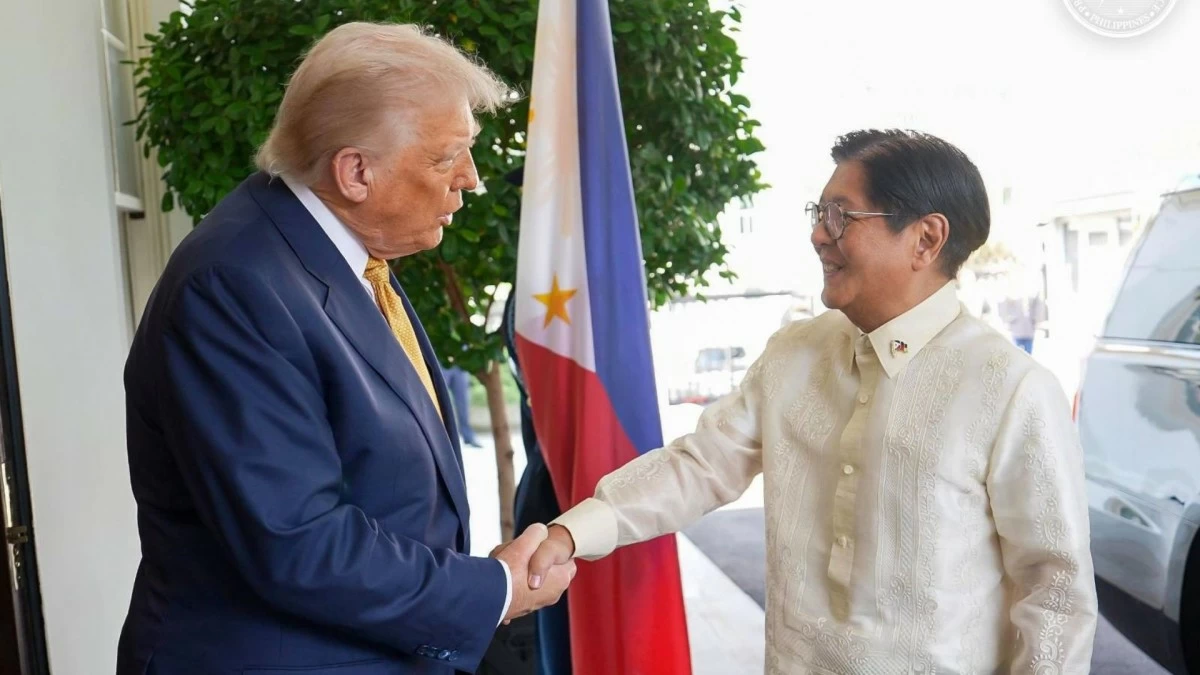
US President Donald Trump and President Marcos
The Federation of Free Farmers (FFF) has called on the government to fully disclose the details of its recent tariff negotiations with the United States (US) due to conflicting statements and widespread speculation.
In a statement on Friday, July 25, Raul Montemayor, FFF national manager, said there have been divergent accounts of the agreement reached between Philippine President Ferdinand R. Marcos, Jr. and US President Donald Trump during their meeting on July 22, 2025.
Trump initially announced on social media that the Philippines would go “OPEN MARKET with the United States, and ZERO Tariffs. The Philippines will pay a 19 percent Tariff.”
However, President Marcos later clarified in a press briefing that the zero-tariff rate would apply only to select US imports like automobiles, pharmaceuticals, soya, and wheat.
Malacañang’s statement was affirmed by Secretary Frederick Go, Special Assistant to the President for Investment and Economic Affairs, who noted that sensitive agricultural commodities such as corn, pork, poultry, fish, sugar, and rice would not be subject to reduced protection.
Montemayor, however, noted these claims by Philippine officials have not been corroborated by the US government, which could potentially lead to demands for a broader application of the zero-tariff policy on all products, similar to what was reportedly imposed on Indonesia and Vietnam.
He added that the Philippines might have granted additional commitments, including loosening import quarantine regulations, increasing minimum access volumes, and maintaining low tariffs on rice, pork, corn, and other commodities, which were previously reduced through Executive Order No. 62 in 2024 and other issuances.
The FFF official called for a comprehensive assessment of the concessions once they are clarified, particularly warning against the impact of duty-free imports of US agricultural commodities that, while not produced in the Philippines, can directly substitute local products like soya, feed wheat, and barley for corn and copra meal, and high fructose corn syrup for domestic cane sugar.
Montemayor noted that the reduction in tariffs on Philippine exports to the US from 20 percent to 19 percent “was not only disproportionate to our zero-tariff concession, but also harmful to our export trade prospects.”
He said that even if the 19 percent tariff is comparable to or lower than those imposed on Indonesia, Thailand, and Vietnam, the Philippines might still lose out in terms of quality, consistency of supply, and overall competitiveness.
The FFF reported that some US importers of Philippine coconut products are already demanding local exporters reduce their selling price to offset the higher tariffs, cautioning that the country risks losing market share if it doesn't meet these demands or if competitors offer better deals.
The group also expressed concern that tariff collections earmarked for the corn, dairy, livestock, and poultry sectors could severely drop if US imports are assessed zero tariffs.
Montemayor noted that the $60 million (₱3 billion) funding assistance for economic and maritime security offered by the US as a “sweetener” to the trade deal is “minimal, compared to our foregone custom revenues and losses that Philippine exporters may incur due to the 19 percent US tariff.”