






Manila Bulletin
 Business
Trade & Industry
DOTr claims 'world first' as MRT-3 rolls out all-inclusive cashless payment
Business
Trade & Industry
DOTr claims 'world first' as MRT-3 rolls out all-inclusive cashless payment
Business
Trade & Industry
DOTr claims 'world first' as MRT-3 rolls out all-inclusive cashless payment
DOTr claims 'world first' as MRT-3 rolls out all-inclusive cashless payment
Published Jul 25, 2025 12:48 pm
|
Updated Jul 25, 2025 01:19 pm


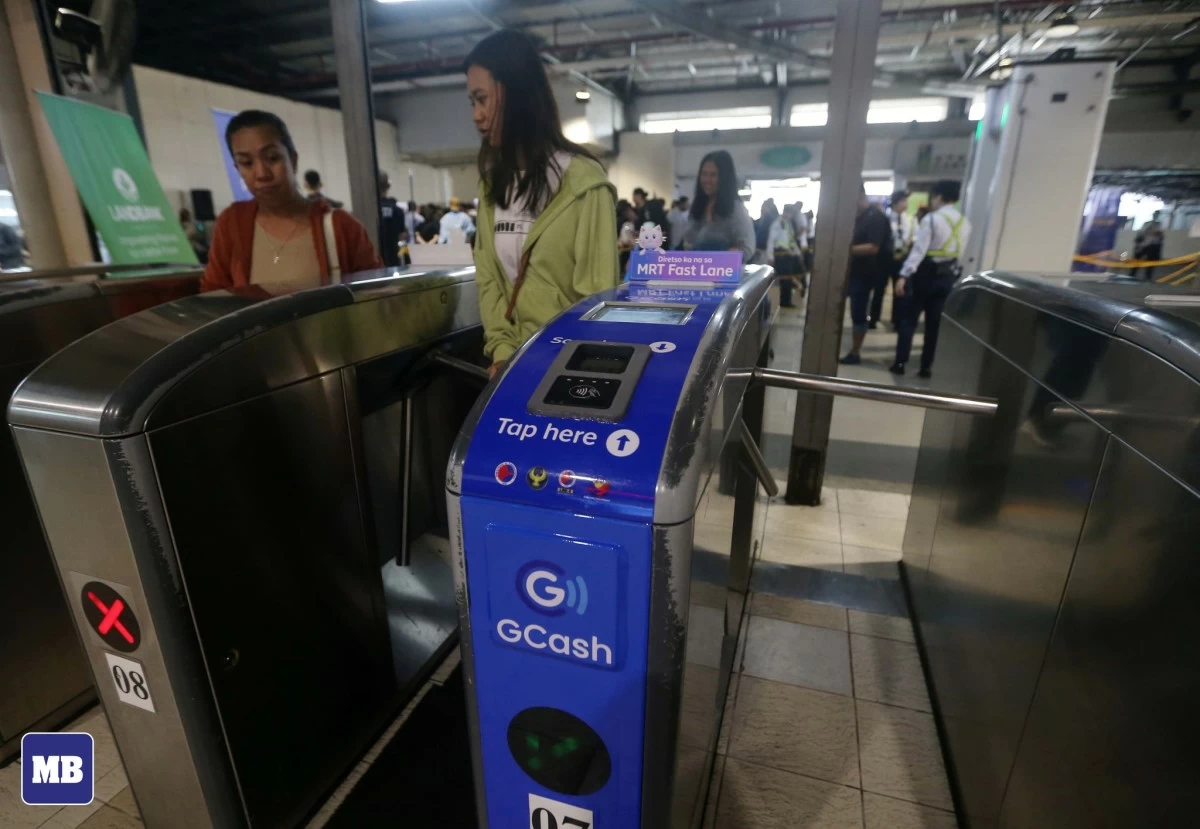
Commuters Gain New Payment Options as MRT Adopts GCash, Mastercard, and Visa. Photo by Mark Balmores | MB
The Department of Transportation (DOTr) has launched a cashless payment system for Metro Rail Transit Line 3 (MRT-3), allowing commuters to pay fares using digital wallets, debit cards, credit cards, and other methods.
Transportation Secretary Vince Dizon led the unveiling of the MRT-3’s automated fare collection system on Friday, July 25, describing the technology as the first of its kind in the world.
Unlike other cashless systems that accept only one payment method, Dizon said the new cashless turnstiles in MRT-3 can accept almost all payment modes.
The upgraded turnstiles now accept e-wallets via QR code, debit cards, credit cards, prepaid cards, tap to pay for Android phones, alongside the single journey ticket and the stored-value card or beep card.
The DOTr has partnered with the Department of Information and Communications Technology (DOTr), popular e-wallet GCash, Rizal Commercial Banking Corp. (RCBC), and state-run Land Bank of the Philippines to launch the program.
In a separate statement, Mastercard said holders of its credit, debit, and prepaid cards can also use the cashless turnstiles.
The company also said that the new method also extends to Mastercard cardholders using compatible e-wallets on NFC-enabled Android smartphones.
Commuters paying cashless will be charged ₱28—the cost of an end-to-end journey ticket—upon tapping in at the inbound turnstile. The system will then automatically return the appropriate change, if applicable, after they tap out.
So far, the system is still undergoing reconfiguration to incorporate discounts for senior citizens, persons with disability, and students. The discounts are currently only available for single-journey tickets.
Dizon said he has been assured by the government’s partners in this initiative, such as GCash and RCBC, that the cashless method is safe and secure for commuters.
Oscar Reyes Jr., president and chief executive officer (CEO) of GCash operator G-Xchange, said the company has tapped cybersecurity firms to ensure that paying via the e-wallet on cashless turnstiles is safe to use.
GCash is currently the only digital wallet that can be used for the MRT-3’s automated fare collection system.
Dizon said commuters should expect other digital wallets and more payment modes in the coming months once the DOTr finalizes the pilot test of the system.
During the pilot run, all 13 stations of the MRT-3 will have one cashless turnstile.
Once fully operational, the DOTr looks to upgrade every turnstile to a cashless version, significantly reducing queues at stations.
Dizon said the agency will launch the automated fare correction system in Light Rail Transit Line 1 (LRT-1) and LRT-2 within the next few weeks.
Apart from Metro Manila’s rail lines, he said the government’s goal is to introduce the cashless system to the EDSA Carousel and even for the country’s traditional public transit modes like jeepneys and buses.
Open-loop payment systems, which allow passengers to use their existing digital wallet and credit or debit card to pay for fares instead of a transit-specific card, are popular among public transport systems in major cities around the world as part of efforts to improve the commuting experience.
Meanwhile, the DICT stated that it is working to enhance its free WiFi service in the MRT-3, following recent upgrades to its network infrastructure across the rail line’s 13 stations.
Within the year, all stations of the LRT-1 and LRT-2 will also get the free internet service.
DICT Secretary Henry Aguda said that all trains of the MRT-3 will also get free WiFi, ensuring uninterrupted access for all commuters.
Similar to Dizon’s plan, he said the government will also introduce the program to other public transport hubs and facilities.