

ADVERTISEMENT

No concessions on agri products in PH-US tariff talks, Palace assures

Published Jul 24, 2025 01:38 pm

At A Glance

  • Go said the agriculture sector remains fully protected under the current framework, amid concerns that cheaper American goods would flood the local market.
Malacañang has assured the public that the government did not offer Philippine agricultural products as concessions in the “still ongoing” negotiations with the United States to lower tariffs on local exports.
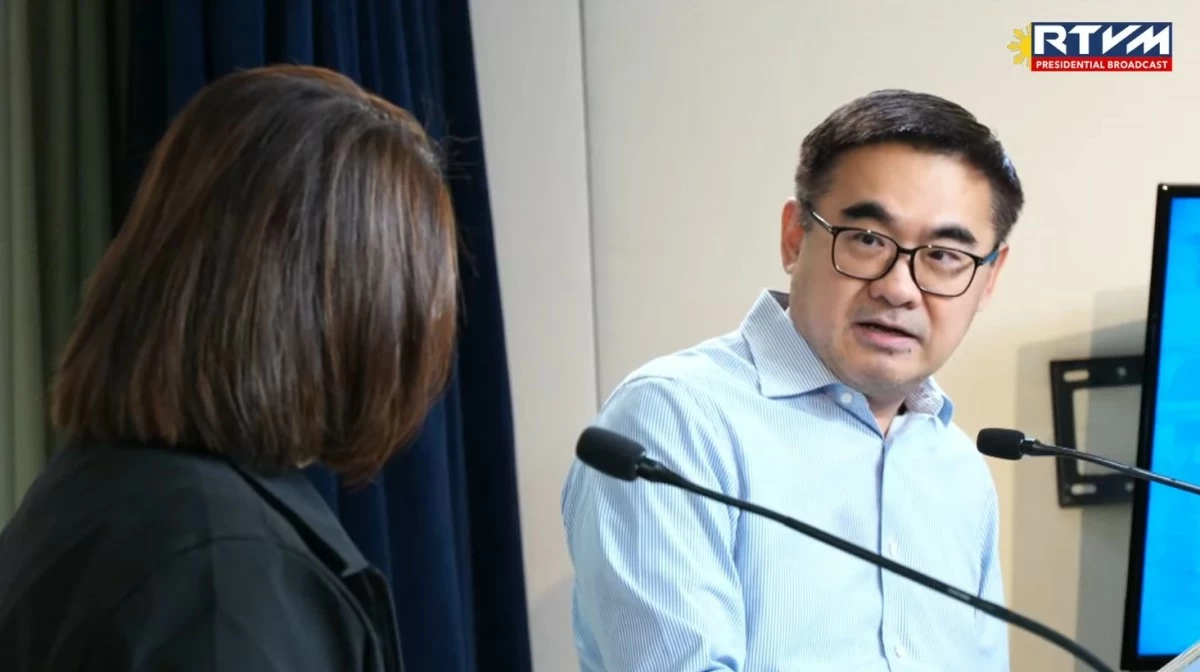
Special Assistant to the President for Investment and Economic Affairs Secretary Frederick Go (RTVM Screenshot)
Special Assistant to the President for Investment and Economic Affairs Secretary Frederick Go said this after the US set the tariff on Philippine products to 19 percent following the meeting between President Marcos and President Donald Trump in Washington, DC, this week.
In a press briefing in Malacañan, Go said the agriculture sector remains fully protected under the current framework, amid concerns that cheaper American goods would flood the local market.
He clarified that sensitive commodities such as rice, sugar, corn, pork, chicken, and seafood were not included in the concessions granted by the Philippines to secure the reduction of the US tariff on local goods from 20 to 19 percent.
“Pinag-aralan namin lahat ng malalaking industriya natin sa Pilipinas… pinrotektahan natin lahat po 'yan (We thoroughly studied all major industries in the Philippines… we protected all of them),” he said on Thursday, July 24.
Go added that none of the country's key agri-fisheries products were placed on the negotiating table.

Open market with clear priorities

Instead, Go explained that the Philippines offered tariff concessions on goods that are not produced locally or only in negligible quantities. This includes pharmaceuticals, automobiles, soybeans, and wheat.
He said that opening the market to these items benefits Filipino consumers by lowering costs.
“Kapag pinasok po natin [ang gamot] na may taripa, mas mahal pa po ang presyo. Pero kung tariff-free, makakababa ng presyo ng gamot (If we import medicine with tariffs, it will be more expensive. If it's tariff-free, it will lower prices),” he said.
Wheat and soy, Go noted, are essential feed inputs for livestock and fish, and bringing them in duty-free will help reduce food production costs.
“Bababa po ang presyo ng pandesal, ng baboy, ng manok, ng isda (The prices of bread, pork, chicken, and fish will go down),” he said.
Go added that the local automotive industry was not affected since the country does not manufacture cars at scale.
“Walang tayong sinaktan dito sa atin (We didn’t hurt any local industry),” he said.
Go addressed comparisons to Indonesia, which the Palace official said gave “full market access.”
“Binigay rin nila lahat, at ang kapalit nun ay 19 percent. At marami pang ibang pinangako ang Indonesia sa America (They gave them all in exchange for 19 percent. Indonesia promised the US a lot),” he said.
“For example, nangako pa ang Indonesia na bibili sila ng 50 Boeing planes from America. Malaking bagay po ito. Tayo wala po tayong ganong pinangako (Indonesia promised to procure 50 Boeing planes from the US. This is a big thing. We didn’t make promises like that),” he added.

Talks not yet over

Go stressed that the tariff deal is not yet finalized as officials from both countries continue negotiations.
“Hindi pa po tapos ang negosasyon (The negotiations are not yet over),” he said.
“Our technical working groups will continue to work with their counterparts from America to finalize the details of this arrangement,” he added.
Go said that while the US tariff is imposed universally and not exclusive to the Philippines, the country enjoys the second-lowest rate in Southeast Asia, after Singapore.
“Importante ito dahil kapag mababa ang ating taripa, makaka-attract tayo ng foreign direct investors (This is important because lower tariffs attract foreign direct investors),” he said.
President Marcos earlier said the Philippines is pushing for a reciprocal trade agreement that would be “mutually acceptable, mutually beneficial” to both nations.

Related Tags

Frederick Go US tariffs PH-US agricultural products
ADVERTISEMENT
.most-popular .layout-ratio{ padding-bottom: 79.13%; } @media (min-width: 768px) and (max-width: 1024px) { .widget-title { font-size: 15px !important; } }

{{ articles_filter_1561_widget.title }}

.most-popular .layout-ratio{ padding-bottom: 79.13%; } @media (min-width: 768px) and (max-width: 1024px) { .widget-title { font-size: 15px !important; } }

{{ articles_filter_1562_widget.title }}

.most-popular .layout-ratio{ padding-bottom: 79.13%; } @media (min-width: 768px) and (max-width: 1024px) { .widget-title { font-size: 15px !important; } }

{{ articles_filter_1563_widget.title }}

{{ articles_filter_1564_widget.title }}

.mb-article-details { position: relative; } .mb-article-details .article-body-preview, .mb-article-details .article-body-summary{ font-size: 17px; line-height: 30px; font-family: "Libre Caslon Text", serif; color: #000; } .mb-article-details .article-body-preview iframe , .mb-article-details .article-body-summary iframe{ width: 100%; margin: auto; } .read-more-background { background: linear-gradient(180deg, color(display-p3 1.000 1.000 1.000 / 0) 13.75%, color(display-p3 1.000 1.000 1.000 / 0.8) 30.79%, color(display-p3 1.000 1.000 1.000) 72.5%); position: absolute; height: 200px; width: 100%; bottom: 0; display: flex; justify-content: center; align-items: center; padding: 0; } .read-more-background a{ color: #000; } .read-more-btn { padding: 17px 45px; font-family: Inter; font-weight: 700; font-size: 18px; line-height: 16px; text-align: center; vertical-align: middle; border: 1px solid black; background-color: white; } .hidden { display: none; }
function initializeAllSwipers() { // Get all hidden inputs with cms_article_id document.querySelectorAll('[id^="cms_article_id_"]').forEach(function (input) { const cmsArticleId = input.value; const articleSelector = '#article-' + cmsArticleId + ' .body_images'; const swiperElement = document.querySelector(articleSelector); if (swiperElement && !swiperElement.classList.contains('swiper-initialized')) { new Swiper(articleSelector, { loop: true, pagination: false, navigation: { nextEl: '#article-' + cmsArticleId + ' .swiper-button-next', prevEl: '#article-' + cmsArticleId + ' .swiper-button-prev', }, }); } }); } setTimeout(initializeAllSwipers, 3000); const intersectionObserver = new IntersectionObserver( (entries) => { entries.forEach((entry) => { if (entry.isIntersecting) { const newUrl = entry.target.getAttribute("data-url"); if (newUrl) { history.pushState(null, null, newUrl); let article = entry.target; // Extract metadata const author = article.querySelector('.author-section').textContent.replace('By', '').trim(); const section = article.querySelector('.section-info ').textContent.replace(' ', ' '); const title = article.querySelector('.article-title h1').textContent; // Parse URL for Chartbeat path format const parsedUrl = new URL(newUrl, window.location.origin); const cleanUrl = parsedUrl.host + parsedUrl.pathname; // Update Chartbeat configuration if (typeof window._sf_async_config !== 'undefined') { window._sf_async_config.path = cleanUrl; window._sf_async_config.sections = section; window._sf_async_config.authors = author; } // Track virtual page view with Chartbeat if (typeof pSUPERFLY !== 'undefined' && typeof pSUPERFLY.virtualPage === 'function') { try { pSUPERFLY.virtualPage({ path: cleanUrl, title: title, sections: section, authors: author }); } catch (error) { console.error('ping error', error); } } // Optional: Update document title if (title && title !== document.title) { document.title = title; } } } }); }, { threshold: 0.1 } ); function showArticleBody(button) { const article = button.closest("article"); const summary = article.querySelector(".article-body-summary"); const body = article.querySelector(".article-body-preview"); const readMoreSection = article.querySelector(".read-more-background"); // Hide summary and read-more section summary.style.display = "none"; readMoreSection.style.display = "none"; // Show the full article body body.classList.remove("hidden"); } document.addEventListener("DOMContentLoaded", () => { let loadCount = 0; // Track how many times articles are loaded const offset = [1, 2, 3, 4, 5, 6, 7, 8, 9, 10]; // Offset values const currentUrl = window.location.pathname.substring(1); let isLoading = false; // Prevent multiple calls if (!currentUrl) { console.log("Current URL is invalid."); return; } const sentinel = document.getElementById("load-more-sentinel"); if (!sentinel) { console.log("Sentinel element not found."); return; } function isSentinelVisible() { const rect = sentinel.getBoundingClientRect(); return ( rect.top < window.innerHeight && rect.bottom >= 0 ); } function onScroll() { if (isLoading) return; if (isSentinelVisible()) { if (loadCount >= offset.length) { console.log("Maximum load attempts reached."); window.removeEventListener("scroll", onScroll); return; } isLoading = true; const currentOffset = offset[loadCount]; window.loadMoreItems().then(() => { let article = document.querySelector('#widget_1690 > div:nth-last-of-type(2) article'); intersectionObserver.observe(article) loadCount++; }).catch(error => { console.error("Error loading more items:", error); }).finally(() => { isLoading = false; }); } } window.addEventListener("scroll", onScroll); });

Sign up by email to receive news.