






Manila Bulletin
 Business
Trade & Industry
DTI chief Roque: Trump's 1% tariff cut boosts Philippines' appeal to foreign investors
Business
Trade & Industry
DTI chief Roque: Trump's 1% tariff cut boosts Philippines' appeal to foreign investors
Business
Trade & Industry
DTI chief Roque: Trump's 1% tariff cut boosts Philippines' appeal to foreign investors
DTI chief Roque: Trump's 1% tariff cut boosts Philippines' appeal to foreign investors
Published Jul 24, 2025 12:25 pm


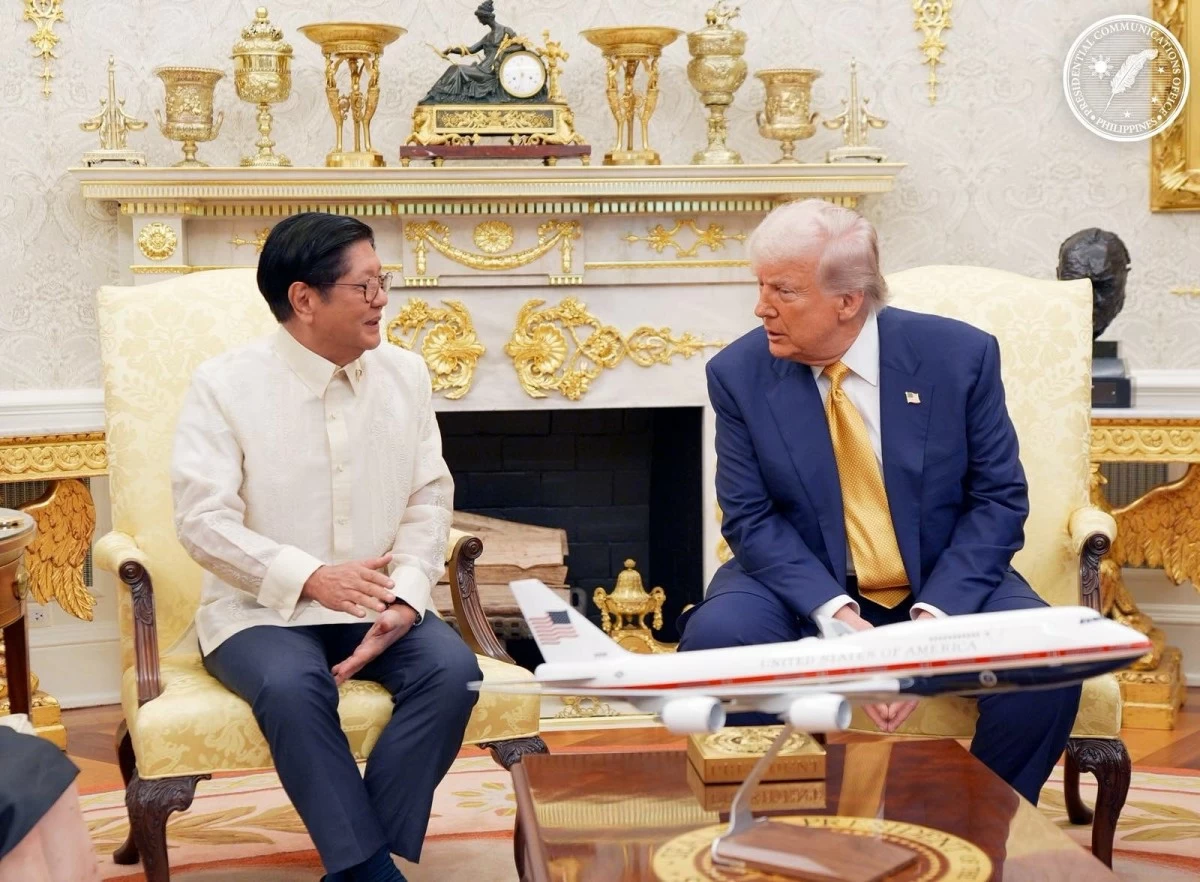
President Marcos Jr. meets with President Trump at the White House (July 22, 2025) to strengthen the enduring PH-US partnership and explore new avenues for security and economic collaboration. This marks the first ASEAN leader's visit since President Trump's return to office. (PCO photo)
United States (US) President Donald Trump’s move to reduce the threatened tariffs on Philippine exports by a mere one percentage point (ppt) still positions the country in a favorable light for foreign direct investments (FDIs), according to the Department of Trade and Industry (DTI).
Trump said in a social media post on Tuesday (US time) that he will slash the tariffs the Philippines is set to face in August from 20 percent to 19 percent. The 19-percent rate is higher than the initial 17 percent outlined in April.
Trump made this announcement shortly after he met President Ferdinand Marcos Jr. at the White House, whom he described as “a very good and tough negotiator.”
DTI Secretary Cristina Roque, who was present during the meeting, said the new tariff rate places the country among Southeast Asia’s most competitive in terms of trading with the US.
She said the Philippines has the second-lowest tariff rate in the region, which it shares with Indonesia, just behind Singapore’s 10-percent rate.
“Because the Philippines benefits from lower US tariffs on its exports, it becomes a more attractive destination for FDIs,” she explained.
Roque said this appeal to investors will give the country a “competitive edge” as a manufacturing hub focused on the American market.
In essence, the Philippines could attract foreign companies that are targeting the US market to consider relocating their operations in the country.
Based on government data, foreign investment pledges reached ₱543.62 billion last year, a sharp 39-percent drop from ₱889.24 billion in 2023.
The top sources of these pledges included South Korea, Switzerland, the Netherlands, and Japan.
As part of the country’s concessions to reduce the tariffs, Trump claimed that Marcos offered to reduce tariffs on American goods from 34 percent to zero.
Marcos was quick to clarify in a press briefing that the claim of zero tariffs will only be imposed on certain markets, including automobiles.
The President also said that the country will increase the importation of agricultural commodities like soy products and wheat and pharmaceutical products.
Special Assistant to the President for Investment and Economic Affairs (SAPIEA) Secretary Frederick Go said offering these concessions is strategic to the country, as these products are not locally produced and are critical to lowering the cost of healthcare.
“Enhanced market access will enable the Philippines to become a more attractive destination for export-oriented investments—opportunities that might have otherwise gone to our neighbors,” he said.
With a potential influx of American goods, Roque noted that the government will continue to protect domestic agricultural and manufacturing industries.
“They are not included in our concessions,” she said, noting that the concerns of local industries will be prioritized in the trade deal.
While the details of the agreement are still being finalized, the DTI Secretary said both nations will work toward a deal that will include the products covered by bilateral market access commitments.
Roque and Go, key negotiators of the government, said their objective in the Philippines’ trade agreement with the US is to ensure that it is aligned with the country’s existing international trade commitments and the needs of domestic industries.
Apart from the US, Roque said they are also pursuing deals with other countries to improve market access of Philippine goods.
“We are focused on building resilient, sustainable, and inclusive trade relationships with key trading partners that contribute to long-term economic growth and prosperity for all Filipinos,” she said.
The Philippines is currently negotiating free trade agreements (FTAs) with key trading partners, including Canada, the United Arab Emirates (UAE), Chile, and the European Union (EU).