







DepEd: 442 schools used as evacuation centers
Over 24,000 public schools suspend face-to-face classes due to typhoons, flooding
Published Jul 24, 2025 09:46 pm


At A Glance
- DepEd vows swift support for schools and teachers affected by typhoons Dante and Emong and 'habagat' flooding
- Response funds, insurance coverage, and loans are activated
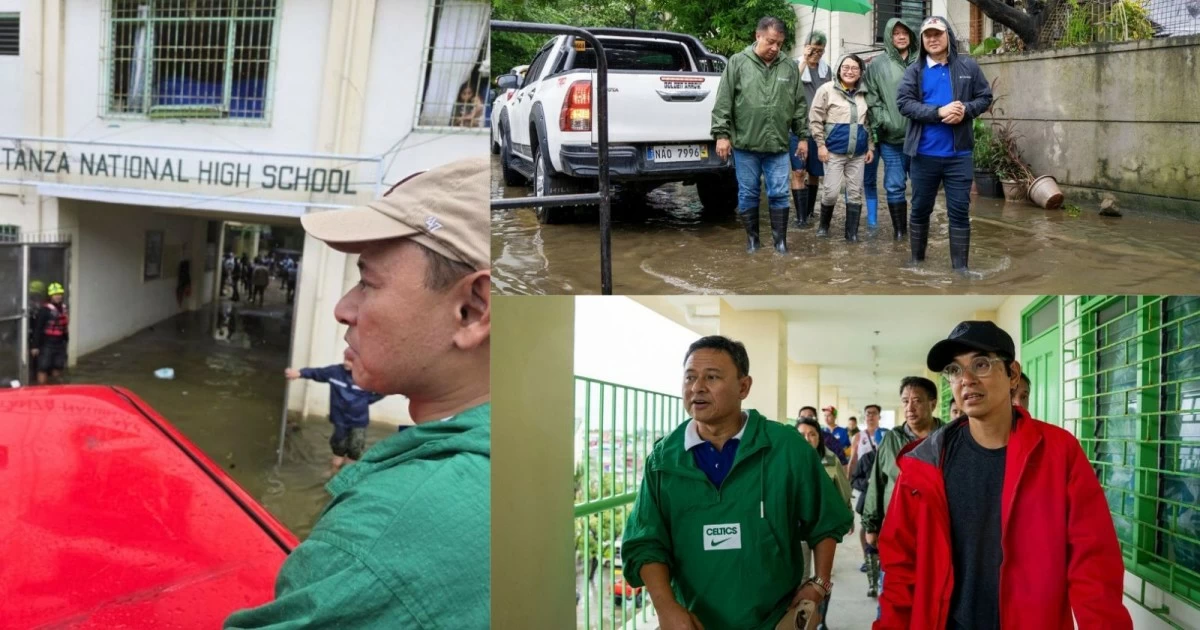
DepEd activates disaster response measures as 442 schools serve as evacuation centers and over 24,000 suspend in-person classes due to typhoons and flooding. (Photo from DepEd)
The Department of Education (DepEd) on Thursday, July 24, announced that 442 public schools across the country have been repurposed as evacuation centers amid the ongoing effects of recent typhoons and widespread flooding.
In addition, over 24,000 public schools have suspended face-to-face classes, prioritizing the safety and well-being of students and staff as severe weather conditions continue to affect several regions.
In its latest situation report on the combined effects of Tropical Storm Dante, Tropical Storm Emong, and the southwest monsoon (habagat), DepEd said a total of 24,649 public schools in 134 divisions across 14 regions have suspended in-person classes.
DepEd noted that the recent class suspensions have lasted for five consecutive days—the longest since July 17.
As of July 23, DepEd has recorded 1,876 classrooms with minor damage, 562 with major damage, 53 with total damage, and 232 damaged hygiene facilities.
The agency continues to validate and update its damage reports through its regional and division offices.
Extended aid to affected schools and personnel
Following the declaration of states of calamity in several parts of the country due to widespread flooding, DepEd has committed to providing immediate support to affected schools and personnel.
Education Secretary Sonny Angara joined President Ferdinand Marcos Jr. and other Cabinet officials during a recent National Disaster Risk Reduction and Management Council (NDRRMC) meeting to coordinate nationwide disaster response and recovery efforts.
Underscoring the administration’s priority on the welfare of learners and education workers, Angara said the President is concerned about both the continuity of education and the well-being of those affected by the calamity.
“Hindi po natin pababayaan ang ating mga paaralan, guro, at estudyante sa gitna ng kalamidad (We will not abandon our schools, teachers, and students in times of disaster),” Angara said. “Gagawin natin ang lahat para sila’y mabilis na makabangon at makapagpatuloy sa pagbibigay ng edukasyon (We will do everything we can to help them recover quickly and continue providing education),” he added.
Quick response measures for schools
DepEd said its Disaster Risk Reduction and Management Service (DRRMS) has released response funds to support urgent clearing and cleaning operations in affected schools.
Educational institutions were also instructed to activate their contingency plans, safeguard learning materials and equipment, and coordinate closely with local disaster risk reduction councils.
DepEd added that it is working with the Department of Public Works and Highways (DPWH) for the deployment of Quick Response Funds (QRF) to expedite post-disaster repairs and reconstruction.
Additional aid may also be provided through the National Indemnity Insurance Program (NIIP)—a collaboration with the GSIS and the Bureau of the Treasury (BTr)—which insures public school buildings against fire, lightning, and natural calamities.
Support for teachers and staff
For personnel in areas under a state of calamity, DepEd has opened access to the DepEd Provident Fund loan, GSIS Calamity Loans, and 30-day calamity leave applications.
In cases of injury or death, DepEd said teachers and staff may claim benefits under the GSIS-issued Group Personal Accident Insurance (GPAI), which provides up to P100,000 for accidental death or dismemberment and up to P30,000 for medical reimbursements.
Ensuring continuity in education
Meanwhile, DepEd emphasized its ongoing coordination with field offices to ensure that recovery efforts are responsive and efficient, allowing schools to safely resume operations as soon as possible.
“DepEd remains in close coordination with its regional and division offices to ensure that all affected learners, teachers, and staff receive timely and appropriate support and that schools can safely resume operations as soon as possible,” the agency said.