






Manila Bulletin
 Philippines
National
Trump says PH-US alliance restored; new trade agreement reached
Philippines
National
Trump says PH-US alliance restored; new trade agreement reached
Philippines
National
Trump says PH-US alliance restored; new trade agreement reached
Trump says PH-US alliance restored; new trade agreement reached
Published Jul 23, 2025 08:01 am
|
Updated Jul 23, 2025 02:22 pm


At A Glance
- According to Trump, the relationship between the Philippines and the US had been restored as he took a jab at Marcos' predecessor.
President Marcos and United States President Donald Trump reaffirmed the "ironclad" relationship between Manila and Washington as the two leaders completed their trade negotiations following their White House meeting on Tuesday, July 22.
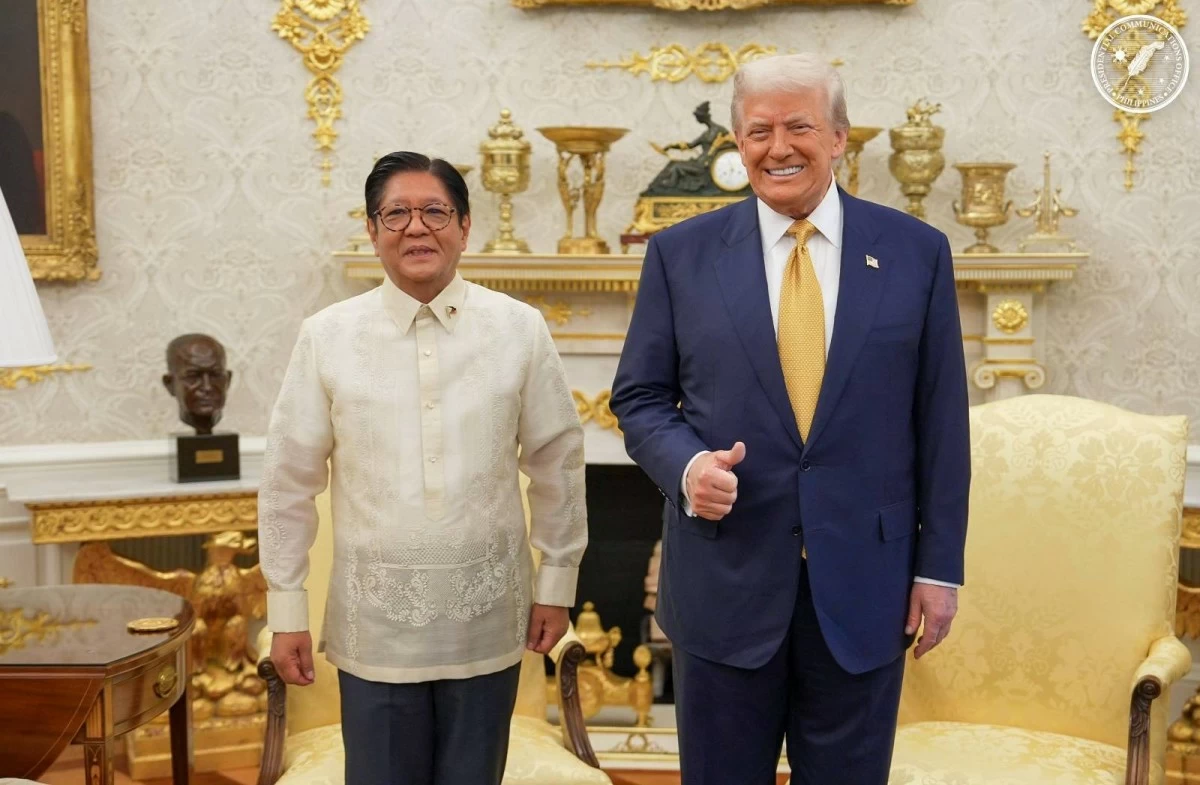
President Ferdinand 'Bongbong' Marcos Jr. and US President Donald Trump (Malacañang photo)
In an interview with the media at the White House, Trump highlighted the robust economic activity already existing between the two nations and added that both countries will benefit more under the proposed trade agreement.
“We're very close to finishing a trade deal — big trade deal, actually,” he said.
“We do a lot of business with you. It's a lot of income coming in for both groups. But I was surprised to see the kind of numbers. They're very big, and they're gonna get bigger under what we're doing and what we're proposing,” he added.
In a post on Truth Social, President Trump described President Marcos' visit as a "beautiful" one as both leaders concluded the trade deal with the Philippines paying a 19 percent tariff, down from 20 percent.
"It was a beautiful visit, and we concluded our Trade Deal, whereby The Philippines is going OPEN MARKET with the United States, and ZERO Tariffs. The Philippines will pay a 19% Tariff," he wrote.
"It was a Great Honor to be with the President. He is Highly Respected in his Country, as he should be. He is also a very good, and tough, negotiator," he added.
According to Communications Undersecretary Claire Castro, President Marcos welcomed the one percent decrease in the tariff on Philippine exports to the US.
“Ayon sa Pangulo, maituturing na 'significant achievement' sa Pilipinas ang bawas na one percent sa tariff rate sa bansa (The President said the one percent decrease in our tariff rate is a significant achievement),” she said on Wednesday, July 23.
“Dahil dito, mas paiigtingin pa ng bansa ang mga hakbang para maging competitive ang Philippine exports (Because of this, the country will strengthen our measures to make Philippine exports more competitive),” she added.
Castro said the 19 percent tariff does not have a significant effect on the Philippines as the country is not dependent on US exports.
“Ibig sabihin, 16 percent lang ng exports ang napupunta sa USA at aabot sa 67 percent nito ay galing sa electronics na kabilang sa (Only 16 percent of our exports go to the US, and 67 percent of those are from electronics, which are part of the) Law on Zero Tariffs under global trade agreements,” she explained.
“Kinumpirma naman ni President Marcos ang open market at zero tariff agreements ng Pilipinas at ng United States sa mga certain markets lamang (President Marcos also confirmed the zero market and zero tariff agreements between the Philippines and the US on certain markets only),” she added.
In an interview with the Philippine media in Washington, President Marcos said the automobile market was one of the markets the US asked the Philippines to open.
“The major areas that he said were automobiles. Because we have a tariff on American automobiles, we will open that market and no longer charge tariffs on that,” he said.
On the other hand, Marcos said there will be an increased importation of soy, wheat, and pharmaceutical products from the US to the Philippines.
“Para makamura naman yung mga – maging mas mura ‘yung gamot natin (So our medicines will become cheaper),” he said.
“So, we are coming to those arrangements. There's still a lot of detail that needs to be worked out on the different products and the different exports and imports,” he added.
President Marcos’ trip to Washington, D.C., came after the US hiked the tariff imposed on Philippine exports from 17 percent to 20 percent. Before leaving for the US, Marcos said he would push for negotiations on a bilateral trade arrangement that can soften the impact of the tariff hike and lay the groundwork for long-term market access.
“I intend to convey to President Trump and his Cabinet officials that the Philippines is ready to negotiate a bilateral trade deal that will ensure strong, mutually beneficial, and future-oriented collaborations that only the United States and the Philippines will be able to take advantage of,” he had said.
Reaffirming alliance
Both leaders extensively reaffirmed the “ironclad” alliance and the “fantastic military relationships” between the two countries. President Marcos underscored the deep historical and strategic importance of the Philippines-US ties.
“We must remember that the United States is our only treaty partner in the Philippines and that has stood us in good stead over the years, certainly through the Second World War,” he said.
“The cultural memory of all Filipinos is that our strongest, closest, most reliable ally has always been the United States. That is something that we value, that we are grateful for, that we will continue to foster as we go on,” he added.
President Trump, for his part, affirmed that military relationships have been "reinstituted" and are in a very positive state. He also recalled past joint efforts in counter-terrorism.
“The Philippines was loaded up with ISIS and a lot of terrorists, and they were at a very, very dangerous point. And during my administration, we went in and we wiped them out— working with the Philippines— but we wiped them out,” he said.
“If we didn't. I don't know what would have happened,” he added.
According to Trump, the relationship between the Philippines and the US had been restored as he took a jab at Marcos’ predecessor.
“They didn't get along with anybody. They didn't know. Honestly, they didn't know what they were doing,” he said.
“You had some problems with another president, and it was not your fault. It was the president's fault.
Trump also noted the previous administration’s relationship with China.
“The country was maybe tilting toward China, but we untilted it very, very quickly,” he good.
“You had a country that was tilting toward China for a period of time, and I just don't think that would have been good for you,” he added.
Dealing with China
Despite this, President Trump said he does not mind if the Philippines continues to deal with China.
“I don't mind if the President dealt with China, you know, if that's meant, because I think he has to do what's right for his country,” he said.
“I've always said, you know, make the Philippines great again. Do whatever you need to do. But you're dealing with China wouldn't bother me at all,” he added.
For his part, President Marcos said there was no inherent need to “balance” Manila’s relationships with Washington and Beijing.
“There is no need, in a sense, to balance our relationship with the United States and China, simply because our foreign policy is an independent one,” he explained.
He clarified that the Philippines' primary concern remains the defense of its territory and the exercise of its sovereign rights, something that the Philippines should not do on its own.
“We need to do this with our partners. And again, our strongest partner has always been the United States,” Marcos said.
“But of course, we are trying to form coalitions and multilateral relations so that we, those like-minded nations who share the same values as we do, who hew to the international law, most specifically the UNCLOS, present that position very clearly to anyone who has intentions of unilaterally changing the world order. And that is how we are guided in that,” he added.