ADVERTISEMENT

The price of flood control failure

Published Jul 23, 2025 12:05 am  |  Updated Jul 22, 2025 04:08 pm
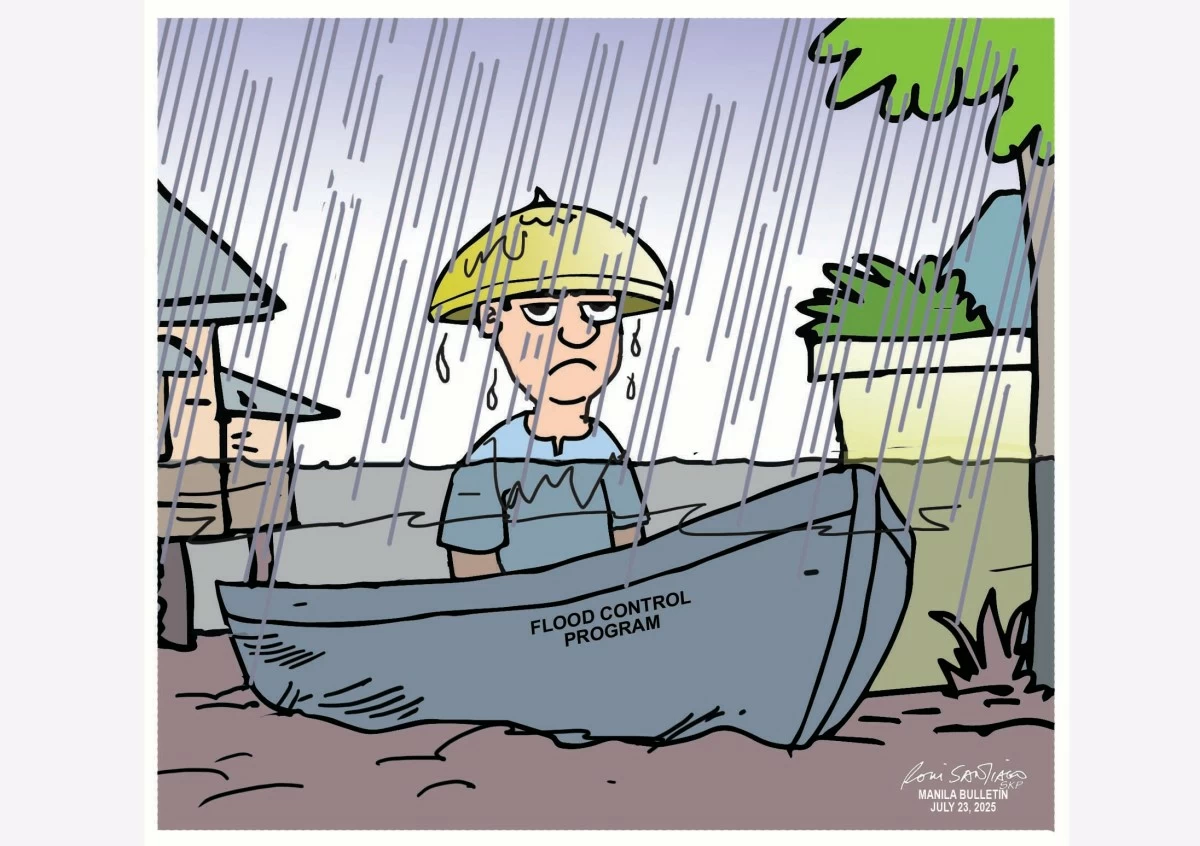
Once again, the rains have come—and once again, our cities, towns, and provinces are submerged in flood. The latest floodings triggered by the southwest monsoon or “habagat” have laid bare not just our vulnerability to nature, but our failure to prepare for it.
The calamity is no longer simply a natural disaster, but the cumulative result of decades of mismanagement and underinvestment. This is further aggravated by climate change.
Each monsoon season follows the same tragic script: families evacuated, lives lost, roads rendered impassable, homes destroyed. The difference lies not in the severity of the floods, but in the silence that follows the deluge. It is a silence that must now be broken.
Year after year, flood control and disaster risk reduction programs are allotted billions of pesos from the national budget. And yet, the same communities get flooded in the same way, often with worse consequences. True, climate change is a contributing factor in overwhelming whatever efforts the government has taken. But the troubling question is: Was the budget fully utilized for flood mitigation?
There is an urgent need for transparency, oversight, and accountability. Infrastructure designed to mitigate flooding must not become an avenue for corruption or inefficiency. Projects must be completed, not just commenced. Drainage systems must function, not merely exist on paper. Too often, flood control budgets become victims of misuse or poor planning, with no one held responsible.
This must end. The Filipino people deserve not only answers, but concrete, sustained action.
In 1989, Republic Act 6716 was enacted, mandating the construction of rainwater collectors and water wells in every barangay. This law was forward-thinking: it sought to provide a decentralized, community-based approach to water management—a measure that could have significantly mitigated flooding and water shortages if fully implemented.
Yet decades later, implementation remains spotty at best. In many barangays, rainwater collectors are either nonexistent, poorly maintained, or entirely forgotten.
Implementing and properly enforcing RA 6716 is both a legal and moral obligation. It represents one of the many underutilized tools we already possess to address our flood crisis.
And it doesn’t help that certain flood control allocations have been rejected in the past. But in a country where a single hour of rain can paralyze entire cities, any decision to reduce or delay flood-related funding must be examined with utmost scrutiny.
Was the rationale grounded in data and long-term planning, or was it a reflexive act of austerity? Cutting crucial infrastructure allocations without clear alternatives or replacement measures is not prudence. We cannot afford to balance budgets at the expense of Filipino lives and livelihoods.
Flood mitigation is not the sole responsibility of the government, though it must lead the charge. There must be a national realignment of priorities. Greater resources must be directed—and protected—for sustainable, science-driven flood control measures. Climate-resilient infrastructure must be non-negotiable. Rainwater harvesting, river desilting, wetlands rehabilitation, and proper zoning regulations must be vigorously implemented.
The private sector must also be held accountable. Commercial developments must no longer obstruct natural waterways or compromise drainage systems. Corporate social responsibility must extend beyond relief drives and into long-term investments in urban planning, environmental sustainability, and disaster preparedness.
And we, as citizens, must also take our share of responsibility. We must remain informed, demand transparency, and insist on competent governance. We must report corruption and support policies and leaders committed to environmental resilience.
The floods we endure are not just the result of rain brought about by climate change, but of long-standing systemic failure. We cannot change the monsoon, but we can and must change how we respond to it, and rise from it. And we must.
ADVERTISEMENT
.most-popular .layout-ratio{ padding-bottom: 79.13%; } @media (min-width: 768px) and (max-width: 1024px) { .widget-title { font-size: 15px !important; } }

{{ articles_filter_1561_widget.title }}

.most-popular .layout-ratio{ padding-bottom: 79.13%; } @media (min-width: 768px) and (max-width: 1024px) { .widget-title { font-size: 15px !important; } }

{{ articles_filter_1562_widget.title }}

.most-popular .layout-ratio{ padding-bottom: 79.13%; } @media (min-width: 768px) and (max-width: 1024px) { .widget-title { font-size: 15px !important; } }

{{ articles_filter_1563_widget.title }}

{{ articles_filter_1564_widget.title }}

.mb-article-details { position: relative; } .mb-article-details .article-body-preview, .mb-article-details .article-body-summary{ font-size: 17px; line-height: 30px; font-family: "Libre Caslon Text", serif; color: #000; } .mb-article-details .article-body-preview iframe , .mb-article-details .article-body-summary iframe{ width: 100%; margin: auto; } .read-more-background { background: linear-gradient(180deg, color(display-p3 1.000 1.000 1.000 / 0) 13.75%, color(display-p3 1.000 1.000 1.000 / 0.8) 30.79%, color(display-p3 1.000 1.000 1.000) 72.5%); position: absolute; height: 200px; width: 100%; bottom: 0; display: flex; justify-content: center; align-items: center; padding: 0; } .read-more-background a{ color: #000; } .read-more-btn { padding: 17px 45px; font-family: Inter; font-weight: 700; font-size: 18px; line-height: 16px; text-align: center; vertical-align: middle; border: 1px solid black; background-color: white; } .hidden { display: none; }
function initializeAllSwipers() { // Get all hidden inputs with cms_article_id document.querySelectorAll('[id^="cms_article_id_"]').forEach(function (input) { const cmsArticleId = input.value; const articleSelector = '#article-' + cmsArticleId + ' .body_images'; const swiperElement = document.querySelector(articleSelector); if (swiperElement && !swiperElement.classList.contains('swiper-initialized')) { new Swiper(articleSelector, { loop: true, pagination: false, navigation: { nextEl: '#article-' + cmsArticleId + ' .swiper-button-next', prevEl: '#article-' + cmsArticleId + ' .swiper-button-prev', }, }); } }); } setTimeout(initializeAllSwipers, 3000); const intersectionObserver = new IntersectionObserver( (entries) => { entries.forEach((entry) => { if (entry.isIntersecting) { const newUrl = entry.target.getAttribute("data-url"); if (newUrl) { history.pushState(null, null, newUrl); let article = entry.target; // Extract metadata const author = article.querySelector('.author-section').textContent.replace('By', '').trim(); const section = article.querySelector('.section-info ').textContent.replace(' ', ' '); const title = article.querySelector('.article-title h1').textContent; // Parse URL for Chartbeat path format const parsedUrl = new URL(newUrl, window.location.origin); const cleanUrl = parsedUrl.host + parsedUrl.pathname; // Update Chartbeat configuration if (typeof window._sf_async_config !== 'undefined') { window._sf_async_config.path = cleanUrl; window._sf_async_config.sections = section; window._sf_async_config.authors = author; } // Track virtual page view with Chartbeat if (typeof pSUPERFLY !== 'undefined' && typeof pSUPERFLY.virtualPage === 'function') { try { pSUPERFLY.virtualPage({ path: cleanUrl, title: title, sections: section, authors: author }); } catch (error) { console.error('ping error', error); } } // Optional: Update document title if (title && title !== document.title) { document.title = title; } } } }); }, { threshold: 0.1 } ); function showArticleBody(button) { const article = button.closest("article"); const summary = article.querySelector(".article-body-summary"); const body = article.querySelector(".article-body-preview"); const readMoreSection = article.querySelector(".read-more-background"); // Hide summary and read-more section summary.style.display = "none"; readMoreSection.style.display = "none"; // Show the full article body body.classList.remove("hidden"); } document.addEventListener("DOMContentLoaded", () => { let loadCount = 0; // Track how many times articles are loaded const offset = [1, 2, 3, 4, 5, 6, 7, 8, 9, 10]; // Offset values const currentUrl = window.location.pathname.substring(1); let isLoading = false; // Prevent multiple calls if (!currentUrl) { console.log("Current URL is invalid."); return; } const sentinel = document.getElementById("load-more-sentinel"); if (!sentinel) { console.log("Sentinel element not found."); return; } function isSentinelVisible() { const rect = sentinel.getBoundingClientRect(); return ( rect.top < window.innerHeight && rect.bottom >= 0 ); } function onScroll() { if (isLoading) return; if (isSentinelVisible()) { if (loadCount >= offset.length) { console.log("Maximum load attempts reached."); window.removeEventListener("scroll", onScroll); return; } isLoading = true; const currentOffset = offset[loadCount]; window.loadMoreItems().then(() => { let article = document.querySelector('#widget_1690 > div:nth-last-of-type(2) article'); intersectionObserver.observe(article) loadCount++; }).catch(error => { console.error("Error loading more items:", error); }).finally(() => { isLoading = false; }); } } window.addEventListener("scroll", onScroll); });

Sign up by email to receive news.