

ADVERTISEMENT

Syria asks Turkey for defense support after sectarian clashes, Turkish officials say

Published Jul 23, 2025 09:32 pm
ANKARA, Turkey (AP) — Syria’s interim government has requested Turkey’s support to strengthen its defense capabilities, Turkish officials said, following sectarian violence over the past two weeks that increased tensions in Syria and drew Israeli intervention.
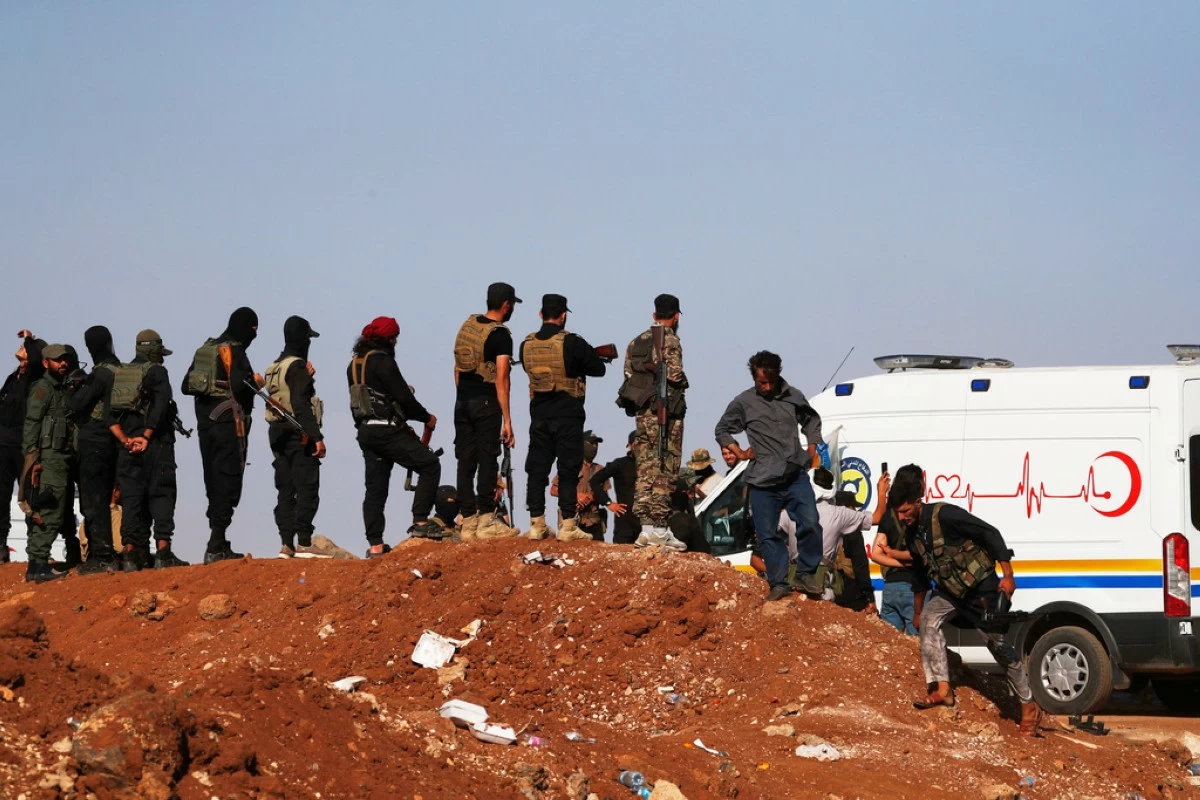
A convoy of ambulances and buses arrives at a checkpoint in the village of Busra al-Harir, southern Syria, on its way to Sweida province, as security forces cordon off the area to block Bedouin fighters from entering the province, Tuesday, July 22, 2025. (AP Photo/Omar Sanadiki)
The defense ministry officials, who spoke on condition of anonymity according to procedures, said Wednesday that Syria has also sought assistance to combat “terrorist organizations,” including the Islamic State group.
Turkey — which has long expressed readiness to assist Syria — was working toward providing training, advisory services and technical support to help strengthen Syria’s defense capacity, the officials added.
Syrian officials could not be immediately reached for comment.
Tensions escalated in southern Syria last week, with violent clashes erupting between Bedouin Arab tribes and Druze militias in Sweida province. The conflict triggered Israeli airstrikes on convoys of government forces in Sweida and on the Ministry of Defense headquarters in central Damascus, which Israel justified as efforts to protect Druze communities.
The U.S. envoy to Syria, Tom Barrack, announced a U.S.-brokered ceasefire between Israel and Syria on July 19, which allowed the Syrian government forces to go into Sweida and break up the fighting between the Druze and Bedouins. An earlier ceasefire between Druze factions and government forces broke down. After a second ceasefire, the government forces withdrew from Sweida, but fighting flared again between Druze and Bedouin groups.
Ankara strongly supports Syria’s interim government led by President Ahmad al-Sharaa and has been seeking a defense agreement with Damascus that could reportedly include establishing Turkish military bases on Syrian territory.
In an interview with the Associated Press earlier this week, Barrack said the U.S. has “no position” on the prospect of a defense pact between Syria and Turkey.
“It's not in the U.S.' business or interest to tell any of the surrounding nations with each other what to do,” he said.
Ankara also backs an agreement reached between the interim Syrian administration and the Kurdish-led Syrian Democratic Forces, or SDF, to integrate into Syria’s national army. Implementation of the deal has stalled, with a major sticking point being whether the SDF would remain as a cohesive unit in the new army or be dissolved completely.
On Tuesday, Turkish Foreign Minister Hakan Fidan warned Kurdish and other groups in Syria against exploiting the tensions to pursue autonomy, stating that any attempt to divide Syria would be viewed as a direct threat to Turkey’s national security and could prompt intervention.
Turkey considers the SDF as a terrorist organization because of its association with the Kurdistan Workers’ Party, or PKK, which has waged a long-running insurgency in Turkey.
The Turkish officials said Turkey expects the SDF to follow through on its commitments under the agreement, adding that Turkey would be “following” the situation.
The situation in Syria has increased tensions between Turkey and Israel. In April, Israel struck five cities in Syria, including more than a dozen strikes near a strategic air base in the city of Hama, where Turkey reportedly has interests in having a military presence. Israel accused Turkey of trying to build a “protectorate” in Syria.

Related Tags

World news
ADVERTISEMENT
.most-popular .layout-ratio{ padding-bottom: 79.13%; } @media (min-width: 768px) and (max-width: 1024px) { .widget-title { font-size: 15px !important; } }

{{ articles_filter_1561_widget.title }}

.most-popular .layout-ratio{ padding-bottom: 79.13%; } @media (min-width: 768px) and (max-width: 1024px) { .widget-title { font-size: 15px !important; } }

{{ articles_filter_1562_widget.title }}

.most-popular .layout-ratio{ padding-bottom: 79.13%; } @media (min-width: 768px) and (max-width: 1024px) { .widget-title { font-size: 15px !important; } }

{{ articles_filter_1563_widget.title }}

{{ articles_filter_1564_widget.title }}

.mb-article-details { position: relative; } .mb-article-details .article-body-preview, .mb-article-details .article-body-summary{ font-size: 17px; line-height: 30px; font-family: "Libre Caslon Text", serif; color: #000; } .mb-article-details .article-body-preview iframe , .mb-article-details .article-body-summary iframe{ width: 100%; margin: auto; } .read-more-background { background: linear-gradient(180deg, color(display-p3 1.000 1.000 1.000 / 0) 13.75%, color(display-p3 1.000 1.000 1.000 / 0.8) 30.79%, color(display-p3 1.000 1.000 1.000) 72.5%); position: absolute; height: 200px; width: 100%; bottom: 0; display: flex; justify-content: center; align-items: center; padding: 0; } .read-more-background a{ color: #000; } .read-more-btn { padding: 17px 45px; font-family: Inter; font-weight: 700; font-size: 18px; line-height: 16px; text-align: center; vertical-align: middle; border: 1px solid black; background-color: white; } .hidden { display: none; }
function initializeAllSwipers() { // Get all hidden inputs with cms_article_id document.querySelectorAll('[id^="cms_article_id_"]').forEach(function (input) { const cmsArticleId = input.value; const articleSelector = '#article-' + cmsArticleId + ' .body_images'; const swiperElement = document.querySelector(articleSelector); if (swiperElement && !swiperElement.classList.contains('swiper-initialized')) { new Swiper(articleSelector, { loop: true, pagination: false, navigation: { nextEl: '#article-' + cmsArticleId + ' .swiper-button-next', prevEl: '#article-' + cmsArticleId + ' .swiper-button-prev', }, }); } }); } setTimeout(initializeAllSwipers, 3000); const intersectionObserver = new IntersectionObserver( (entries) => { entries.forEach((entry) => { if (entry.isIntersecting) { const newUrl = entry.target.getAttribute("data-url"); if (newUrl) { history.pushState(null, null, newUrl); let article = entry.target; // Extract metadata const author = article.querySelector('.author-section').textContent.replace('By', '').trim(); const section = article.querySelector('.section-info ').textContent.replace(' ', ' '); const title = article.querySelector('.article-title h1').textContent; // Parse URL for Chartbeat path format const parsedUrl = new URL(newUrl, window.location.origin); const cleanUrl = parsedUrl.host + parsedUrl.pathname; // Update Chartbeat configuration if (typeof window._sf_async_config !== 'undefined') { window._sf_async_config.path = cleanUrl; window._sf_async_config.sections = section; window._sf_async_config.authors = author; } // Track virtual page view with Chartbeat if (typeof pSUPERFLY !== 'undefined' && typeof pSUPERFLY.virtualPage === 'function') { try { pSUPERFLY.virtualPage({ path: cleanUrl, title: title, sections: section, authors: author }); } catch (error) { console.error('ping error', error); } } // Optional: Update document title if (title && title !== document.title) { document.title = title; } } } }); }, { threshold: 0.1 } ); function showArticleBody(button) { const article = button.closest("article"); const summary = article.querySelector(".article-body-summary"); const body = article.querySelector(".article-body-preview"); const readMoreSection = article.querySelector(".read-more-background"); // Hide summary and read-more section summary.style.display = "none"; readMoreSection.style.display = "none"; // Show the full article body body.classList.remove("hidden"); } document.addEventListener("DOMContentLoaded", () => { let loadCount = 0; // Track how many times articles are loaded const offset = [1, 2, 3, 4, 5, 6, 7, 8, 9, 10]; // Offset values const currentUrl = window.location.pathname.substring(1); let isLoading = false; // Prevent multiple calls if (!currentUrl) { console.log("Current URL is invalid."); return; } const sentinel = document.getElementById("load-more-sentinel"); if (!sentinel) { console.log("Sentinel element not found."); return; } function isSentinelVisible() { const rect = sentinel.getBoundingClientRect(); return ( rect.top < window.innerHeight && rect.bottom >= 0 ); } function onScroll() { if (isLoading) return; if (isSentinelVisible()) { if (loadCount >= offset.length) { console.log("Maximum load attempts reached."); window.removeEventListener("scroll", onScroll); return; } isLoading = true; const currentOffset = offset[loadCount]; window.loadMoreItems().then(() => { let article = document.querySelector('#widget_1690 > div:nth-last-of-type(2) article'); intersectionObserver.observe(article) loadCount++; }).catch(error => { console.error("Error loading more items:", error); }).finally(() => { isLoading = false; }); } } window.addEventListener("scroll", onScroll); });

Sign up by email to receive news.