






Manila Bulletin
 Business
The Economy
Philippine agri sector braces for outcome of Marcos-Trump trade deal
Business
The Economy
Philippine agri sector braces for outcome of Marcos-Trump trade deal
Business
The Economy
Philippine agri sector braces for outcome of Marcos-Trump trade deal
Philippine agri sector braces for outcome of Marcos-Trump trade deal
Published Jul 23, 2025 04:09 pm


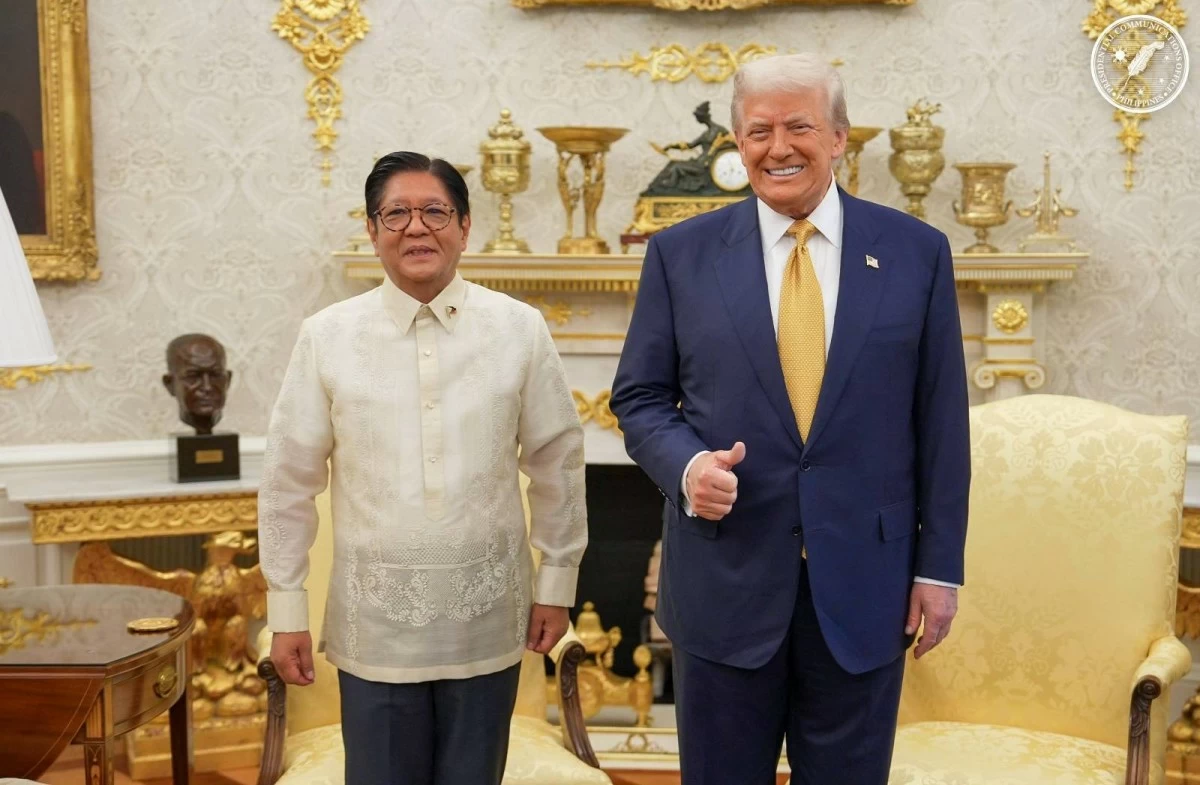
President Ferdinand 'Bongbong' Marcos Jr. and US President Donald Trump (Malacañang photo)
The agriculture sector is still awaiting the final details of the Philippines’ trade agreement with the United States (US), following President Ferdinand Marcos Jr.’s offer to increase imports of agricultural goods from the world’s number one economy as part of concessions to reduce the country’s tariff rate from 20 percent to 19 percent.
Department of Agriculture (DA) Secretary Francisco Tiu Laurel said it is too early to tell how this would impact the domestic industry and the country’s agricultural exports.
“Whether the Philippine agriculture sector will gain or not from this trade deal with the US remains to be seen,” he said in a statement.
US President Donald Trump announced in a social media post after his meeting with President Marcos at the White House that the tariffs imposed on Philippine goods will now stand at 19 percent.
The new tariff rate is one-percentage-point (ppt) lower than the 20 percent Trump issued earlier this month.
It is also slightly higher than the 17-percent rate announced in April as part of the so‑called reciprocal tariffs against the majority of the US’ trading partners.
Trump views these tariffs as a way to “correct” the US’ trade deficits, which he claims are a “major threat” to the American economy and national security.
Data from the Office of the US Trade Representative (USTR) showed the US’ goods trade deficit with the Philippines reached $4.9 billion in 2024, meaning it imported more goods from the Philippines than it exported to the country.
Last year, America’s total goods trade with the Philippines amounted to an estimated $23.5 billion.
Trump said the trade deal he negotiated with Marcos—whom he described as “a very good and tough negotiator”—will eliminate tariffs on American goods entering the Philippines, reducing them from 34 percent to zero.
“We concluded our Trade Deal, whereby The Philippines is going OPEN MARKET with the United States, and ZERO Tariffs. The Philippines will pay a 19% Tariff,” said Trump.
No other details were disclosed regarding the agreement.
Marcos, for his part, later clarified that Trump’s claim of zero tariffs will only be imposed on certain American markets, including automobiles.
The USTR earlier flagged the tariffs against vehicles and motorcycles as a barrier to trade with the Philippines.
The Philippines imposes a 30-percent tariff on passenger vehicles with capacity of up to 10 people, while vehicles that can seat more than 10 people such as buses and commercial vehicles (CVs) like trucks face a 20-percent tariff.
As part of the concessions, Marcos said the country will increase the importation of pharmaceutical products and agricultural commodities such as soy products and wheat.
In a press briefing on Wednesday, July 23, DA Assistant Secretary Arnel de Mesa said increasing imports of such agricultural goods could benefit the local feed industry, as they are key ingredients in animal feed, although he did not provide further details.
According to the United States Department of Agriculture (USDA), the Philippines is the ninth-most valuable agricultural export market of the US, with the top commodities being soybean meal and wheat.
Based on government data, the country’s agricultural trade deficit with the US reached $1.95 billion last year, narrower than the $2.36-billion shortfall in 2023.
While no other details have been provided about the trade deal yet, the country’s Agriculture chief sees the benefit in Marcos offering zero tariffs on American agricultural imports.
Tiu Laurel said this would support the Marcos administration’s goal of achieving a food-secure Philippines by lowering the cost of key inputs, especially for livestock production.
With a tariff rate at 19 percent, which is the second-lowest tariff level in Southeast Asia, the Philippine government sees the lower tax to also attract interest among the country’s agricultural exporters.
But as Tiu Laurel pointed out, the country’s competitors for exports to America are also negotiating with the US to lower taxes imposed on them.
As of writing, the Philippines shares the same tariff level as Indonesia, which recently reached an agreement with the US to reduce its tariff to 19 percent from a steep 32 percent
Based on a document published on the White House’s website, Indonesia agreed to remove 99 percent of the tariffs it imposes on American industrial and agricultural exports.
De Mesa, also the DA’s spokesperson, said last week that a similar tariff rate with Indonesia would likely maintain the status quo when it comes to exports to the US.
The two regional neighbors are relatively equal when it comes to exports of coconut products.
Coconut products are the Philippines’ top agricultural exports to the US, which include coconut oil, desiccated coconut, and other by-products.
Coconut oil, in particular, was the most valuable agricultural export to America last year, generating $558.7 million.
Apart from Indonesia, Vietnam also secured an agreement with the US that will cut its tariffs from an initial 46 percent to 20 percent, with transshipped goods from Vietnam taxed at 40 percent.
Thailand and Cambodia, also exporters of agricultural goods to America, are also looking for a deal to cut their respective 36-percent tariff rates.