ADVERTISEMENT

Not just pretty clothes

Filipino designer Mara San Pedro fuses sustainability and heritage in global competition

Published Jul 23, 2025 05:05 pm  |  Updated Aug 6, 2025 03:23 pm
Mara San Pedro
Mara San Pedro
For Mara San Pedro, fashion is more than something people use to cover their bodies. Each piece is a tool that helps paint a story—and in her case, the pieces she designs depict a tale of how sustainability and heritage can go hand in hand in building a more planet-friendly fashion industry. That is something she brings to the Redress Design Award, an international competition for sustainable and circular fashion design.
Pursuing a career in fashion design was not something Mara had envisioned. However, what she shares with other creatives is the belief that design is a form of storytelling—one that can extend beyond personal level.
“This passion wasn’t always what I thought would drive my career,” Mara confessed. “But being able to create has given me the voice and space to express my ideas and identity freely.”
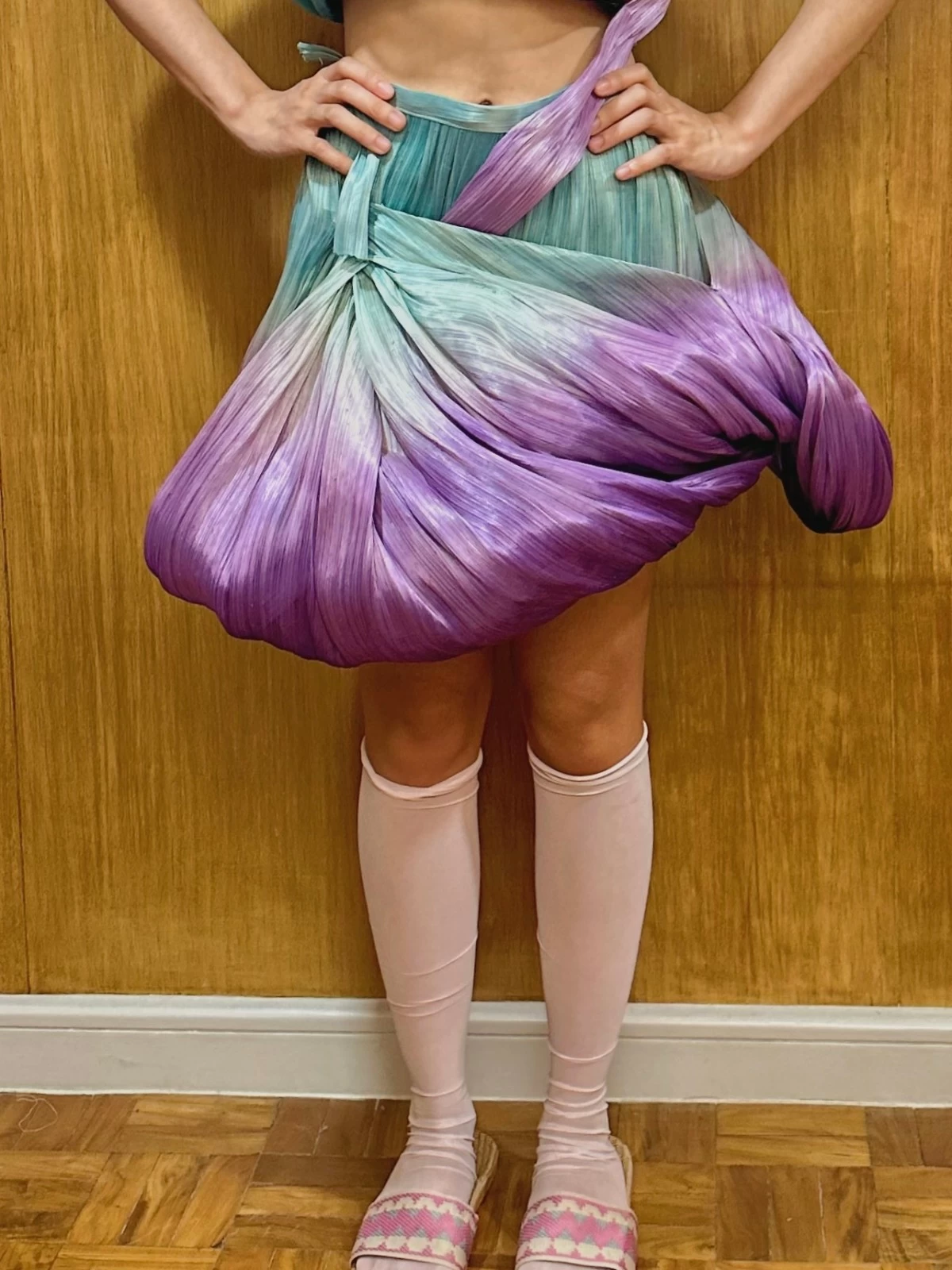
Animara Abaca Skirt
Animara Abaca Skirt
After completing a management degree at Ateneo de Manila University, Mara flew to the United Kingdom to study fashion design technology at the University of the Arts London-London College of Fashion. During her time as a student, she fell deeply in love with Filipino handwoven textiles, which she often used throughout her course.
“I found myself even more connected to my roots with a renewed perspective on how I can merge Philippine culture and tradition with my own design voice,” the designer told Manila Bulletin.
Filipino textiles eventually became a core part of Mara's design creed. Her craft centers on merging tradition and modern sensibility, while also celebrating diverse cultures and femininity. Her aesthetic—and her commitment to promoting eco-conscious fashion—led her to become one of the finalists at this year’s Redress Design Award.
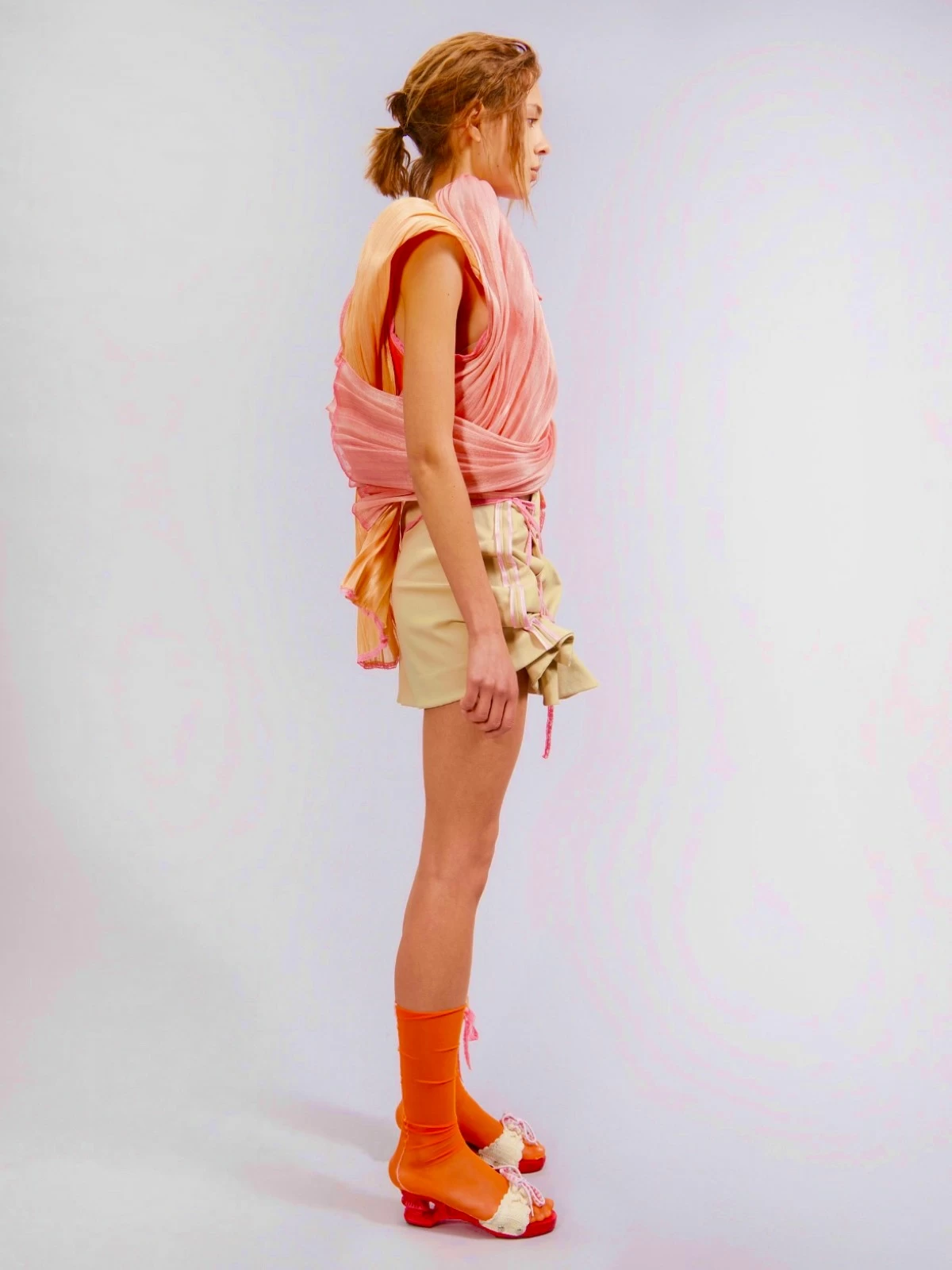
Animara LCF Work
Animara LCF Work
Launched in 2011 and formerly known as the EcoChic Design Award, Redress aims to educate emerging designers on circular fashion—covering everything from zero-waste and upcycling to reconstruction and material longevity. The competition challenges participants to create collections using textile waste or recycled materials, encouraging them to rethink every stage of the design process.
“Redress’ mission of reducing environmental impact is something I deeply resonate with,” Mara said. “As designers, we carry a responsibility to be more intentional with what we create, because of the huge impact we have on waste, especially with the rate of fast fashion today. It’s a great opportunity to be part of a movement like this.”
The competition will take place in September, where Mara and nine other finalists from around the globe will attend a design boot camp and present their collections in Hong Kong. As the Philippines’ representative, Mara will showcase “Echoes of the Weave,” a collection that incorporates low-waste techniques such as zero-waste draping. To add texture to her pieces, the collection will also feature smocking and shirring.
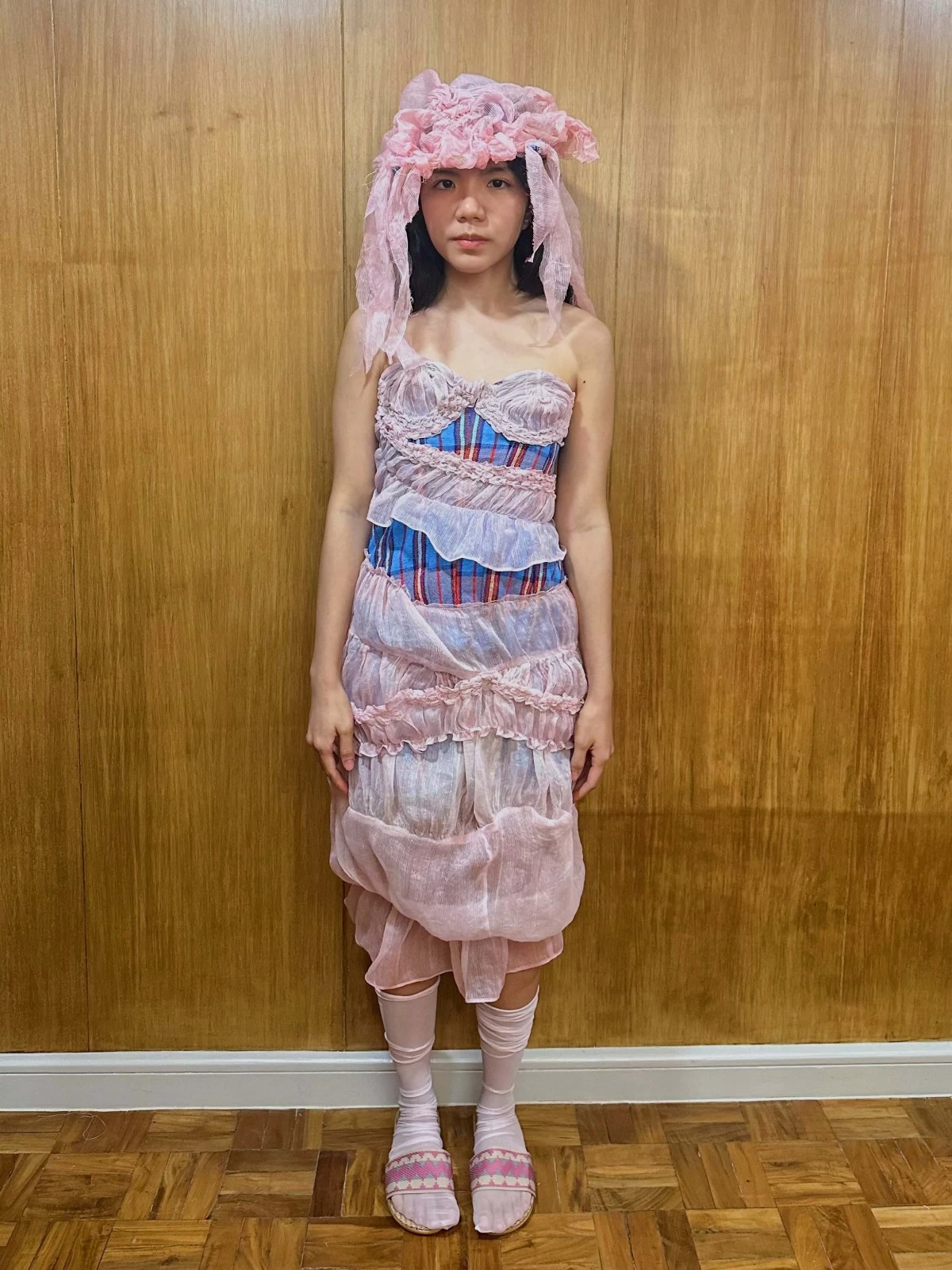
Animara Piña — Inabel Dress
“My collection navigates the place of Philippine tradition in today’s modern world,” she explained. “I wanted to challenge the idea that traditional textiles like piña and abaca only have a place in formal or ceremonial dress. I reinterpreted these elements through my own lens to reflect my relationship with my culture and upbringing—one filled with innocence, playfulness, and rebellion, while embracing nuanced femininity.”
As the fashion industry continues to be one of the major contributors to global pollution, it is becoming essential for fashion creatives today not only to master the craft of design but also to understand how to reduce fashion’s environmental impact. There is no singular approach for all designers, but in Mara’s case, the most important thing a designer can do is understand and respond to their community’s needs.
“Here in the Philippines, we have so many incredible handweaving communities, so for me, it’s about keeping our supply chains as local as possible,” Mara said. “With sustainability, it’s not just about the materials—it is also about the impact you have on the people you work with. For me, that means preserving our culture and supporting the livelihoods of our weavers, who continue to pass down this craft and tradition.”

Related Tags

SPOTLIGHT FEATURES
ADVERTISEMENT
.most-popular .layout-ratio{ padding-bottom: 79.13%; } @media (min-width: 768px) and (max-width: 1024px) { .widget-title { font-size: 15px !important; } }

{{ articles_filter_1561_widget.title }}

.most-popular .layout-ratio{ padding-bottom: 79.13%; } @media (min-width: 768px) and (max-width: 1024px) { .widget-title { font-size: 15px !important; } }

{{ articles_filter_1562_widget.title }}

.most-popular .layout-ratio{ padding-bottom: 79.13%; } @media (min-width: 768px) and (max-width: 1024px) { .widget-title { font-size: 15px !important; } }

{{ articles_filter_1563_widget.title }}

{{ articles_filter_1564_widget.title }}

.mb-article-details { position: relative; } .mb-article-details .article-body-preview, .mb-article-details .article-body-summary{ font-size: 17px; line-height: 30px; font-family: "Libre Caslon Text", serif; color: #000; } .mb-article-details .article-body-preview iframe , .mb-article-details .article-body-summary iframe{ width: 100%; margin: auto; } .read-more-background { background: linear-gradient(180deg, color(display-p3 1.000 1.000 1.000 / 0) 13.75%, color(display-p3 1.000 1.000 1.000 / 0.8) 30.79%, color(display-p3 1.000 1.000 1.000) 72.5%); position: absolute; height: 200px; width: 100%; bottom: 0; display: flex; justify-content: center; align-items: center; padding: 0; } .read-more-background a{ color: #000; } .read-more-btn { padding: 17px 45px; font-family: Inter; font-weight: 700; font-size: 18px; line-height: 16px; text-align: center; vertical-align: middle; border: 1px solid black; background-color: white; } .hidden { display: none; }
function initializeAllSwipers() { // Get all hidden inputs with cms_article_id document.querySelectorAll('[id^="cms_article_id_"]').forEach(function (input) { const cmsArticleId = input.value; const articleSelector = '#article-' + cmsArticleId + ' .body_images'; const swiperElement = document.querySelector(articleSelector); if (swiperElement && !swiperElement.classList.contains('swiper-initialized')) { new Swiper(articleSelector, { loop: true, pagination: false, navigation: { nextEl: '#article-' + cmsArticleId + ' .swiper-button-next', prevEl: '#article-' + cmsArticleId + ' .swiper-button-prev', }, }); } }); } setTimeout(initializeAllSwipers, 3000); const intersectionObserver = new IntersectionObserver( (entries) => { entries.forEach((entry) => { if (entry.isIntersecting) { const newUrl = entry.target.getAttribute("data-url"); if (newUrl) { history.pushState(null, null, newUrl); let article = entry.target; // Extract metadata const author = article.querySelector('.author-section').textContent.replace('By', '').trim(); const section = article.querySelector('.section-info ').textContent.replace(' ', ' '); const title = article.querySelector('.article-title h1').textContent; // Parse URL for Chartbeat path format const parsedUrl = new URL(newUrl, window.location.origin); const cleanUrl = parsedUrl.host + parsedUrl.pathname; // Update Chartbeat configuration if (typeof window._sf_async_config !== 'undefined') { window._sf_async_config.path = cleanUrl; window._sf_async_config.sections = section; window._sf_async_config.authors = author; } // Track virtual page view with Chartbeat if (typeof pSUPERFLY !== 'undefined' && typeof pSUPERFLY.virtualPage === 'function') { try { pSUPERFLY.virtualPage({ path: cleanUrl, title: title, sections: section, authors: author }); } catch (error) { console.error('ping error', error); } } // Optional: Update document title if (title && title !== document.title) { document.title = title; } } } }); }, { threshold: 0.1 } ); function showArticleBody(button) { const article = button.closest("article"); const summary = article.querySelector(".article-body-summary"); const body = article.querySelector(".article-body-preview"); const readMoreSection = article.querySelector(".read-more-background"); // Hide summary and read-more section summary.style.display = "none"; readMoreSection.style.display = "none"; // Show the full article body body.classList.remove("hidden"); } document.addEventListener("DOMContentLoaded", () => { let loadCount = 0; // Track how many times articles are loaded const offset = [1, 2, 3, 4, 5, 6, 7, 8, 9, 10]; // Offset values const currentUrl = window.location.pathname.substring(1); let isLoading = false; // Prevent multiple calls if (!currentUrl) { console.log("Current URL is invalid."); return; } const sentinel = document.getElementById("load-more-sentinel"); if (!sentinel) { console.log("Sentinel element not found."); return; } function isSentinelVisible() { const rect = sentinel.getBoundingClientRect(); return ( rect.top < window.innerHeight && rect.bottom >= 0 ); } function onScroll() { if (isLoading) return; if (isSentinelVisible()) { if (loadCount >= offset.length) { console.log("Maximum load attempts reached."); window.removeEventListener("scroll", onScroll); return; } isLoading = true; const currentOffset = offset[loadCount]; window.loadMoreItems().then(() => { let article = document.querySelector('#widget_1690 > div:nth-last-of-type(2) article'); intersectionObserver.observe(article) loadCount++; }).catch(error => { console.error("Error loading more items:", error); }).finally(() => { isLoading = false; }); } } window.addEventListener("scroll", onScroll); });

Sign up by email to receive news.