ADVERTISEMENT

Is climate change changing rainfall patterns in the Philippines? PAGASA explains

Published Jul 23, 2025 04:54 pm
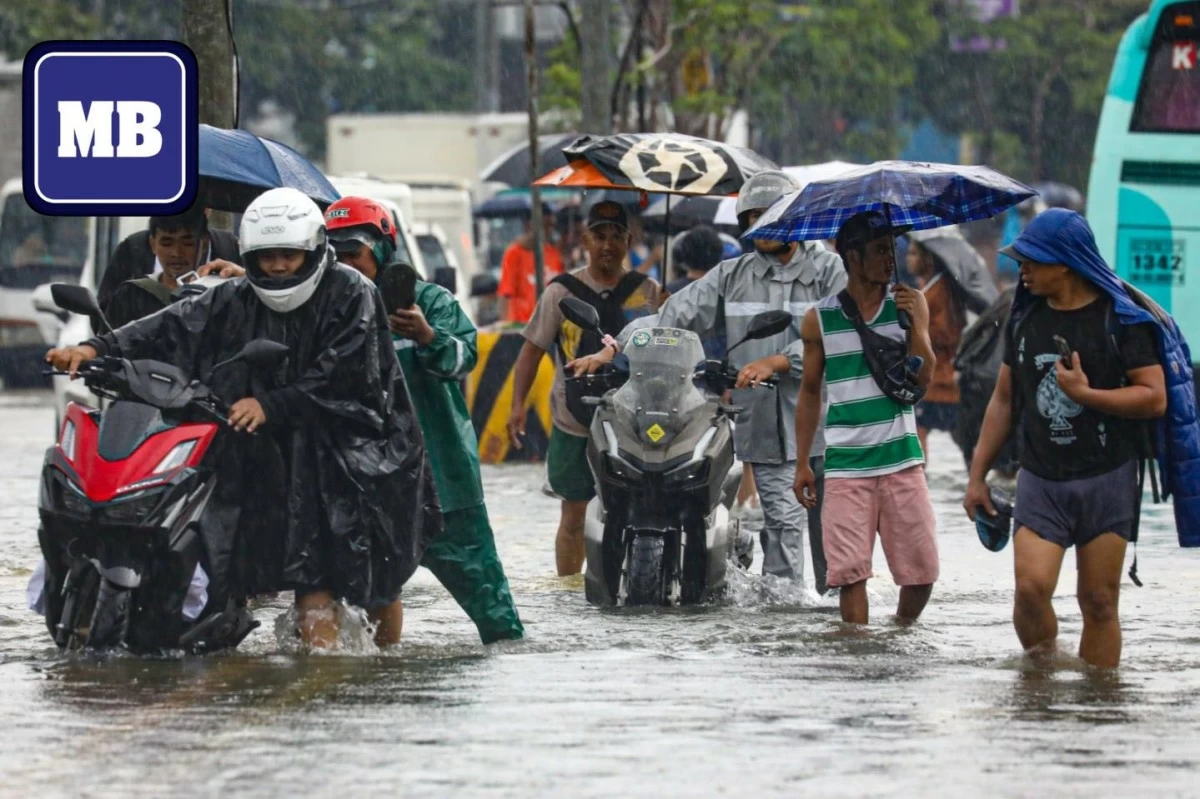
(John Louie Abrina/Manila Bulletin)
As more rains from the enhanced southwest monsoon, or “habagat,” are expected to drench several parts of the Philippines, the chief of the Philippine Atmospheric, Geophysical and Astronomical Services Administration (PAGASA) said these persistent downpours may be linked to climate change, which is causing warmer seas and heavier rainfall.
PAGASA Administrator Dr. Nathaniel Servando explained on Wednesday, July 23, that climate change is causing global temperatures to rise, a trend that is also reflected in local temperature records.
He said average air temperatures in the Philippines have been steadily increasing alongside this global pattern, noting that rising temperatures also cause sea surface temperatures to climb.
“We know that when the temperature of our oceans is high, it produces more water vapor, which fuels tropical cyclones to become more intense. Of course, more water vapor means we will experience heavier rainfall when there is climate change or global warming,” Servando explained in Filipino.
PAGASA data shows that although rainfall totals over the past two days have not yet surpassed monthly averages, more areas are receiving rain from the habagat, and the rainfall is heavier than before.
In Cavite’s Sangley Point, for example, Servando said about 350 millimeters of rain fell in a single day during the habagat event, which is nearly 83 percent of the normal total rainfall for the entire month of July.
In Quezon City’s Science Garden, one day’s rain accounted for 55 percent, or more than half, of July’s average monthly rainfall, he added.
Servando noted that while such heavy rainfall has been recorded before, what stands out now is how these rains are affecting a broader area.
“Not only did Metro Manila experience heavy rains, but also a wide area including Western Visayas and the western parts of Luzon have received rainfall,” he said, adding that this impact reflects changes in weather patterns likely influenced by the ongoing climate crisis.
When asked if the habagat and rainfall from tropical cyclones will become wetter in the coming years due to the ongoing climate crisis, Servando replied, “Yes, we expect that. But of course, the intensity of tropical cyclones and their behavior, including where they form and which areas they hit, can vary.”
He also highlighted a significant shift in cyclone patterns affecting the country.
“Even the southern portion of the country—Mindanao—has started to be affected by tropical cyclones. In the past, we never raised storm wind signals even in the Davao Region. This is one of the clear manifestations of the effects of climate change,” he said.
Servando cited studies showing that with climate change and global warming, both the intensity of tropical cyclones and the amount of rainfall they bring are expected to increase.

Related Tags

PAGASA HABAGAT CLIMATE CHANGE SOUTHWEST MONSOON GLOBAL WARMING
ADVERTISEMENT
.most-popular .layout-ratio{ padding-bottom: 79.13%; } @media (min-width: 768px) and (max-width: 1024px) { .widget-title { font-size: 15px !important; } }

{{ articles_filter_1561_widget.title }}

.most-popular .layout-ratio{ padding-bottom: 79.13%; } @media (min-width: 768px) and (max-width: 1024px) { .widget-title { font-size: 15px !important; } }

{{ articles_filter_1562_widget.title }}

.most-popular .layout-ratio{ padding-bottom: 79.13%; } @media (min-width: 768px) and (max-width: 1024px) { .widget-title { font-size: 15px !important; } }

{{ articles_filter_1563_widget.title }}

{{ articles_filter_1564_widget.title }}

.mb-article-details { position: relative; } .mb-article-details .article-body-preview, .mb-article-details .article-body-summary{ font-size: 17px; line-height: 30px; font-family: "Libre Caslon Text", serif; color: #000; } .mb-article-details .article-body-preview iframe , .mb-article-details .article-body-summary iframe{ width: 100%; margin: auto; } .read-more-background { background: linear-gradient(180deg, color(display-p3 1.000 1.000 1.000 / 0) 13.75%, color(display-p3 1.000 1.000 1.000 / 0.8) 30.79%, color(display-p3 1.000 1.000 1.000) 72.5%); position: absolute; height: 200px; width: 100%; bottom: 0; display: flex; justify-content: center; align-items: center; padding: 0; } .read-more-background a{ color: #000; } .read-more-btn { padding: 17px 45px; font-family: Inter; font-weight: 700; font-size: 18px; line-height: 16px; text-align: center; vertical-align: middle; border: 1px solid black; background-color: white; } .hidden { display: none; }
function initializeAllSwipers() { // Get all hidden inputs with cms_article_id document.querySelectorAll('[id^="cms_article_id_"]').forEach(function (input) { const cmsArticleId = input.value; const articleSelector = '#article-' + cmsArticleId + ' .body_images'; const swiperElement = document.querySelector(articleSelector); if (swiperElement && !swiperElement.classList.contains('swiper-initialized')) { new Swiper(articleSelector, { loop: true, pagination: false, navigation: { nextEl: '#article-' + cmsArticleId + ' .swiper-button-next', prevEl: '#article-' + cmsArticleId + ' .swiper-button-prev', }, }); } }); } setTimeout(initializeAllSwipers, 3000); const intersectionObserver = new IntersectionObserver( (entries) => { entries.forEach((entry) => { if (entry.isIntersecting) { const newUrl = entry.target.getAttribute("data-url"); if (newUrl) { history.pushState(null, null, newUrl); let article = entry.target; // Extract metadata const author = article.querySelector('.author-section').textContent.replace('By', '').trim(); const section = article.querySelector('.section-info ').textContent.replace(' ', ' '); const title = article.querySelector('.article-title h1').textContent; // Parse URL for Chartbeat path format const parsedUrl = new URL(newUrl, window.location.origin); const cleanUrl = parsedUrl.host + parsedUrl.pathname; // Update Chartbeat configuration if (typeof window._sf_async_config !== 'undefined') { window._sf_async_config.path = cleanUrl; window._sf_async_config.sections = section; window._sf_async_config.authors = author; } // Track virtual page view with Chartbeat if (typeof pSUPERFLY !== 'undefined' && typeof pSUPERFLY.virtualPage === 'function') { try { pSUPERFLY.virtualPage({ path: cleanUrl, title: title, sections: section, authors: author }); } catch (error) { console.error('ping error', error); } } // Optional: Update document title if (title && title !== document.title) { document.title = title; } } } }); }, { threshold: 0.1 } ); function showArticleBody(button) { const article = button.closest("article"); const summary = article.querySelector(".article-body-summary"); const body = article.querySelector(".article-body-preview"); const readMoreSection = article.querySelector(".read-more-background"); // Hide summary and read-more section summary.style.display = "none"; readMoreSection.style.display = "none"; // Show the full article body body.classList.remove("hidden"); } document.addEventListener("DOMContentLoaded", () => { let loadCount = 0; // Track how many times articles are loaded const offset = [1, 2, 3, 4, 5, 6, 7, 8, 9, 10]; // Offset values const currentUrl = window.location.pathname.substring(1); let isLoading = false; // Prevent multiple calls if (!currentUrl) { console.log("Current URL is invalid."); return; } const sentinel = document.getElementById("load-more-sentinel"); if (!sentinel) { console.log("Sentinel element not found."); return; } function isSentinelVisible() { const rect = sentinel.getBoundingClientRect(); return ( rect.top < window.innerHeight && rect.bottom >= 0 ); } function onScroll() { if (isLoading) return; if (isSentinelVisible()) { if (loadCount >= offset.length) { console.log("Maximum load attempts reached."); window.removeEventListener("scroll", onScroll); return; } isLoading = true; const currentOffset = offset[loadCount]; window.loadMoreItems().then(() => { let article = document.querySelector('#widget_1690 > div:nth-last-of-type(2) article'); intersectionObserver.observe(article) loadCount++; }).catch(error => { console.error("Error loading more items:", error); }).finally(() => { isLoading = false; }); } } window.addEventListener("scroll", onScroll); });

Sign up by email to receive news.