






Manila Bulletin
 Business
Trade & Industry
Chinese exports rerouting surges imports of emerging markets like Philippines
Business
Trade & Industry
Chinese exports rerouting surges imports of emerging markets like Philippines
Business
Trade & Industry
Chinese exports rerouting surges imports of emerging markets like Philippines
Chinese exports rerouting surges imports of emerging markets like Philippines
Published Jul 23, 2025 12:58 pm
|
Updated Jul 23, 2025 01:06 pm


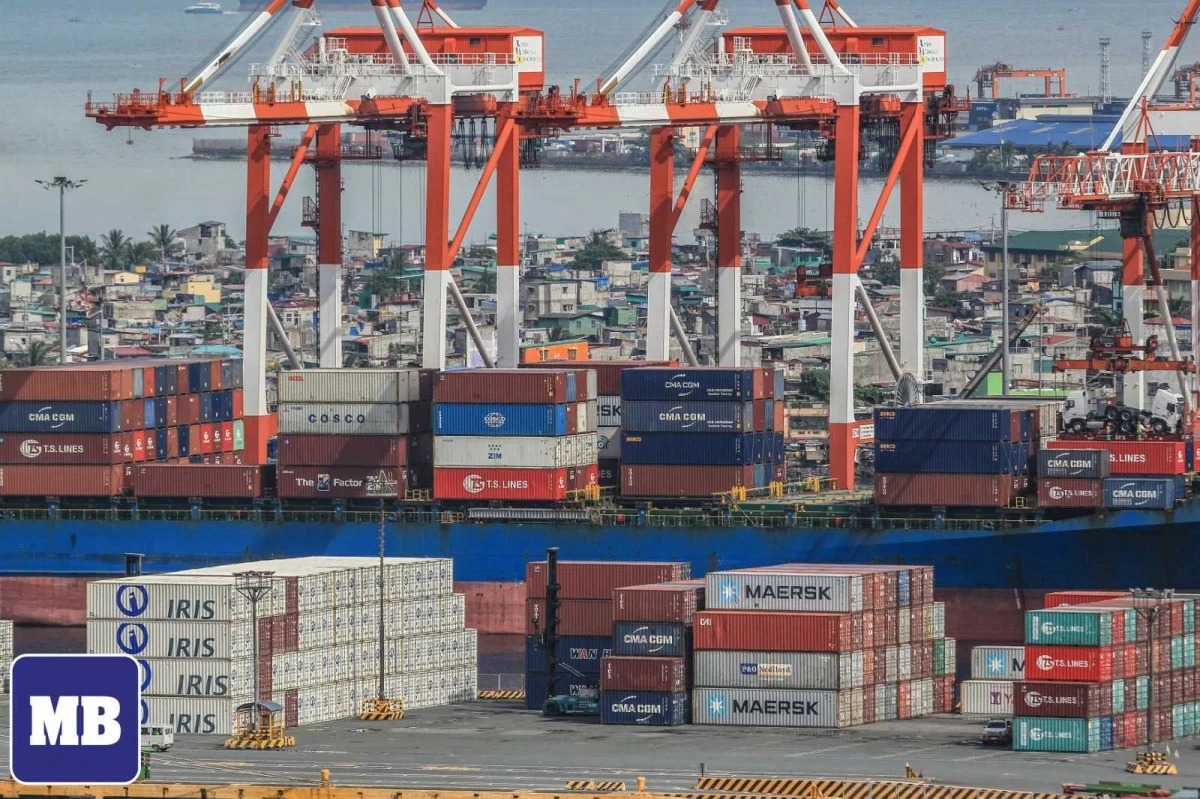
(Manila Bulletin file photo)
Amid trade tensions between Washington and Beijing, China is increasing exports to emerging markets (EMs) like the Philippines, to reroute shipments to the United States (US), think tanks said.
“US tariffs appear to have given renewed impetus to Chinese producers’ efforts to export to EMs, resulting in a widening trade surplus with the EM world in the first half of the year,” said Capital Economics chief EMs economist William Jackson in a July 22 report.
“Whereas EMs accounted for about 70 percent of the rise in China’s exports between 2019 and 2024, they accounted for almost 90 percent of the approximately $100-billion increase in the first half of this year compared with the same period of 2024,” Jackson pointed out.
On the other hand, Jackson noted that “China’s imports from EMs have declined over the same period, reflecting in large part the lower prices of its commodity imports.” This has led to an even wider Chinese trade surplus with EMs.
“Part of the rise in China’s exports to EMs reflects efforts to reroute shipments to the US via third markets to avoid high tariffs. Exports to some of the traditional conduits for transshipments to the US, particularly Vietnam, but also Malaysia and Thailand, have risen particularly sharply,” Jackson explained.
“But it’s not all about rerouting. The rise in exports has been geographically broad. In dollar terms, China grew its exports in around 75 percent of EMs in the first half of the year. Many of the key growth markets include parts of the Middle East and Latin America that have not been rerouting hubs in the past. This appears to reflect Chinese producers seeking new markets,” he added.
The Philippines is a net importer of the goods it consumes. Economists are bracing for a surge of products coming from China—already the top source of Philippine imports for many years now—as Chinese exporters look for alternative markets other than the US amid renewed trade tensions between Beijing and Washington.
The latest Philippine Statistics Authority (PSA) data showed that imports from China soared 14.9 percent year-on-year to $3.15 billion in May, bringing the first five months’ total to $15.31 billion—higher by 17.8 percent than a year ago.
Imported Chinese goods also hiked their share to over 28-29 percent of the month’s and end-May’s totals, versus 24-25 percent for the same periods last year.
For Jackson, surging Chinese imports “may be seen as a growing threat to the well-trodden EM development path up the manufacturing value chain.”
In a separate report, Oxford Economics lead economist Alexandra Hermann pointed to “surprisingly robust” Asian exports, some of which “likely reflects rerouted shipments from China.”
“Export strength so far has largely been correlated with the importance of machinery and electronics and the size of the US as a destination market in a country’s export mix. In Taiwan, one-fifth of all exports are machinery and electronics destined for the US. In Thailand, Vietnam, the Philippines, and Malaysia, the equivalent share is a sizable 12-14 percent,” Hermann noted.
“A key factor supporting the sector’s export resilience so far has been exemptions from US import tariff for several major product categories, including semiconductors and smartphones, and crucially the likelihood that these will be phased out soon,” she explained.
Electronic products are the Philippines’ top export commodity, accounting for about three-fifths of the value of outbound shipments.
Also, Hermann cited that “the US’ strong import reliance on Asia, and specifically China, is also reflected in Chinese products that are already subject to considerably higher US import tariffs being rerouted through the rest of Asia.”
“China’s direct exports to the US plummeted by $24.3 billion in April and May compared to a year ago. The pattern persisted in June. Meanwhile, exports to the most obvious possible re-routing Asian destinations—Malaysia, the Philippines, Thailand, and Vietnam—surged by $11.8 billion. At the same time, these countries’ exports to the US rose by similar amounts,” she noted.
“Re-export data from Hong Kong, Malaysia, Singapore, and Taiwan provide more evidence of Chinese manufacturers likely rerouting through ASEAN [Association of Southeast Asian Nations] hubs. Re-exports growth in these economies was faster than domestic exports growth in the second quarter, suggesting regional supply chains have adapted quickly to tariff developments since April,” she added.
For Hermann, “the clearest sign is a pronounced shift in Chinese exports transiting through Hong Kong away from the US to ASEAN-6 (Indonesia, Malaysia, the Philippines, Singapore, Thailand, and Vietnam),” pointing out that “the US levies the same tariffs on Hong Kong as it does on mainland China, which is much higher than on the ASEAN-6.”