






Manila Bulletin
 Business
The Economy
Cebu BRT: A decade in the making, now ready for September pilot
Business
The Economy
Cebu BRT: A decade in the making, now ready for September pilot
Business
The Economy
Cebu BRT: A decade in the making, now ready for September pilot
Cebu BRT: A decade in the making, now ready for September pilot
Published Jul 23, 2025 06:13 pm


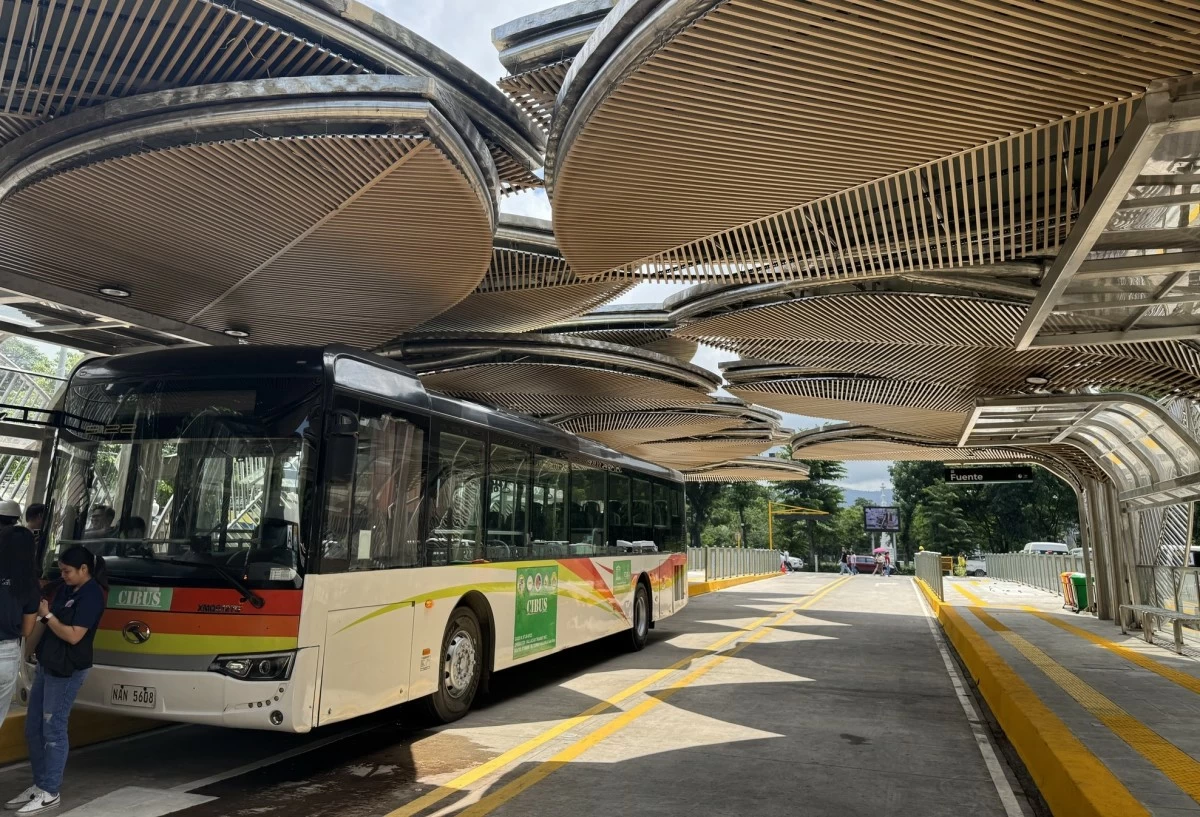
A look at one of the stations of the Cebu Bus Rapid Transit (DOTr photo)
The Department of Transportation (DOTr) announced that pilot operations of the Cebu Bus Rapid Transit (BRT) will commence in September, nearly a decade after funding for the project was approved.
Transportation Secretary Vince Dizon said the pilot run is expected to benefit up to 70,000 commuters, spanning three stations of the Cebu BRT’s first phase.
The first phase of the project encompasses the 2.38-kilometer bus lane that extends from the Cebu South Bus Terminal to the Cebu Provincial Capitol along Osmeña Highway.
Initial operations will cover the Cebu South Bus Terminal, Cebu Normal University, and Fuente.
Dizon said the station at the Cebu Provincial Capitol is still under development, as its engineering design has been revised to convert it from a curbside configuration to a median station.
He said the construction of the station will begin immediately after plans are finalized.
Dizon added that the government is expediting the construction of other stations to further expand its reach, benefiting more commuters.
The second and third phases of the Cebu BRT, which comprise 13 stations and 62 bus stops, are expected to be completed in 2028.
A BRT system for Cebu City was first conceptualized during the 1990s, with formal conceptualization beginning in 2010.
Following the completion of its feasibility study, the World Bank approved a $116-million loan for the project in 2014.
As the Manila Bulletin earlier reported, the Washington-based multilateral lender recommended restructuring its loan, of which only 32 percent has been disbursed so far, as it nears expiration.
The World Bank has criticized the project’s slow implementation, noting that major civil works packages have yet to be launched.
Aside from the World Bank, the funding sources for the Cebu BRT include the French Development Agency and the Philippine government.
Once completed, the Cebu BRT will span 17 kilometers of trunk service and 18 kilometers of feeder services in the north and south of the trunk lines.
It will feature 22 stations, 62 bus stops, four terminals, and a depot.
During full operations, the entire transit system is expected to serve 164,000 passengers.
In a related development, the DOTr has launched a free ride program along the Urgello–Parkmall route in Cebu City, where commuters can ride modern jeepneys at no cost.
The government has allocated ₱125 million for a full year of free rides, which can serve approximately 20,000 passengers daily.
Through the service contracting program, the initiative aims to provide a fixed income to over 400 drivers and operators.
The DOTr is also studying the expansion of the free ride program to other routes, such as Talisay–IT Park, which is heavily used by call center agents.
Dizon said the program, which is expected to run until 2028, will run daily from 6:00 to 9:00 am and 5:00 to 8:00 pm.