






Manila Bulletin
 Philippines
National
AFP backs US proposal for deployment of more US assets, base development
Philippines
National
AFP backs US proposal for deployment of more US assets, base development
Philippines
National
AFP backs US proposal for deployment of more US assets, base development
AFP backs US proposal for deployment of more US assets, base development
Published Jul 23, 2025 04:08 pm


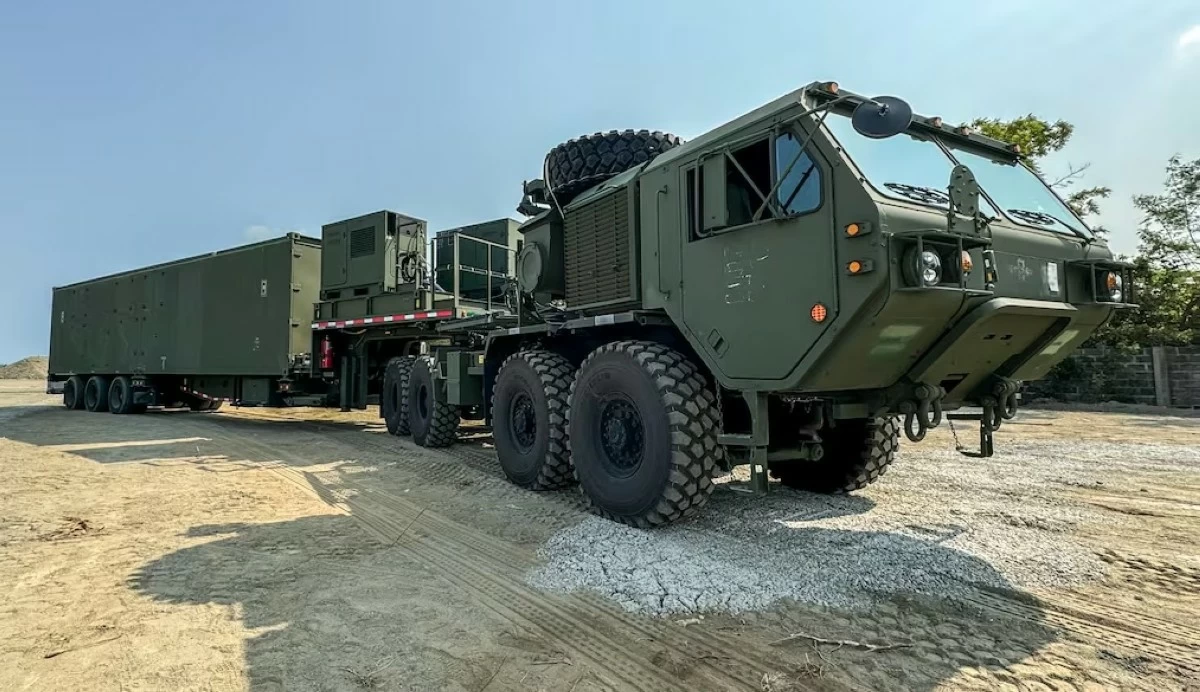
The Typhon mid-range capability (MRC) missile system of the United States arrives in Northern Luzon, in April, 2024 for a military exercise. (Photo: Capt. Ryan DeBooy/US Army)
The Armed Forces of the Philippines (AFP) welcomed the commitment of the United States government to send advanced equipment and assets, such as missiles and drones, and enhance industrial bases in the Philippines to build a credible “shield of deterrence” and resist China’s growing presence in the West Philippine Sea (WPS).
“The overall posture of the Armed Forces is that we welcome all statements of support, all actions by our like-minded countries who support us in our stand in the West Philippine Sea,” said Rear Adm. Roy Vincent Trinidad, AFP spokesperson for WPS.
The commitment was made by US Defense Secretary Pete Hegseth during his meeting with President Marcos Jr. and Department of National Defense (DND) Secretary Gilberto Teodoro Jr. on Monday, July 21.
Hegseth said that the US government is ready to cooperate with the Philippines to modernize and train with the AFP.
“We're also deploying new cutting-edge missiles and unmanned systems, and revitalizing our defense industrial bases. Together, we must forge a strong shield of real deterrence for peace, ensuring the long-term security and prosperity for our nations,” he said in a transcript provided by the US defense department.
The US military has deployed two missile systems in the Philippines, which are the Typhon mid-range capability (MRC) and the Navy-Marine Expeditionary Ship Interdiction System (NMESIS).
The Typhon and NMESIS missile systems were first deployed in 2024 for the Balikatan and Salaknib exercises between the AFP and US Armed Forces. They were again used in this year’s iteration of the war games, and the AFP had said the missile systems will not be pulled out since they would still have to use them for future exercises.
Washington is also building an ammunition hub in Subic, a former US naval base, as well as a boat maintenance facility in Palawan facing the WPS.
The presence of the US missile systems in the Philippines angered China, with its foreign ministry noting that their placements were “provocative” and “escalatory.” It further warned that they risk turning the Philippines into a “pawn of foreign powers.”
However, Trinidad begs to differ. He said the presence of Typhon and NMESIS, as well as future US assets, in the country signals a strong collaboration of the Philippines with “like-minded” countries against unilateral attempts to change the international order.
“The coming together of different countries to support the stand of the government of the Philippines in the West Philippine Sea is a very strong deterrent factor against the Chinese Communist Party,” he said.
“If you notice, it's not only in the Indo-Pacific region but we have also countries from Northern America, from Europe who are expressing support and sending their ships to show that they are serious in providing not only statements but even actions of support to the stand of the country,” he added.