






Manila Bulletin
 Philippines
National
'Very old' drainage system hampers Metro Manila flood control—DPWH
Philippines
National
'Very old' drainage system hampers Metro Manila flood control—DPWH
Philippines
National
'Very old' drainage system hampers Metro Manila flood control—DPWH
'Very old' drainage system hampers Metro Manila flood control—DPWH
By Trixee Rosel
Published Jul 22, 2025 03:25 pm


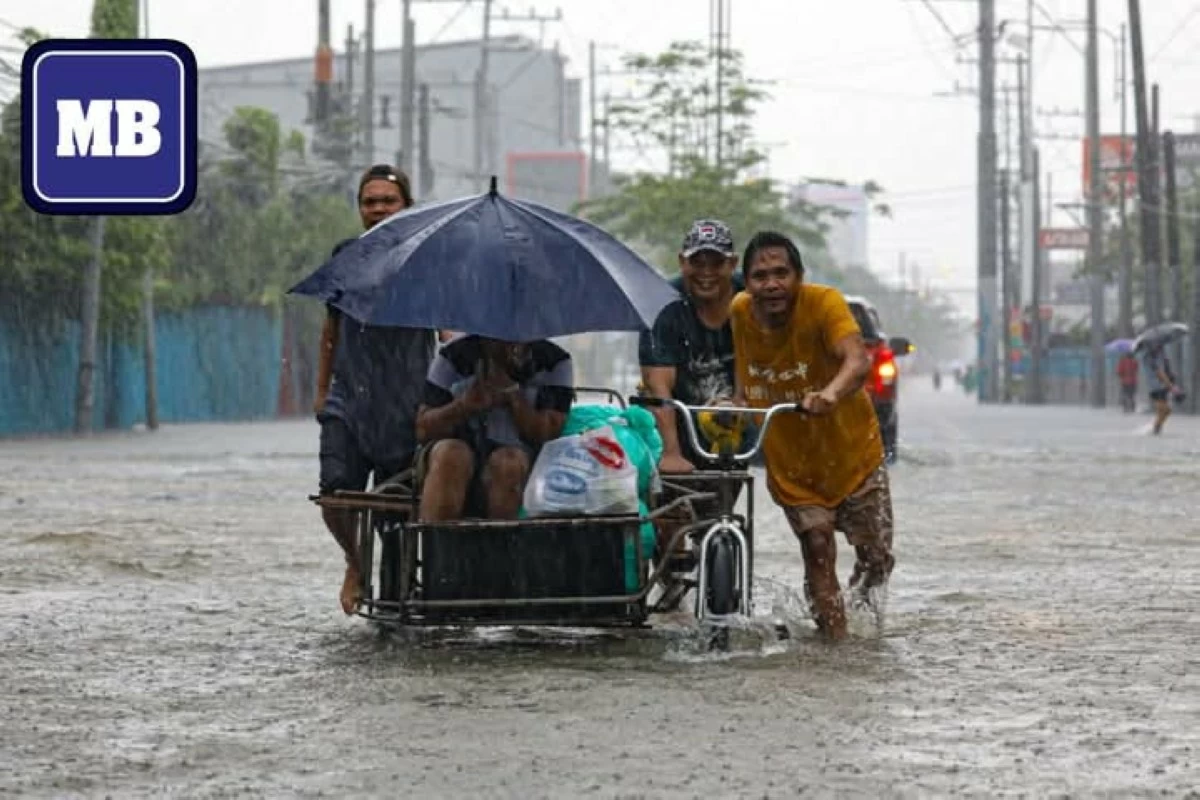
A group makes their way through knee-deep floodwaters along Felix Avenue in Cainta, Rizal, on Tuesday, July 22, 2025, after heavy rains brought by the southwest monsoon. The Department of Public Works and Highways (DPWH) said Metro Manila’s aging drainage system can no longer cope with severe downpours, hampering flood control efforts. (John Louie Abrina/MB)
The Department of Public Works and Highways (DPWH) on Tuesday, July 22, raised concern over Metro Manila’s flood control capability, saying the region’s “very old” drainage system is no longer sufficient to handle the volume of rainwater during heavy downpours.
DPWH Secretary Manuel Bonoan said nearly 70 percent of the capital region’s drainage network can no longer channel floodwaters to pumping stations, even though these facilities remain fully operational.
“The pumping stations are working. The problem is, floodwaters can’t flow to them because the drainage system is not adequate to convey floodwaters,” Bonoan said, noting that much of the system is outdated and heavily silted.
He also cited that areas previously not prone to flooding, including Commonwealth Avenue in Quezon City, are now experiencing water buildup due to clogged inlets and disconnected waterways.
A comprehensive assessment by the DPWH showed that the region’s drainage network can no longer cope with present-day rainfall levels.
In response, the department has partnered with the World Bank to update Metro Manila’s flood management master plan.
The updated plan includes the rehabilitation of 32 existing pumping stations and the construction of two additional facilities in the Metro Talon area.
While operations and maintenance are under the Metropolitan Manila Development Authority (MMDA), the DPWH is leading infrastructure improvements.
“This has to be done immediately. It’s only the start of the rainy season, and already we’re seeing serious flooding issues,” Bonoan said.
The agency will also review MMDA’s report attributing flooding along Commonwealth Avenue to the ongoing construction of the MRT-7 station.
Bonoan said technical recommendations will be issued following a detailed assessment.
Meanwhile, more than 20,000 residents across 55 barangays in Quezon City were evacuated due to severe flooding caused by garbage-clogged drains and rising waters from the San Mateo, San Juan, Tullahan, and Meycauayan rivers.
Quezon City spokesperson Peachy de Leon said the city’s drainage system was overwhelmed by improperly disposed garbage and the overflowing La Mesa Dam, which contributed to flooding in several low-lying communities.
To address long-term flood risks, the DPWH is pursuing the Pasig-Marikina River floodway program, which includes the construction of retarding basins and potential flood-control dams to manage runoff from the Sierra Madre mountain range.
Bonoan said President Marcos has directed a “holistic approach” to flood mitigation, integrating engineering solutions with land use planning, environmental protection, and solid waste management.
“Flooding is not just an engineering problem. It’s also a problem of environment, land use, and garbage. We need an all-of-government strategy,” Bonoan added.