







This town is beating illiteracy—and it's not in Metro Manila
How Norzagaray, Bulacan beat illiteracy and was cited by DepEd, EDCOM 2 as a national model for ending illiteracy in Philippine schools
Published Jul 22, 2025 08:06 pm


At A Glance
- Norzagaray, Bulacan proves that towns beyond Metro Manila can overcome illiteracy
- DepEd and EDCOM 2 cite the municipality as a national model for education reform
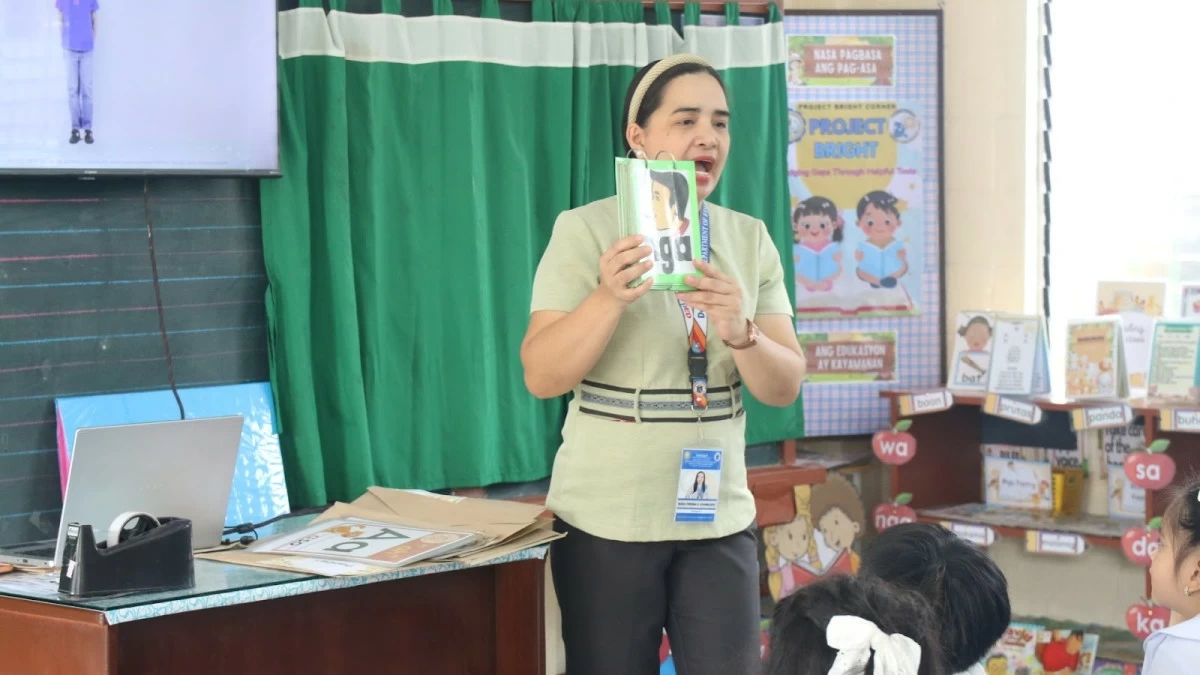
DepEd and EDCOM 2 recognize Norzagaray, Bulacan as a national model in ending illiteracy, showing that transformative education reform is possible across the Philippines. (Photo from EDCOM 2)
In a remarkable turnaround that defies national trends, the town of Norzagaray in Bulacan has emerged as a national model in the fight against illiteracy.
Cited by both the Department of Education (DepEd) and the Second Congressional Commission on Education (EDCOM 2), Norzagaray’s targeted literacy initiatives are proving that even communities outside Metro Manila can lead the way in transforming Philippine education.
A powerful model of hope
Amid growing concern over poor literacy rates in the Philippines, schools in Norzagaray, Bulacan have become a beacon of hope and a blueprint for nationwide education reform.
With support from DepEd, EDCOM 2, and strong backing from the local government, Norzagaray has successfully eliminated illiteracy among Grades 1 to 3 students—setting a new national benchmark.
The turnaround stems from Project BRIGHT (BRIdging Gaps through Helpful Tools), a local initiative launched in 2023 that mobilized DepEd schools, teachers, parents, and the local government to confront early-grade illiteracy head-on.
The results are remarkable: 60.73 percent of Norzagaray learners now read at grade level—significantly higher than the national average of 47.74 percent, according to DepEd’s 2024–2025 Comprehensive Rapid Literacy Assessment (CRLA).
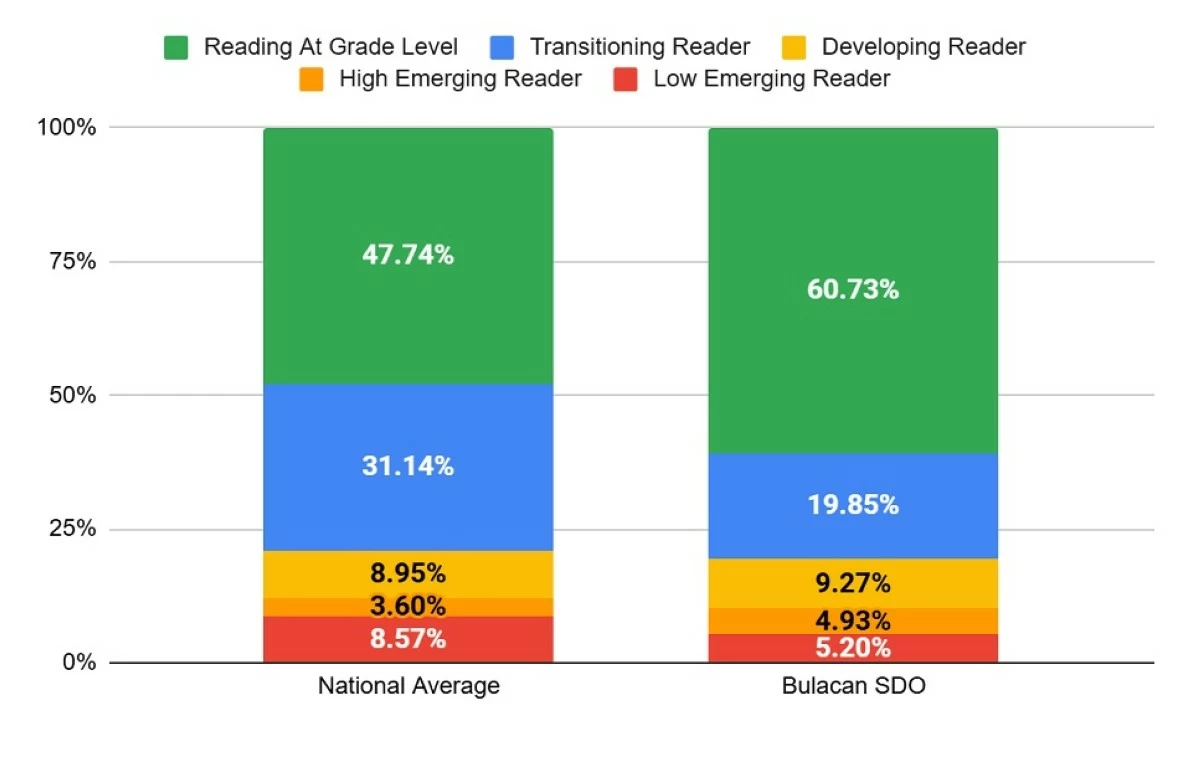
A standout achievement is that 60.73 percent of students in Norzagaray, Bulacan are now reading at their grade level, far exceeding the national average of 47.74 percent. (Photo from EDCOM 2)
From crisis to classroom success
These improvements sharply contrast with findings from the 2022 PISA report and a World Bank study, which revealed that 75 percent of Filipino students underperform in core subjects and that 91 percent of 10-year-olds struggle to read simple texts.
But Norzagaray’s schools tell a different story—one of resilience, innovation, and community-driven change.
“We are inspired by the success of Norzagaray, which shows us—without a doubt—that every Filipino student can read and achieve their full potential,” said EDCOM 2 Executive Director Karol Mark Yee.
“These schools we have visited here in Norzagaray prove that with determined school leaders and teachers, strong community support, and a formidable partnership with the LGU, we can successfully tackle illiteracy and secure a strong foundation of learning for our students,” he added.
Best practices in literacy reform
Among the standout schools visited by EDCOM 2 and DepEd officials were North Hills Village Elementary School – 61.6 percent progress; FVR Phase 3 Elementary School – 52.7 percent progress; and Norzagaray Elementary School – 47.1 percent progress.
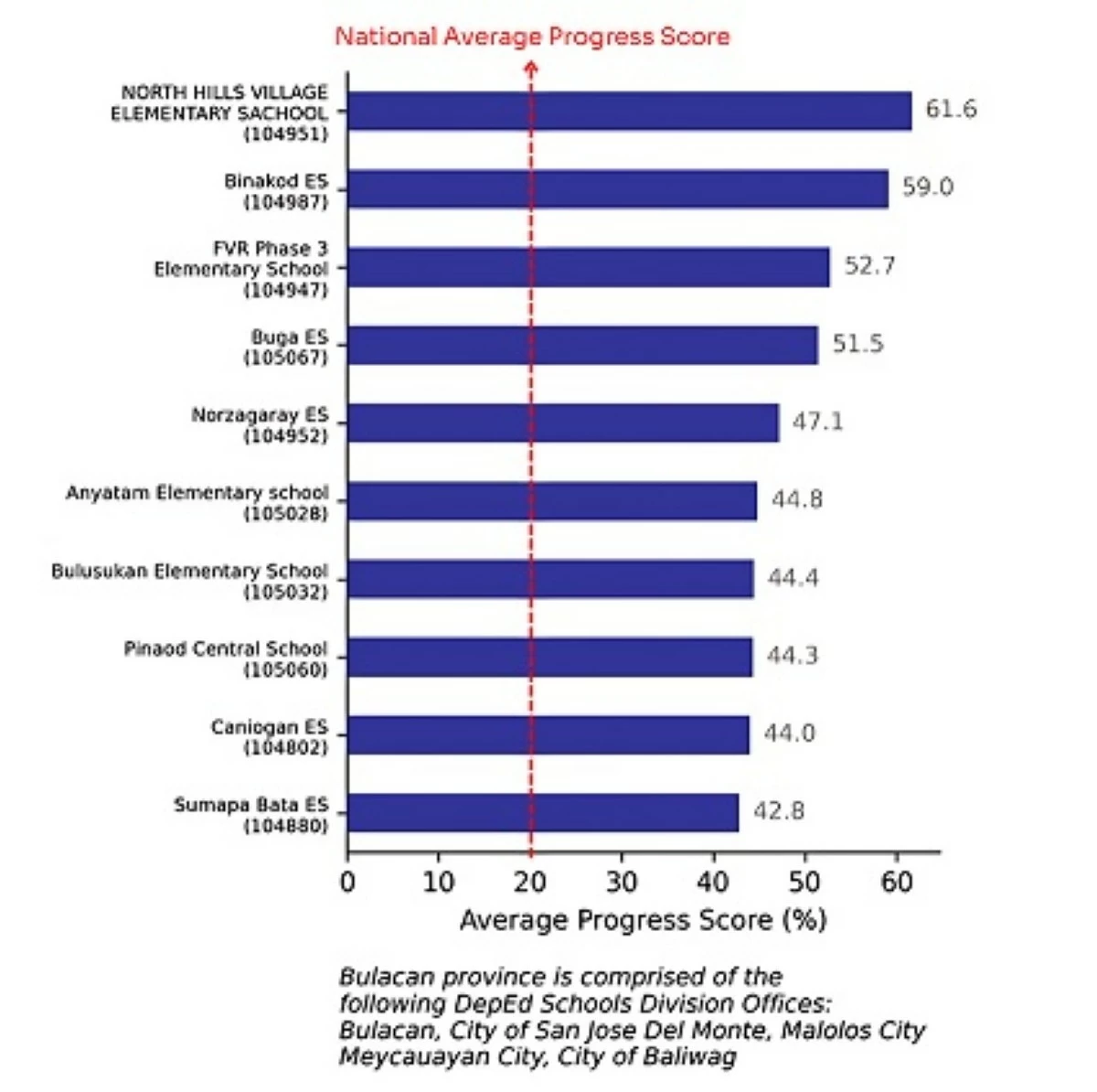
The schools visited by EDCOM 2 and DepEd in Norzagaray exemplified this success.(Photo from EDCOM 2)
Across these schools, teachers implemented creative and targeted literacy interventions.
These included learning-through-play strategies, phonics and vocabulary games, lunchtime storytelling, one-on-one reading tutorials, and engaging songs and online activities.
“Di naman po pwedeng basa-basa agad ang bata. Dinadaan aming sa paglalaro, at may competency naman po na kasama sa learning through play (We can’t just rush a child into reading right away. We guide them through play, and competencies are built into the learning-through-play approach),” explained Norzagaray Public School District Supervisor Nora Manalo.
Teachers emphasized that small class sizes (1:31) and a 1:1 book-to-pupil ratio were critical to student success.
The missing link: Local government
Teachers cited how local government support played a decisive role in the turnaround.
Norzagaray Mayor Merlyn Germar allocated P7,000 incentives for teachers during summer reading camps and ensured a steady supply of literacy materials throughout the school year.
Germar, for her part, highlighted the local community’s support as a key contributor to the success of the district’s literacy remediation projects.
She also underscored the town’s steadfast commitment to advancing Project BRIGHT’s goals through initiatives like book distribution and continued support for government-led reading camps.
“Sa Norzagaray, naniniwala kami na ang edukasyon ay responsibilidad nating lahat… na ang pagbabasa ay hindi lamang kasanayan, kundi susi ng kinabukasan (In Norzagaray, we believe that education is everyone’s responsibility… that reading is not just a skill, but a key to the future),” she added.
DepEd eyes nationwide adoption through ARAL Program
Meanwhile, DepEd officials lauded Norzagaray’s achievements as a model for the Academic Recovery and Accessible Learning (ARAL) Program, which aims to address learning losses nationwide.
“Visiting your schools has given us valuable insight into how we can strengthen ARAL across the country,” said DepEd Assistant Secretary Jerome Buenviaje.
DepEd Undersecretary Malcolm Garma also emphasized the value of data-driven instruction, enabled by tools like the CRLA.
“This really proves that a program like this can succeed if we start leveraging the data,” Garma said. “Because of the CRLA, your efforts are more targeted and focused on the learners who need it most,” he added.
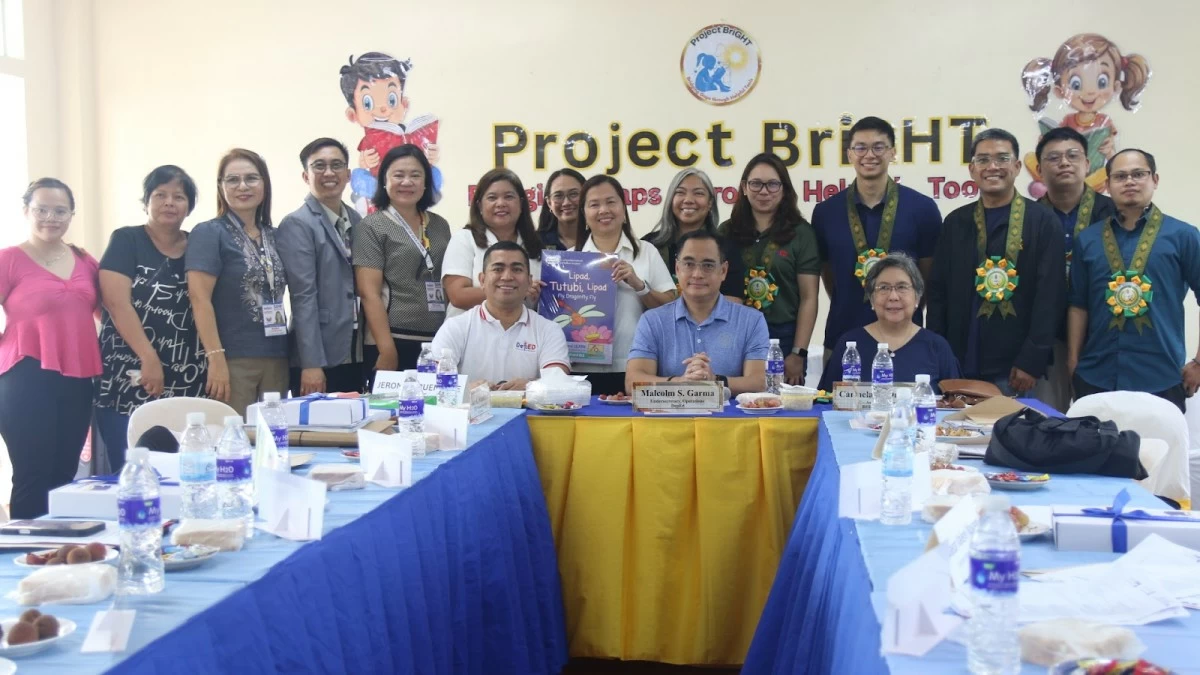
(Photo from EDCOM 2)
Other DepEd officials who joined the EDCOM 2 team included Assistant Secretary Carmela Oracion and Assistant Secretary Jerome Buenviaje, along with directors and staff from various DepEd offices.
Bulacan Schools Division Superintendent Norma P. Esteban also joined the visit, accompanied by officers from the Schools Division Office.
EDCOM 2’s education reform agenda
The consultations in Norzagaray form part of EDCOM 2’s broader mission to “fix the foundations” of Philippine education by addressing early-grade literacy and student nutrition.
Created under Republic Act 11899, EDCOM 2 is tasked with assessing the performance of the education sector and recommending policy solutions to address systemic issues.