ADVERTISEMENT

Grab now accepts crypto for GrabPay top-ups

Published Jul 22, 2025 12:34 pm
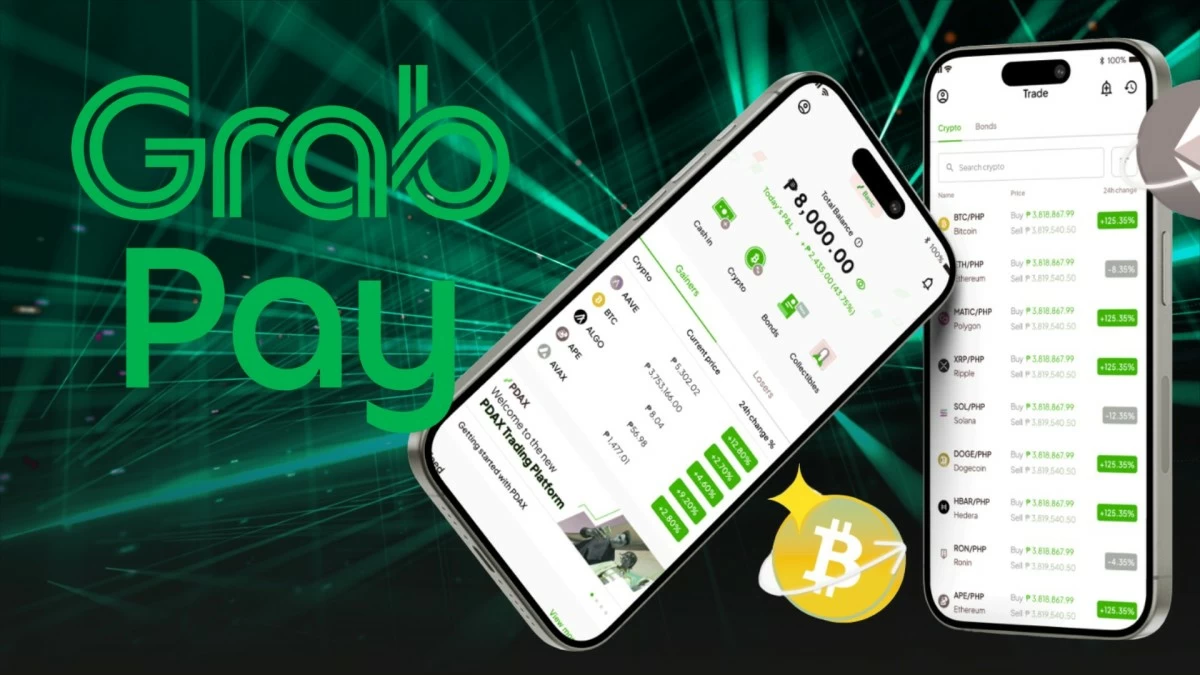
Grab Philippines is now accepting cryptocurrencies as a new cash-in method for its in-app digital wallet as the ride-hailing giant seeks to promote greater financial inclusion among digital-first Filipinos.
Its parent company, Grab Holdings Inc., first launched the crypto top-up option in Singapore last year through its tie-up with digital currencies payments provider Triple-A.
Grab Philippines said it has partnered with Triple-A and local digital asset exchange PDAX to enable the new cash-in method.
The new cryptocurrency option will allow users to top up their GrabPay wallets using Bitcoin, Ether, USDT, and US dollar-backed stablecoin USDC.
The company said users can select the option in the Grab app, allowing them to transfer tokens from their preferred crypto wallet to the provided address.
CJ Lacsican, head of the Grab financial group in the Philippines, said introducing this option reflects the company’s commitment to advancing financial inclusion.
“By offering more accessible, digital-first solutions, we aim to empower a wider spectrum of Filipinos—especially those with limited access to traditional banking or those who prefer the convenience of digital currencies,” she said.
Other cash-in methods for GrabPay include e-wallets, linked bank accounts, debit and credit cards, online banking via InstaPay, and select convenience stores and business centers.
PDAX Chief Executive Officer (CEO) Nichel Gaba stated that the Philippine market is ripe for introducing cryptocurrency as a payment option, as it now boasts one of the largest user base worldwide.
Gaba said their partnership with Grab Philippines will both support the existing crypto community and drive greater adoption.
Triple-A CEO Eric Barbier said he is looking forward to a strong response from the local market after the feature’s successful launch in Singapore.
“We're looking forward to bringing this service to the Philippines, a market that's ready for digital currencies,” said Barbier.
“This is a big step in making digital currencies easier to use in everyday life across Southeast Asia,” he added.
Grab Philippines has assured crypto users that every top-up of their GrabPay wallets is safe and secure.
It noted that Triple-A is licensed by financial watchdogs Monetary Authority of Singapore (MAS) and the Financial Crimes Enforcement Network (FinCEN), while PDAX is regulated by the Bangko Sentral ng Pilipinas (BSP).
Grab Philippines said its cryptocurrency option meets global standards for cybersecurity, fraud prevention, and data protection.
Aside from ride-hailing, users can access financial services and delivery of food, groceries, and parcels through the Grab app.

Related Tags

Grab Philippines Grab Holdings Inc. crypto top-up Triple-A PDAX
ADVERTISEMENT
.most-popular .layout-ratio{ padding-bottom: 79.13%; } @media (min-width: 768px) and (max-width: 1024px) { .widget-title { font-size: 15px !important; } }

{{ articles_filter_1561_widget.title }}

.most-popular .layout-ratio{ padding-bottom: 79.13%; } @media (min-width: 768px) and (max-width: 1024px) { .widget-title { font-size: 15px !important; } }

{{ articles_filter_1562_widget.title }}

.most-popular .layout-ratio{ padding-bottom: 79.13%; } @media (min-width: 768px) and (max-width: 1024px) { .widget-title { font-size: 15px !important; } }

{{ articles_filter_1563_widget.title }}

{{ articles_filter_1564_widget.title }}

.mb-article-details { position: relative; } .mb-article-details .article-body-preview, .mb-article-details .article-body-summary{ font-size: 17px; line-height: 30px; font-family: "Libre Caslon Text", serif; color: #000; } .mb-article-details .article-body-preview iframe , .mb-article-details .article-body-summary iframe{ width: 100%; margin: auto; } .read-more-background { background: linear-gradient(180deg, color(display-p3 1.000 1.000 1.000 / 0) 13.75%, color(display-p3 1.000 1.000 1.000 / 0.8) 30.79%, color(display-p3 1.000 1.000 1.000) 72.5%); position: absolute; height: 200px; width: 100%; bottom: 0; display: flex; justify-content: center; align-items: center; padding: 0; } .read-more-background a{ color: #000; } .read-more-btn { padding: 17px 45px; font-family: Inter; font-weight: 700; font-size: 18px; line-height: 16px; text-align: center; vertical-align: middle; border: 1px solid black; background-color: white; } .hidden { display: none; }
function initializeAllSwipers() { // Get all hidden inputs with cms_article_id document.querySelectorAll('[id^="cms_article_id_"]').forEach(function (input) { const cmsArticleId = input.value; const articleSelector = '#article-' + cmsArticleId + ' .body_images'; const swiperElement = document.querySelector(articleSelector); if (swiperElement && !swiperElement.classList.contains('swiper-initialized')) { new Swiper(articleSelector, { loop: true, pagination: false, navigation: { nextEl: '#article-' + cmsArticleId + ' .swiper-button-next', prevEl: '#article-' + cmsArticleId + ' .swiper-button-prev', }, }); } }); } setTimeout(initializeAllSwipers, 3000); const intersectionObserver = new IntersectionObserver( (entries) => { entries.forEach((entry) => { if (entry.isIntersecting) { const newUrl = entry.target.getAttribute("data-url"); if (newUrl) { history.pushState(null, null, newUrl); let article = entry.target; // Extract metadata const author = article.querySelector('.author-section').textContent.replace('By', '').trim(); const section = article.querySelector('.section-info ').textContent.replace(' ', ' '); const title = article.querySelector('.article-title h1').textContent; // Parse URL for Chartbeat path format const parsedUrl = new URL(newUrl, window.location.origin); const cleanUrl = parsedUrl.host + parsedUrl.pathname; // Update Chartbeat configuration if (typeof window._sf_async_config !== 'undefined') { window._sf_async_config.path = cleanUrl; window._sf_async_config.sections = section; window._sf_async_config.authors = author; } // Track virtual page view with Chartbeat if (typeof pSUPERFLY !== 'undefined' && typeof pSUPERFLY.virtualPage === 'function') { try { pSUPERFLY.virtualPage({ path: cleanUrl, title: title, sections: section, authors: author }); } catch (error) { console.error('ping error', error); } } // Optional: Update document title if (title && title !== document.title) { document.title = title; } } } }); }, { threshold: 0.1 } ); function showArticleBody(button) { const article = button.closest("article"); const summary = article.querySelector(".article-body-summary"); const body = article.querySelector(".article-body-preview"); const readMoreSection = article.querySelector(".read-more-background"); // Hide summary and read-more section summary.style.display = "none"; readMoreSection.style.display = "none"; // Show the full article body body.classList.remove("hidden"); } document.addEventListener("DOMContentLoaded", () => { let loadCount = 0; // Track how many times articles are loaded const offset = [1, 2, 3, 4, 5, 6, 7, 8, 9, 10]; // Offset values const currentUrl = window.location.pathname.substring(1); let isLoading = false; // Prevent multiple calls if (!currentUrl) { console.log("Current URL is invalid."); return; } const sentinel = document.getElementById("load-more-sentinel"); if (!sentinel) { console.log("Sentinel element not found."); return; } function isSentinelVisible() { const rect = sentinel.getBoundingClientRect(); return ( rect.top < window.innerHeight && rect.bottom >= 0 ); } function onScroll() { if (isLoading) return; if (isSentinelVisible()) { if (loadCount >= offset.length) { console.log("Maximum load attempts reached."); window.removeEventListener("scroll", onScroll); return; } isLoading = true; const currentOffset = offset[loadCount]; window.loadMoreItems().then(() => { let article = document.querySelector('#widget_1690 > div:nth-last-of-type(2) article'); intersectionObserver.observe(article) loadCount++; }).catch(error => { console.error("Error loading more items:", error); }).finally(() => { isLoading = false; }); } } window.addEventListener("scroll", onScroll); });

Sign up by email to receive news.