






Manila Bulletin
 Philippines
National
DepEd, partners to roll out sustainable, accessible transport for Filipino learners
Philippines
National
DepEd, partners to roll out sustainable, accessible transport for Filipino learners
Philippines
National
DepEd, partners to roll out sustainable, accessible transport for Filipino learners
DepEd, partners to roll out sustainable, accessible transport for Filipino learners
Published Jul 22, 2025 02:46 pm


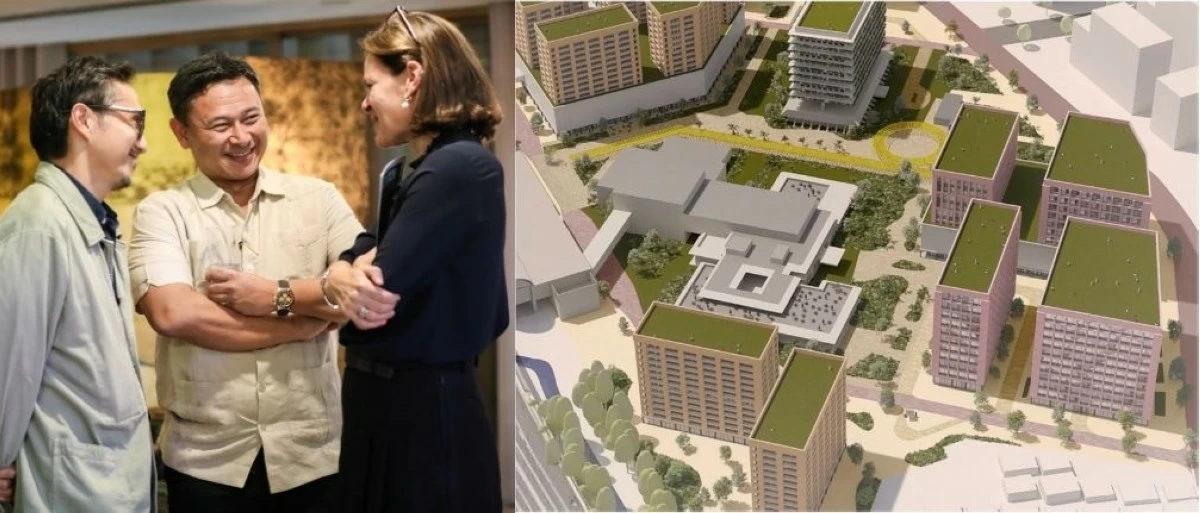
DepEd, DOTr, and the UK partner to build Education City in Taguig and improve student commutes via a transit-oriented project under PBBM’s infrastructure push. (Photo from DepEd)
To enhance student mobility and foster sustainable city planning, the Department of Education (DepEd), in collaboration with the Department of Transportation (DOTr) and the United Kingdom government, has officially launched the Senate-DepEd (SEED) Transit-Oriented Development (TOD) Project.
In a statement, DepEd said the initiative is designed to support President Marcos’ infrastructure agenda by integrating public education with efficient transportation systems.
Through a memorandum of understanding (MOU) signed with the UK Foreign, Commonwealth & Development Office (UK FCDO), the agencies committed to creating safer, more accessible, and environmentally sustainable commuting options for learners and educators across Metro Manila.
“This partnership ensures that our learners and educators will also directly benefit from a well-planned, green, and safe environment that ultimately contributes to our public education objectives,” said Education Secretary Sonny Angara.
Education City to rise in Taguig
At the center of the initiative is the transformation of DepEd’s 13-hectare property in Taguig City into “Education City”—a future-ready, climate-resilient complex that will house green residential and commercial spaces, public transport hubs, teacher accommodations, and facilities for training and conferences.
DepEd said the city will be anchored on the upcoming Senate-DepEd Station, a key transport hub linking the North-South Commuter Railway (NSCR) and the Metro Manila Subway Project (MMSP)—two flagship projects under the "Build Better More" infrastructure program.
Smart urban planning for better access
The SEED TOD Project aims to create walkable, well-connected communities around key railway lines, allowing students and residents to more easily live, learn, and work in Metro Manila.
By improving urban mobility, the project is expected to reduce commute times, ease traffic congestion, and enhance quality of life.
It also presents a potential revenue stream for DepEd, helping fund additional classrooms and accelerate the shift to digital learning in public schools.
UK brings global expertise to the Philippines
“The UK is proud to bring in British expertise and innovation to pioneer a TOD where people can live, learn, work, and thrive—connected by efficient transport systems, designed with people at the heart, and guided by principles of sustainability and resilience,” said British Ambassador to the Philippines Laure Beaufils.
Inspired by London’s Elizabeth Line, the project will tap experts from Crossrail International and leading British engineering and design firms to deliver world-class urban infrastructure.
The initiative is backed by the UK FCDO’s Green Cities and Infrastructure Programme, which promotes sustainable development in partner countries.
Next steps
Under the MOU, a joint working group will oversee the implementation of the project.
The next phase involves conducting technical studies and developing a full project proposal to be submitted to the National Economic and Development Authority (NEDA) Investment Coordination Committee (ICC) for approval.