






Manila Bulletin
 Business
Trade & Industry
Business execs join Asia-Pacific call for trade stability amid tariff fears
Business
Trade & Industry
Business execs join Asia-Pacific call for trade stability amid tariff fears
Business
Trade & Industry
Business execs join Asia-Pacific call for trade stability amid tariff fears
Business execs join Asia-Pacific call for trade stability amid tariff fears
Published Jul 22, 2025 01:56 pm


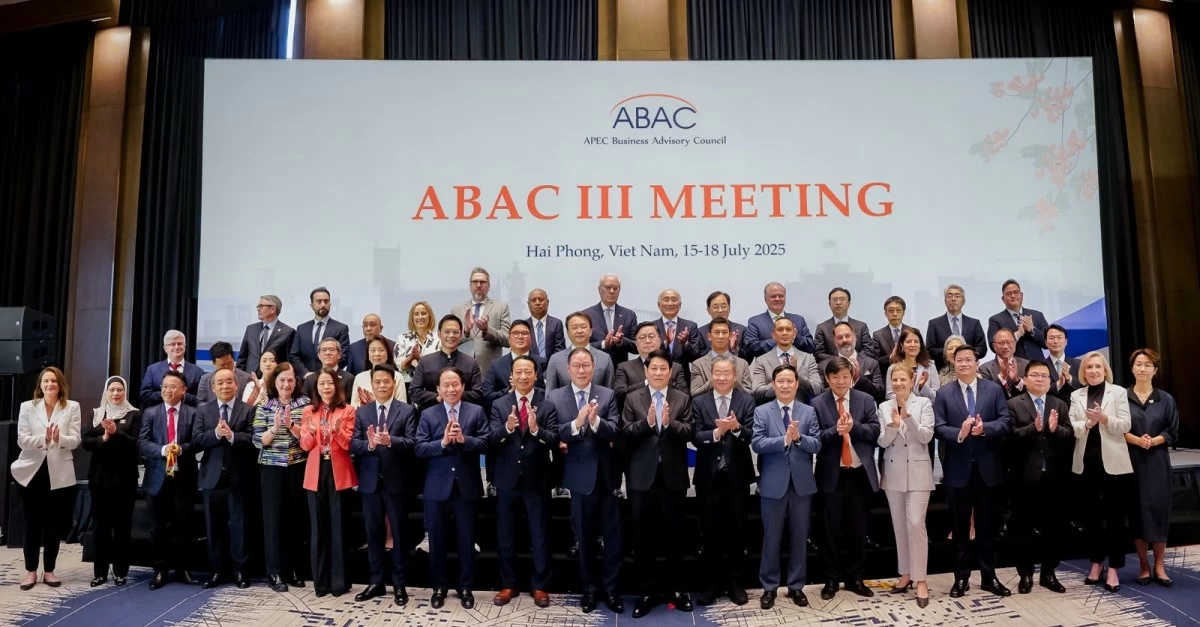
Members of the APEC Business Advisory Council (ABAC photo)
Top business executives across the Asia-Pacific are urging regional leaders to reaffirm their commitment to free trade amid escalating trade tensions and global uncertainties.
The APEC Business Advisory Council (ABAC), which provides the private sector’s perspective on matters concerning the Asia-Pacific Economic Cooperation (APEC), said the region’s economic growth has long been driven by a shared commitment to an open, rules-based, non-discriminatory, predictable, and competitive market.
In its recommendation, the ABAC urged 21 APEC economy leaders to reaffirm their commitment to these principles.
“APEC’s prosperity has long rested on reducing distortions and opening markets, anchored by transparent, rules-based trade but today, that foundation is under threat,” it said.
Without mentioning any specific policy, ABAC stated that trade tensions are disrupting supply chains, hiking costs, eroding investor confidence, and threatening jobs and living standards.
The council points to these uncertainties for impeding growth and “distracting from the critical work of revitalizing businesses and our economies.”
The ABAC is likely referring to the tariff policy being implemented by the world’s largest economy and one of APEC’s founding members, the United States (US).
US President Donald Trump has been hiking tariffs against the majority of its trading partners, including countries within the 21-member bloc.
The Philippines, a longtime ally of the US, is scheduled to face a 20 percent tariff rate on its exports to the US starting next month.
Trump has long viewed such a policy as means to level the playing field in trade deficits.
With the imposition of higher tariffs feared to upend the global trade and economic environment, business leaders in the Asia-Pacific region emphasize the need to return to stability.
The ABAC said maintaining a stable economic landscape will mitigate potential impacts on consumers, workers, jobs, and living standards in every economy across the APEC.
As such, the group is calling on APEC members, including the US, to de-escalate the current trade situation and create a solid foundation for businesses to thrive.
The ABAC noted that leaders should preserve existing market access commitments and avoid trade-distorting measures to underpin a stable trading environment.
To foster transparency among APEC economies, the group is advocating for the submission of an annual report on trade-restrictive measures to assess if every member is adhering to the free trade commitment.
Furthermore, business leaders are also seeking the revitalization of global trade through reforms that support all forms of trade, including goods, services, the digital economy, and green trade.
Through initiatives such as the New Services Agenda and the Greener Trade Framework, the ABAC recommends a much-needed update of trade rules to reflect the demands of today’s interconnected economies.
The advisory group, for instance, is asking for a robust and sustainable infrastructure to support the development and deployment of artificial intelligence (AI).
It likewise calls for the realization of the proposed Free Trade Area of the Asia-Pacific (FTAAP), reforming the World Trade Organization (WTO), and increased investment into digital transformation, energy transition, disaster response, and healthcare innovation.
The ABAC, which comprises up to three members from the private sector of each APEC economy, is the sole non-governmental entity with an official role in the APEC Economic Leaders’ Meeting.
In the Philippines, its representatives in the ABAC are Aboitiz Equity Ventures Inc. President and CEO Sabin Aboitiz, Alsons Consolidated Resources Inc. Director Tomas Alcantara and Globe Capital Partners LLC Chairperson Joanne de Asis.