

ADVERTISEMENT

US backs Luzon Economic Corridor as key PH growth project—Amb. Romualdez

Published Jul 21, 2025 04:05 pm

At A Glance

  • Romualdez said several companies are already lining up to invest in the corridor, which is expected to benefit not just national growth but also the economies of provinces along the route.
The United States has reaffirmed its support for the Luzon Economic Corridor, granting it an exemption under its economic assistance program to ensure the project’s continuity, Philippine Ambassador to the US Jose Manuel Romualdez.
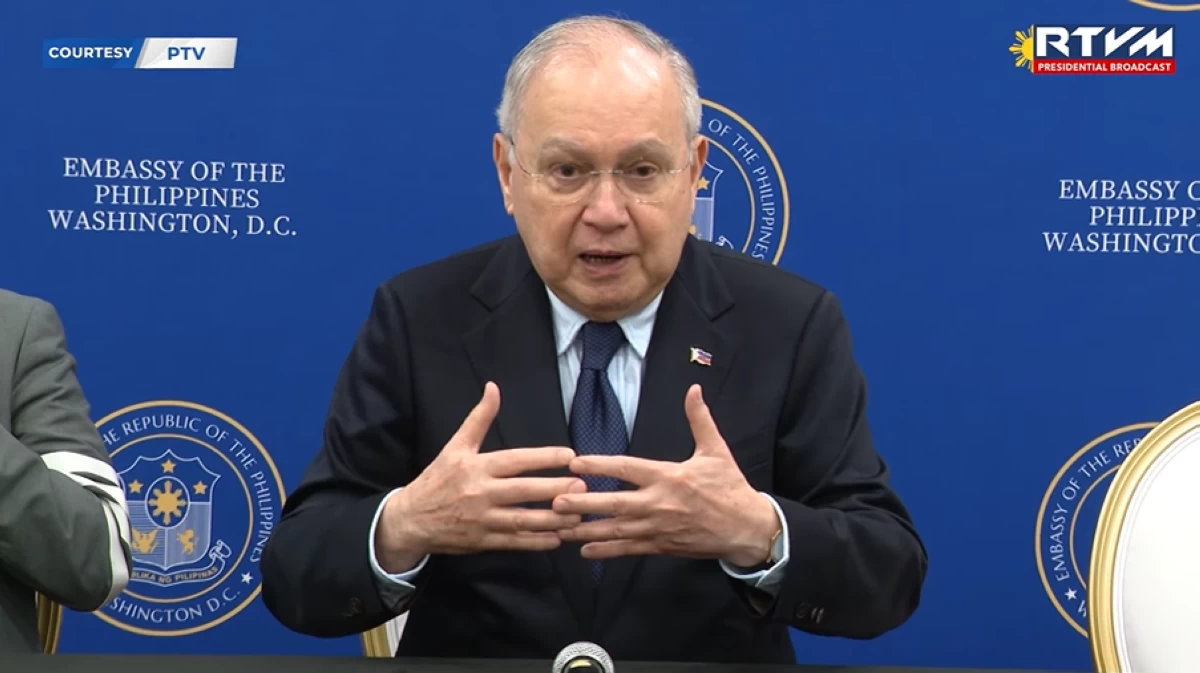
Ambassador Jose Manuel 'Babe’ Romualdez of the Philippine Embassy in the United States of America (USA) holds a press briefing with the Philippine media delegation in Washington, D.C. on July 20, 2025. (RTVM)
In a press conference in Washington, D.C., on the sidelines of President Marcos’ working visit there, Romualdez described the corridor—linking Subic, Clark, and Batangas ports—as a “very, very good project” with the potential to drive substantial economic activity and growth.
“The Luzon Corridor has long been planned, and it was given an exemption by Secretary Marco Rubio to continue as part of the US program on economic assistance to the Philippines,” he told reporters on Monday, July 21 (Manila time).
“Connecting the Subic area all the way up to the Batangas ports…that area has a very high potential for economic activity that will definitely enhance our economic prosperity,” he added.
Romualdez said several companies are already lining up to invest in the corridor, which is expected to benefit not just national growth but also the economies of provinces along the route.
“It will boost the economy in those areas that will cover the Luzon Economic Corridor,” he said.
“So that’s a very significant investment coming not only from the United States but other countries as well,” he added.
While a feasibility study is ongoing, Romualdez said early investor interest indicates strong confidence in the project. He noted that Japan, South Korea, and Australia are among the countries that have signaled their interest in participating in the project.
“Once the feasibility study is completed, we will be able to determine how it will contribute to our economic program,” he said.
“We are very confident that it will bring in billions of dollars to our country once it’s completed or even as it progresses,” he added.
In April last year, the Philippines, the United States, and Japan launched the Luzon Economic Corridor, supporting connectivity between Subic Bay, Clark, Manila, and Batangas.
Through this corridor, Japan, the Philippines, and the United States commit to accelerating coordinated investments in high-impact infrastructure projects.
These projects include rail, ports modernization, clean energy, semiconductor supply chains and deployments, agribusiness, and civilian port upgrades at Subic Bay.
In May this year, Special Assistant to the President for Investment and Economic Affairs Secretary Frederick Go said the US had approved funding for the Subic-Clark-Manila-Batangas Rail that would boost trade by linking ports handling over 80 percent of the country’s cargo.

Related Tags

Luzon Economic Corridor Jose Manuel Romualdez PH-US
ADVERTISEMENT
.most-popular .layout-ratio{ padding-bottom: 79.13%; } @media (min-width: 768px) and (max-width: 1024px) { .widget-title { font-size: 15px !important; } }

{{ articles_filter_1561_widget.title }}

.most-popular .layout-ratio{ padding-bottom: 79.13%; } @media (min-width: 768px) and (max-width: 1024px) { .widget-title { font-size: 15px !important; } }

{{ articles_filter_1562_widget.title }}

.most-popular .layout-ratio{ padding-bottom: 79.13%; } @media (min-width: 768px) and (max-width: 1024px) { .widget-title { font-size: 15px !important; } }

{{ articles_filter_1563_widget.title }}

{{ articles_filter_1564_widget.title }}

.mb-article-details { position: relative; } .mb-article-details .article-body-preview, .mb-article-details .article-body-summary{ font-size: 17px; line-height: 30px; font-family: "Libre Caslon Text", serif; color: #000; } .mb-article-details .article-body-preview iframe , .mb-article-details .article-body-summary iframe{ width: 100%; margin: auto; } .read-more-background { background: linear-gradient(180deg, color(display-p3 1.000 1.000 1.000 / 0) 13.75%, color(display-p3 1.000 1.000 1.000 / 0.8) 30.79%, color(display-p3 1.000 1.000 1.000) 72.5%); position: absolute; height: 200px; width: 100%; bottom: 0; display: flex; justify-content: center; align-items: center; padding: 0; } .read-more-background a{ color: #000; } .read-more-btn { padding: 17px 45px; font-family: Inter; font-weight: 700; font-size: 18px; line-height: 16px; text-align: center; vertical-align: middle; border: 1px solid black; background-color: white; } .hidden { display: none; }
function initializeAllSwipers() { // Get all hidden inputs with cms_article_id document.querySelectorAll('[id^="cms_article_id_"]').forEach(function (input) { const cmsArticleId = input.value; const articleSelector = '#article-' + cmsArticleId + ' .body_images'; const swiperElement = document.querySelector(articleSelector); if (swiperElement && !swiperElement.classList.contains('swiper-initialized')) { new Swiper(articleSelector, { loop: true, pagination: false, navigation: { nextEl: '#article-' + cmsArticleId + ' .swiper-button-next', prevEl: '#article-' + cmsArticleId + ' .swiper-button-prev', }, }); } }); } setTimeout(initializeAllSwipers, 3000); const intersectionObserver = new IntersectionObserver( (entries) => { entries.forEach((entry) => { if (entry.isIntersecting) { const newUrl = entry.target.getAttribute("data-url"); if (newUrl) { history.pushState(null, null, newUrl); let article = entry.target; // Extract metadata const author = article.querySelector('.author-section').textContent.replace('By', '').trim(); const section = article.querySelector('.section-info ').textContent.replace(' ', ' '); const title = article.querySelector('.article-title h1').textContent; // Parse URL for Chartbeat path format const parsedUrl = new URL(newUrl, window.location.origin); const cleanUrl = parsedUrl.host + parsedUrl.pathname; // Update Chartbeat configuration if (typeof window._sf_async_config !== 'undefined') { window._sf_async_config.path = cleanUrl; window._sf_async_config.sections = section; window._sf_async_config.authors = author; } // Track virtual page view with Chartbeat if (typeof pSUPERFLY !== 'undefined' && typeof pSUPERFLY.virtualPage === 'function') { try { pSUPERFLY.virtualPage({ path: cleanUrl, title: title, sections: section, authors: author }); } catch (error) { console.error('ping error', error); } } // Optional: Update document title if (title && title !== document.title) { document.title = title; } } } }); }, { threshold: 0.1 } ); function showArticleBody(button) { const article = button.closest("article"); const summary = article.querySelector(".article-body-summary"); const body = article.querySelector(".article-body-preview"); const readMoreSection = article.querySelector(".read-more-background"); // Hide summary and read-more section summary.style.display = "none"; readMoreSection.style.display = "none"; // Show the full article body body.classList.remove("hidden"); } document.addEventListener("DOMContentLoaded", () => { let loadCount = 0; // Track how many times articles are loaded const offset = [1, 2, 3, 4, 5, 6, 7, 8, 9, 10]; // Offset values const currentUrl = window.location.pathname.substring(1); let isLoading = false; // Prevent multiple calls if (!currentUrl) { console.log("Current URL is invalid."); return; } const sentinel = document.getElementById("load-more-sentinel"); if (!sentinel) { console.log("Sentinel element not found."); return; } function isSentinelVisible() { const rect = sentinel.getBoundingClientRect(); return ( rect.top < window.innerHeight && rect.bottom >= 0 ); } function onScroll() { if (isLoading) return; if (isSentinelVisible()) { if (loadCount >= offset.length) { console.log("Maximum load attempts reached."); window.removeEventListener("scroll", onScroll); return; } isLoading = true; const currentOffset = offset[loadCount]; window.loadMoreItems().then(() => { let article = document.querySelector('#widget_1690 > div:nth-last-of-type(2) article'); intersectionObserver.observe(article) loadCount++; }).catch(error => { console.error("Error loading more items:", error); }).finally(() => { isLoading = false; }); } } window.addEventListener("scroll", onScroll); });

Sign up by email to receive news.