






Manila Bulletin
 Business
Trade & Industry
Philippines, EU race to conclude FTA talks amid global uncertainties
Business
Trade & Industry
Philippines, EU race to conclude FTA talks amid global uncertainties
Business
Trade & Industry
Philippines, EU race to conclude FTA talks amid global uncertainties
Philippines, EU race to conclude FTA talks amid global uncertainties
Published Jul 21, 2025 02:41 pm


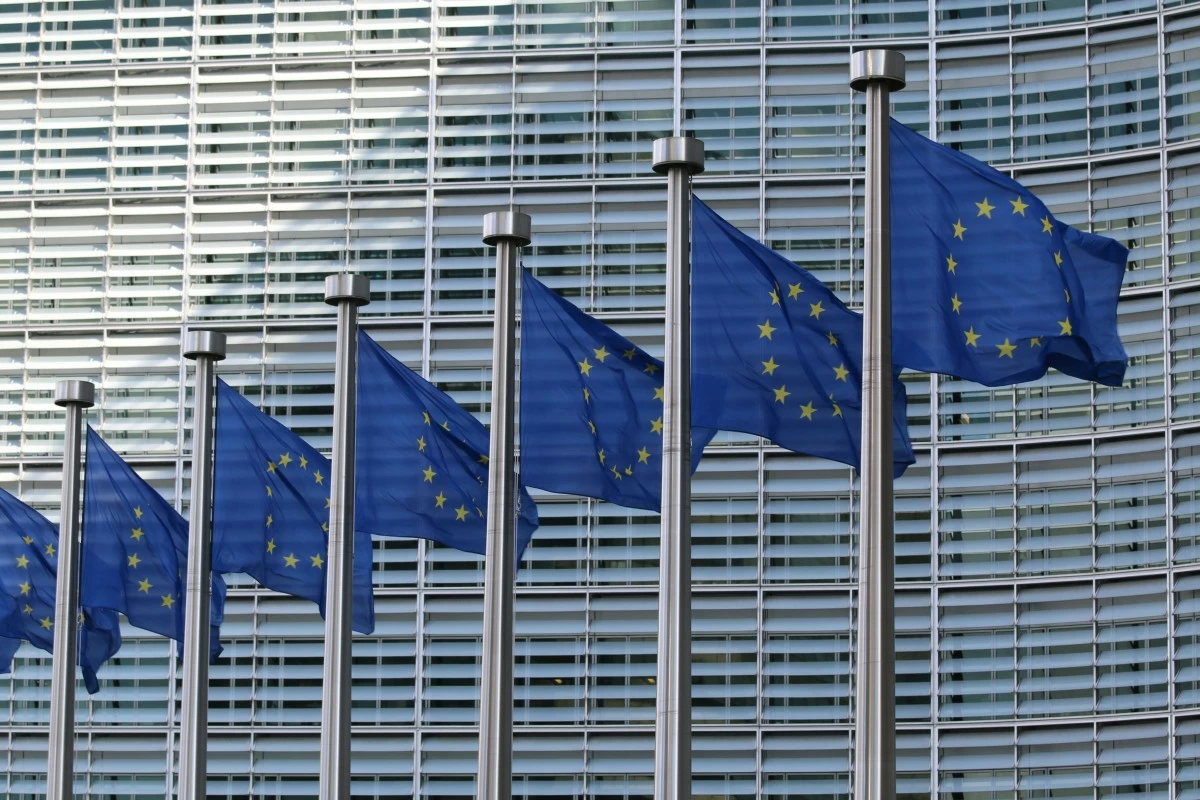
A display of European Union flags (Unsplash)
The Philippines and the European Union (EU) are seeking to expedite the conclusion of negotiations for a free trade agreement (FTA) amid uncertainties in global trade, with the next round of talks scheduled for October in Manila.
Department of Trade and Industry (DTI) Undersecretary Allan Gepty, the country’s lead negotiator for FTAs, said the Philippines and the EU have achieved “meaningful progress” in finding mutually agreeable provisions.
Gepty said the third round of negotiations last month in Brussels, Belgium was a significant step in deepening both parties’ bilateral trade and investment ties.
He noted that negotiators from both sides engaged in discussions across 19 key areas that aim to bolster the country’s trade relations with the 27-member bloc.
Among the sectors that were deliberated on include trade in goods, services and investment, customs and trade facilitation, intellectual property (IP, including geographical indications), sanitary and phytosanitary (SPS) measures, and technical barriers to trade (TBT), among others.
During the third round, government procurement, digital trade, energy and raw materials, and trade and sustainable development were covered in the FTA talks.
According to the DTI, the FTA with the EU is the most comprehensive trade agreement the Philippines has pursued in the country’s history.
Gepty said both sides are committed to craft a trade agreement that delivers tangible benefits for businesses, consumers, and stakeholders in both the Philippines and the EU.
“We will continue with this approach and look forward to commencing market access negotiations by the next round,” said Gepty.
“We remain steadfast in our common vision to conclude this FTA expeditiously, particularly in light of the evolving global trade landscape,” he added.
Last May, EU Ambassador to the Philippines Massimo Santoro said uncertainties such as the tariff policy of the United States (US) should expedite negotiations “at an even higher pace.”
However, Santoro noted that this would ultimately depend on the mutual goodwill of both parties to find common ground.
The Philippines and the EU resumed FTA negotiations in October last year after the Marcos administration showed “willingness to engage with the EU on key issues of importance.” The second round of FTA talks was held in February.
Both parties previously negotiated for a trade agreement during the Duterte administration, with the first round taking place in May 2016 and the second in February 2017.
The talks were then put on hold after the EU flagged the alleged human rights abuses of the Duterte administration’s anti-drug campaign.
Last year, the EU was the Philippines’ fifth-largest trading partner, representing 7.7 percent of the country’s total trade.
Philippine exports to the EU reached $8.1 billion, while imports from the EU stood at $7.5 billion. The total trade between the two parties totaled $15.5 billion.
The DTI said the country’s FTA with the EU is expected to establish a more predictable and stable trading environment.
The agency, headed by Secretary Cristina Roque, said this would also further enhance the country’s benefits from the EU’s Generalized Scheme of Preferences Plus (GSP+).
The GSP+ is a special incentive arrangement that offers zero tariffs on 6,274 products or 66 percent of all EU tariff lines.
The Philippines’ utilization of the GSP+ reached a record high of 80.3 percent in 2024.