ADVERTISEMENT

PH eyes 10th straight year in Tier 1 list of US trafficking in person report

Published Jul 21, 2025 07:59 am
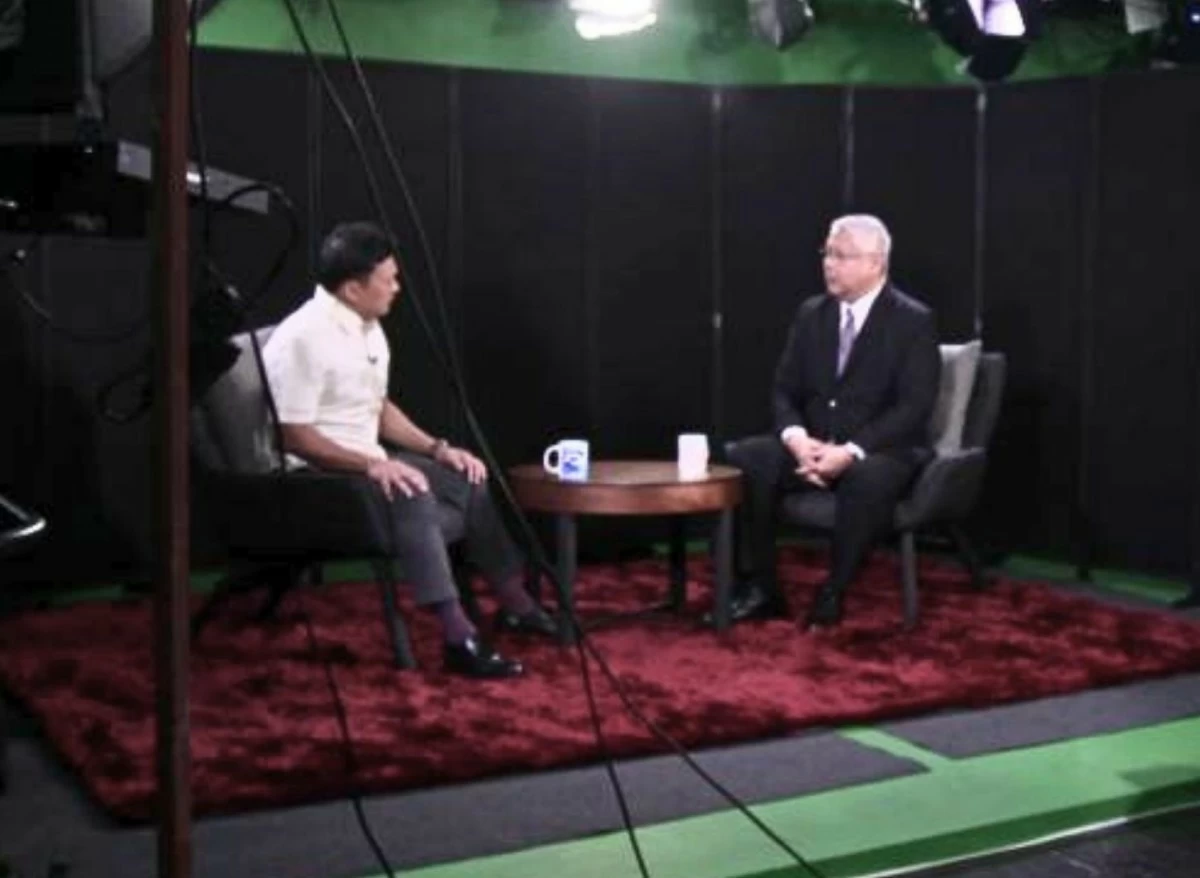
Commission on Filipinos Overseas (CFO) Secretary Dante “Klink” Ang II and Department of Justice Inter-Agency Council Against Trafficking (IACAT) Undersecretary-in-Charge Nicholas Felix Ty discuss the Philippine government's action plan to secure its 10th straight year in the U.S. State Department's Tier 1 anti-trafficking ranking. (Photo: Jerry Carual)
Authorities are confident that the Philippines will achieve its 10th consecutive year in tier one of the United States Trafficking in Persons (TIP) report, a rare feat even among developed nations.
Only 30 countries worldwide currently hold the tier one designation and the Philippines has earned the distinction for nine straight years, according to to Department of Justice Inter-Agency Council Against Trafficking (IACAT) Undersecretary-in-Charge Nicholas Felix Ty.
And for Secretary Dante “Klink” Ang II, the Commission on Filipinos Overseas (CFO), which he heads, played a key role in initiating programs targeting trafficking vulnerabilities, especially among Filipino women, children, and overseas-bound individuals.
One of them, he said is the CFO’s Guidance and Counseling Program (GCP) plays a frontline role in identifying red flags among Filipinos departing the country to join foreign spouses.
Ty, during the program ‘The Chairman’s Report’ hosted by Ang, said the Philippines’ status in the fight against human trafficking is built not on the absence of cases, but on the government’s consistent and aggressive efforts to combat exploitation in all its forms.
“To maintain the tier one ranking, it’s not about the incidence of human trafficking but about the effort. There are countries who continue to have a human trafficking problem but remain in tier one because the U.S. State Department sees that the country’s effort meets the minimum standard. It’s not just about prosecution; it’s about protection and prevention as well,” said Ty.
Ty also acknowledged the challenge this poses, especially when the government appears to interfere with personal decisions: “Sometimes we get in the way of employment; here we get in the way of love.”
“But in the end, the government is just here to protect particular interests, and in this instance, it is the interests of Filipino individuals who may be susceptible or vulnerable to human trafficking or the evils out there,” he said.
Ty warned that human trafficking has evolved rapidly in the digital age. Cases of Online Sexual Abuse and Exploitation of Children (OSAEC), for instance, have escalated due to a confluence of vulnerabilities—including poverty, English fluency, digital access, and technological literacy.
“Even if these children are in their own homes, because their sexual services are being offered to foreign nationals abroad, that constitutes human trafficking,” he stressed.
The interview also tackled growing concerns over surrogacy scams, which currently fall in a legal gray area in the Philippines.
Ty cited cases where Filipinas were offered large sums of money—up to half a million pesos—for entering surrogacy arrangements abroad, only to face legal trouble in countries like Cambodia where surrogacy is prohibited.
“If you are considering such an agreement, please don’t,” he advised. “We do not recognize that in the Philippines.”
Ang and Ty also touched on marriage scams, where Filipinas travel abroad as supposed spouses but end up as domestic workers or victims of abuse.
The CFO’s GCP serves as a safeguard in such cases, helping ensure that outbound Filipinos are fully aware of the risks and realities of their destinations.
ADVERTISEMENT
.most-popular .layout-ratio{ padding-bottom: 79.13%; } @media (min-width: 768px) and (max-width: 1024px) { .widget-title { font-size: 15px !important; } }

{{ articles_filter_1561_widget.title }}

.most-popular .layout-ratio{ padding-bottom: 79.13%; } @media (min-width: 768px) and (max-width: 1024px) { .widget-title { font-size: 15px !important; } }

{{ articles_filter_1562_widget.title }}

.most-popular .layout-ratio{ padding-bottom: 79.13%; } @media (min-width: 768px) and (max-width: 1024px) { .widget-title { font-size: 15px !important; } }

{{ articles_filter_1563_widget.title }}

{{ articles_filter_1564_widget.title }}

.mb-article-details { position: relative; } .mb-article-details .article-body-preview, .mb-article-details .article-body-summary{ font-size: 17px; line-height: 30px; font-family: "Libre Caslon Text", serif; color: #000; } .mb-article-details .article-body-preview iframe , .mb-article-details .article-body-summary iframe{ width: 100%; margin: auto; } .read-more-background { background: linear-gradient(180deg, color(display-p3 1.000 1.000 1.000 / 0) 13.75%, color(display-p3 1.000 1.000 1.000 / 0.8) 30.79%, color(display-p3 1.000 1.000 1.000) 72.5%); position: absolute; height: 200px; width: 100%; bottom: 0; display: flex; justify-content: center; align-items: center; padding: 0; } .read-more-background a{ color: #000; } .read-more-btn { padding: 17px 45px; font-family: Inter; font-weight: 700; font-size: 18px; line-height: 16px; text-align: center; vertical-align: middle; border: 1px solid black; background-color: white; } .hidden { display: none; }
function initializeAllSwipers() { // Get all hidden inputs with cms_article_id document.querySelectorAll('[id^="cms_article_id_"]').forEach(function (input) { const cmsArticleId = input.value; const articleSelector = '#article-' + cmsArticleId + ' .body_images'; const swiperElement = document.querySelector(articleSelector); if (swiperElement && !swiperElement.classList.contains('swiper-initialized')) { new Swiper(articleSelector, { loop: true, pagination: false, navigation: { nextEl: '#article-' + cmsArticleId + ' .swiper-button-next', prevEl: '#article-' + cmsArticleId + ' .swiper-button-prev', }, }); } }); } setTimeout(initializeAllSwipers, 3000); const intersectionObserver = new IntersectionObserver( (entries) => { entries.forEach((entry) => { if (entry.isIntersecting) { const newUrl = entry.target.getAttribute("data-url"); if (newUrl) { history.pushState(null, null, newUrl); let article = entry.target; // Extract metadata const author = article.querySelector('.author-section').textContent.replace('By', '').trim(); const section = article.querySelector('.section-info ').textContent.replace(' ', ' '); const title = article.querySelector('.article-title h1').textContent; // Parse URL for Chartbeat path format const parsedUrl = new URL(newUrl, window.location.origin); const cleanUrl = parsedUrl.host + parsedUrl.pathname; // Update Chartbeat configuration if (typeof window._sf_async_config !== 'undefined') { window._sf_async_config.path = cleanUrl; window._sf_async_config.sections = section; window._sf_async_config.authors = author; } // Track virtual page view with Chartbeat if (typeof pSUPERFLY !== 'undefined' && typeof pSUPERFLY.virtualPage === 'function') { try { pSUPERFLY.virtualPage({ path: cleanUrl, title: title, sections: section, authors: author }); } catch (error) { console.error('ping error', error); } } // Optional: Update document title if (title && title !== document.title) { document.title = title; } } } }); }, { threshold: 0.1 } ); function showArticleBody(button) { const article = button.closest("article"); const summary = article.querySelector(".article-body-summary"); const body = article.querySelector(".article-body-preview"); const readMoreSection = article.querySelector(".read-more-background"); // Hide summary and read-more section summary.style.display = "none"; readMoreSection.style.display = "none"; // Show the full article body body.classList.remove("hidden"); } document.addEventListener("DOMContentLoaded", () => { let loadCount = 0; // Track how many times articles are loaded const offset = [1, 2, 3, 4, 5, 6, 7, 8, 9, 10]; // Offset values const currentUrl = window.location.pathname.substring(1); let isLoading = false; // Prevent multiple calls if (!currentUrl) { console.log("Current URL is invalid."); return; } const sentinel = document.getElementById("load-more-sentinel"); if (!sentinel) { console.log("Sentinel element not found."); return; } function isSentinelVisible() { const rect = sentinel.getBoundingClientRect(); return ( rect.top < window.innerHeight && rect.bottom >= 0 ); } function onScroll() { if (isLoading) return; if (isSentinelVisible()) { if (loadCount >= offset.length) { console.log("Maximum load attempts reached."); window.removeEventListener("scroll", onScroll); return; } isLoading = true; const currentOffset = offset[loadCount]; window.loadMoreItems().then(() => { let article = document.querySelector('#widget_1690 > div:nth-last-of-type(2) article'); intersectionObserver.observe(article) loadCount++; }).catch(error => { console.error("Error loading more items:", error); }).finally(() => { isLoading = false; }); } } window.addEventListener("scroll", onScroll); });

Sign up by email to receive news.