







Lacson's return to the Senate: Testament to moral leadership
Published Jul 21, 2025 12:05 am
|
Updated Jul 20, 2025 03:44 pm


BARRACKS AND STRATEGY
In a political climate frequently clouded by self-interest and short-term agendas, the return of Senator Panfilo “Ping” Lacson to the Philippine Senate brings with it a much-needed wave of integrity, discipline, and ethical leadership. His reentry into the legislative chamber is not just a personal comeback—it is a reaffirmation of the values we ought to demand in public office: moral clarity, good governance, and unwavering accountability.
My perspective on Senator Lacson is both political and personal. As his former squad leader of Alfa Company at the Philippine Military Academy, I had the privilege of guiding plebes during their most difficult stage of cadet life. Among those plebes was Cadet 4th Class Panfilo Lacson, along with Gregorio “Gringo” Honasan Jr. The fourth-class year is a crucible—it tests not only the physical and mental limits of a young cadet but more importantly, their moral fiber and ethical threshold. The success rate to progress to third class is notoriously low. But those who emerge from this process often carry with them a deep-rooted sense of discipline, integrity, and service above self. It is this foundation that has shaped Lacson’s brand of public service and explains his steadfast adherence to principles even in the rough terrain of Philippine politics.
Lacson’s career has long been defined by his refusal to compromise his values. A former Chief of the Philippine National Police and a graduate of PMA’s Matatag Class of 1971, he entered public life not as a traditional politician but as a reformer. His Senate career is distinguished by a consistent stand against corruption, inefficiency, and wasteful spending. Central to his advocacy is his bold and principled stand against the pork barrel system—formally known as the Priority Development Assistance Fund (PDAF). While many lawmakers have used pork barrel as a means of political patronage or personal enrichment, Lacson has unflinchingly refused to accept his allocation since his first term. He has often warned that such discretionary funds breed corruption and weaken the checks and balances essential to democratic governance.
But his principled rejection of pork is only one aspect of a broader ethic. Lacson has also refused to receive his Senate salary—a move critics have derided as symbolic, but which in truth reflects a deeper commitment to ethical service. His message is clear: public office is a public trust, not a private enterprise. In an era where transparency is scarce and public confidence in institutions is waning, Lacson’s actions serve as a powerful counter-narrative—proof that clean, competent, and ethical leadership is not only possible but necessary.
His leadership goes beyond personal example. As legislators, Lacson and his fellow plebe-turned-senator Gregorio Honasan championed landmark legislation that significantly upgraded the salaries and benefits of the Armed Forces of the Philippines and other uniformed personnel. Recognizing the risks and sacrifices made by our men and women in uniform, they worked to ensure that compensation matched the dignity and demands of the profession. This legislative success was more than a policy win—it was a moral assertion that service, honor, and duty must be properly valued and rewarded.
Lacson’s legislative record further reflects his deep sense of responsibility and patriotism. He has authored and supported key reforms aimed at national budget transparency, anti-graft efforts, law enforcement modernization, and national security. His approach is analytical, research-driven, and grounded in public interest—eschewing political grandstanding in favor of solutions that endure. At a time when sound policy is often drowned out by political noise, Lacson brings a disciplined, rational voice that challenges his peers to focus on substance over spectacle.
In many ways, Lacson stands as a counterexample to the prevailing culture of transactional politics. His brand of leadership—quiet but resolute, ethical yet pragmatic—is rare in today’s governance landscape. He listens more than he speaks, acts more than he boasts, and stands by his convictions even when it means standing alone.
More than ever, our country needs leaders who can rise above personal ambition and partisan interest. The challenges we face—from economic recovery to geopolitical threats—demand lawmakers with moral courage and ethical foresight. Lacson embodies this kind of leadership. His return to the Senate is not just a political development; it is a national imperative.
In Senator Panfilo Lacson, the Filipino people have not only a senator but a statesman. He is a reminder that leadership grounded in moral integrity is not an aspiration—it is a choice, forged by experience, discipline, and a lifelong commitment to public service. His legacy affirms that governance, when rooted in ethics, can uplift a nation.
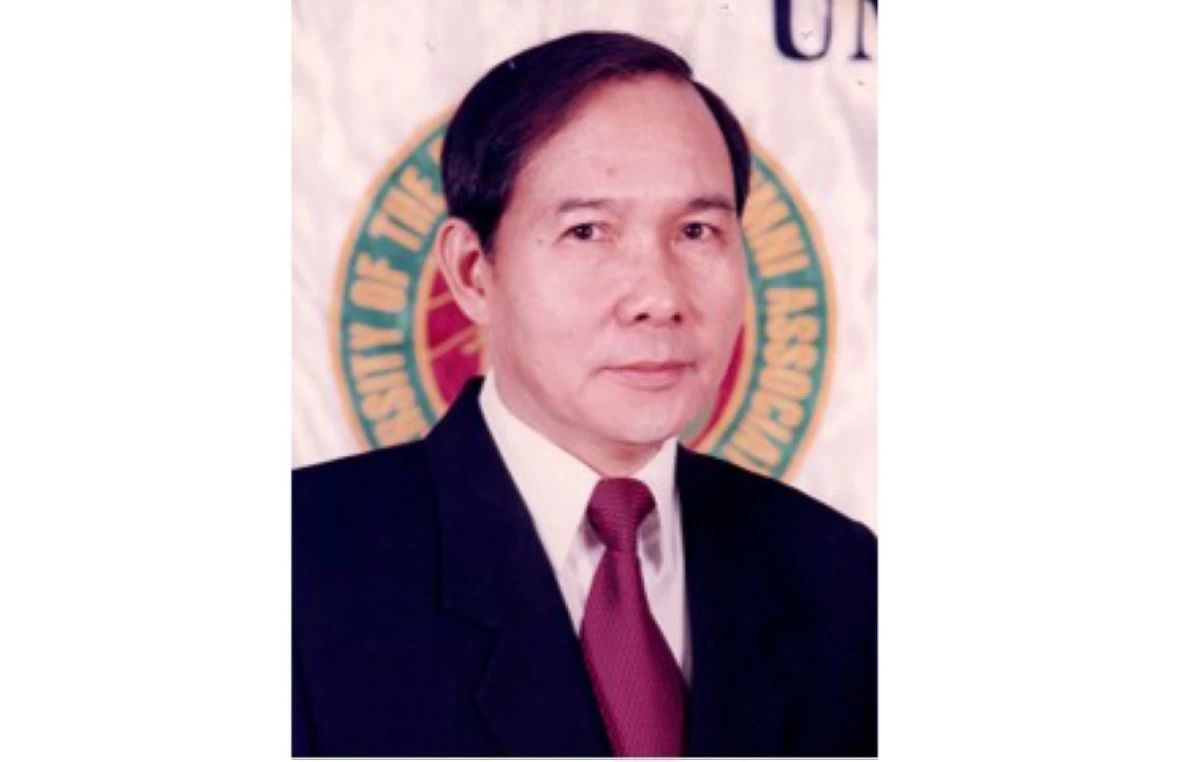
(Lt. Gen. Jaime S. de los Santos served with distinction as a military professional, 42nd Commanding Gen. Philippine Army, 1st Force Commander, UN Multi-National Peacekeeping Force in East Timor, former member, UP Board of Regents and Professorial Lecturer II (part-time), UP-Diliman.)