ADVERTISEMENT

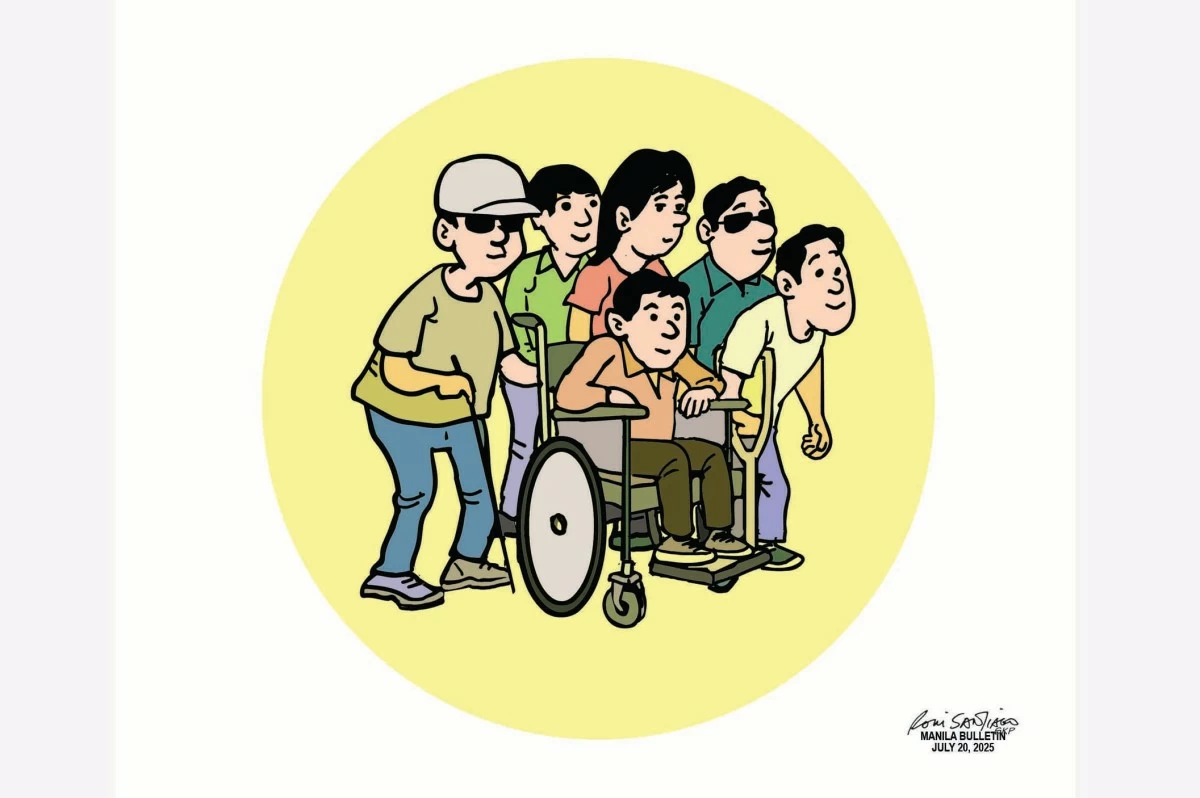
National Disability Rights Week: Inclusion is everyone's responsibility

Published Jul 20, 2025 12:05 am  |  Updated Jul 19, 2025 04:04 pm
The pursuit of an inclusive, accessible, and compassionate society requires more than policies and proclamations—it demands concrete action from government, corporations, and individuals alike. That is the timely reminder of the observance of National Disability Rights Week (NDRW) from July 17 to 23.
This year’s theme, “Innovation for inclusion: Building inclusive communities together,” highlights the ongoing efforts to bridge the gaps in education, employment, and accessibility for persons with disabilities (PWDs).
Leading the nationwide observance is the National Council on Disability Affairs (NCDA), under the Department of Social Welfare and Development (DSWD), reinforcing the government’s commitment to upholding the rights, dignity, and welfare of PWDs.
Among the key highlights of this year’s celebration is the increase in the train fare discount for PWDs from 20 percent to 50 percent—a tangible benefit that addresses mobility and access to opportunities. From July 17 to 23, LRT-2 and MRT-3 have even offered free rides during peak hours for PWDs. These measures may seem simple, but for many PWDs, they mean being able to stretch limited resources for education, work, healthcare, and social engagement.
However, infrastructure accessibility remains a more pressing challenge than discounts, as NCDA Executive Director Glenda Relova pointed out. Public transportation systems still need to fully comply with accessibility standards: from dedicated wheelchair spaces, ramps, priority seating, to elevators designed with PWD needs in mind. To address these, the NCDA works closely with the DOTr’s Subcommittee on Built Environment and Transportation to audit transport facilities and push for reforms.
Beyond mobility, education and employment remain critical pillars for achieving real inclusion. The NCDA is partnering with state universities and colleges (SUCs) to create educational programs aimed at enhancing the qualifications of PWDs, thus making them more competitive in the job market. The council also connects PWDs to potential employers, with sectors like BPOs, courier services, and food establishments opening opportunities.
The private sector plays a crucial role beyond employment. Companies must ensure physical and digital spaces comply with accessibility standards, and adopt hiring practices that welcome—not exclude—PWD applicants. Moreover, services like accessible transport options, such as the DSWD’s PWD e-shuttle project, demonstrate how innovation and business models can serve both social and economic goals. The e-shuttle initiative not only offers dignified mobility but also provides livelihood to PWD cooperatives, proving that empowerment and profit need not be at odds.
Individuals, too, have a part to play. Greater empathy and respect, especially toward those with non-visible disabilities, is crucial. Incidents of public ridicule—whether against a person quietly occupying a priority seat or someone struggling to navigate public spaces—must be addressed through awareness and education. As the DSWD reminds us, invisible disabilities are just as valid as visible ones.
This October, the unified PWD ID system will be launched to strengthen protection against fraud and ensure that benefits reach those who genuinely need them. This aims to safeguard the dignity and rights of PWDs through systemic improvements.
The observance of National Disability Rights Week is more than a celebration of policy wins. It is a reminder of the ongoing journey toward a future where no Filipino is left behind—where inclusion is not an afterthought but a standard. It calls upon every sector of society to take concrete steps, big or small, to uphold the rights and dignity of PWDs. Only then can we truly say we are building an inclusive nation together.
ADVERTISEMENT
.most-popular .layout-ratio{ padding-bottom: 79.13%; } @media (min-width: 768px) and (max-width: 1024px) { .widget-title { font-size: 15px !important; } }

{{ articles_filter_1561_widget.title }}

.most-popular .layout-ratio{ padding-bottom: 79.13%; } @media (min-width: 768px) and (max-width: 1024px) { .widget-title { font-size: 15px !important; } }

{{ articles_filter_1562_widget.title }}

.most-popular .layout-ratio{ padding-bottom: 79.13%; } @media (min-width: 768px) and (max-width: 1024px) { .widget-title { font-size: 15px !important; } }

{{ articles_filter_1563_widget.title }}

{{ articles_filter_1564_widget.title }}

.mb-article-details { position: relative; } .mb-article-details .article-body-preview, .mb-article-details .article-body-summary{ font-size: 17px; line-height: 30px; font-family: "Libre Caslon Text", serif; color: #000; } .mb-article-details .article-body-preview iframe , .mb-article-details .article-body-summary iframe{ width: 100%; margin: auto; } .read-more-background { background: linear-gradient(180deg, color(display-p3 1.000 1.000 1.000 / 0) 13.75%, color(display-p3 1.000 1.000 1.000 / 0.8) 30.79%, color(display-p3 1.000 1.000 1.000) 72.5%); position: absolute; height: 200px; width: 100%; bottom: 0; display: flex; justify-content: center; align-items: center; padding: 0; } .read-more-background a{ color: #000; } .read-more-btn { padding: 17px 45px; font-family: Inter; font-weight: 700; font-size: 18px; line-height: 16px; text-align: center; vertical-align: middle; border: 1px solid black; background-color: white; } .hidden { display: none; }
function initializeAllSwipers() { // Get all hidden inputs with cms_article_id document.querySelectorAll('[id^="cms_article_id_"]').forEach(function (input) { const cmsArticleId = input.value; const articleSelector = '#article-' + cmsArticleId + ' .body_images'; const swiperElement = document.querySelector(articleSelector); if (swiperElement && !swiperElement.classList.contains('swiper-initialized')) { new Swiper(articleSelector, { loop: true, pagination: false, navigation: { nextEl: '#article-' + cmsArticleId + ' .swiper-button-next', prevEl: '#article-' + cmsArticleId + ' .swiper-button-prev', }, }); } }); } setTimeout(initializeAllSwipers, 3000); const intersectionObserver = new IntersectionObserver( (entries) => { entries.forEach((entry) => { if (entry.isIntersecting) { const newUrl = entry.target.getAttribute("data-url"); if (newUrl) { history.pushState(null, null, newUrl); let article = entry.target; // Extract metadata const author = article.querySelector('.author-section').textContent.replace('By', '').trim(); const section = article.querySelector('.section-info ').textContent.replace(' ', ' '); const title = article.querySelector('.article-title h1').textContent; // Parse URL for Chartbeat path format const parsedUrl = new URL(newUrl, window.location.origin); const cleanUrl = parsedUrl.host + parsedUrl.pathname; // Update Chartbeat configuration if (typeof window._sf_async_config !== 'undefined') { window._sf_async_config.path = cleanUrl; window._sf_async_config.sections = section; window._sf_async_config.authors = author; } // Track virtual page view with Chartbeat if (typeof pSUPERFLY !== 'undefined' && typeof pSUPERFLY.virtualPage === 'function') { try { pSUPERFLY.virtualPage({ path: cleanUrl, title: title, sections: section, authors: author }); } catch (error) { console.error('ping error', error); } } // Optional: Update document title if (title && title !== document.title) { document.title = title; } } } }); }, { threshold: 0.1 } ); function showArticleBody(button) { const article = button.closest("article"); const summary = article.querySelector(".article-body-summary"); const body = article.querySelector(".article-body-preview"); const readMoreSection = article.querySelector(".read-more-background"); // Hide summary and read-more section summary.style.display = "none"; readMoreSection.style.display = "none"; // Show the full article body body.classList.remove("hidden"); } document.addEventListener("DOMContentLoaded", () => { let loadCount = 0; // Track how many times articles are loaded const offset = [1, 2, 3, 4, 5, 6, 7, 8, 9, 10]; // Offset values const currentUrl = window.location.pathname.substring(1); let isLoading = false; // Prevent multiple calls if (!currentUrl) { console.log("Current URL is invalid."); return; } const sentinel = document.getElementById("load-more-sentinel"); if (!sentinel) { console.log("Sentinel element not found."); return; } function isSentinelVisible() { const rect = sentinel.getBoundingClientRect(); return ( rect.top < window.innerHeight && rect.bottom >= 0 ); } function onScroll() { if (isLoading) return; if (isSentinelVisible()) { if (loadCount >= offset.length) { console.log("Maximum load attempts reached."); window.removeEventListener("scroll", onScroll); return; } isLoading = true; const currentOffset = offset[loadCount]; window.loadMoreItems().then(() => { let article = document.querySelector('#widget_1690 > div:nth-last-of-type(2) article'); intersectionObserver.observe(article) loadCount++; }).catch(error => { console.error("Error loading more items:", error); }).finally(() => { isLoading = false; }); } } window.addEventListener("scroll", onScroll); });

Sign up by email to receive news.