






Manila Bulletin
 Lifestyle
Luminaries and Life
What does our fascination with beauty pageants say about us?
Lifestyle
Luminaries and Life
What does our fascination with beauty pageants say about us?
Lifestyle
Luminaries and Life
What does our fascination with beauty pageants say about us?
What does our fascination with beauty pageants say about us?
Gene Navera's new book explores the Filipino fascination with beauty pageants
Published Jul 19, 2025 10:17 am


By LAYETA P. BUCOY
What lies behind a beauty queen’s tiara? Or, more pointedly, what is it about its sparkle that keeps Filipinos endlessly fascinated with beauty pageants?
These questions and more are answered by Dr. Gene Segarra Navera, deputy director and senior lecturer at the Centre for English Language Communication at the National University of Singapore, in his new book, “Beauty Spectacle: Pageants, Fan Culture, and the Filipino Adoration for Queens.” Launched by Vibal Foundation, the book is “made by a pageant fan for pageant fans and for those curious about the scene.”
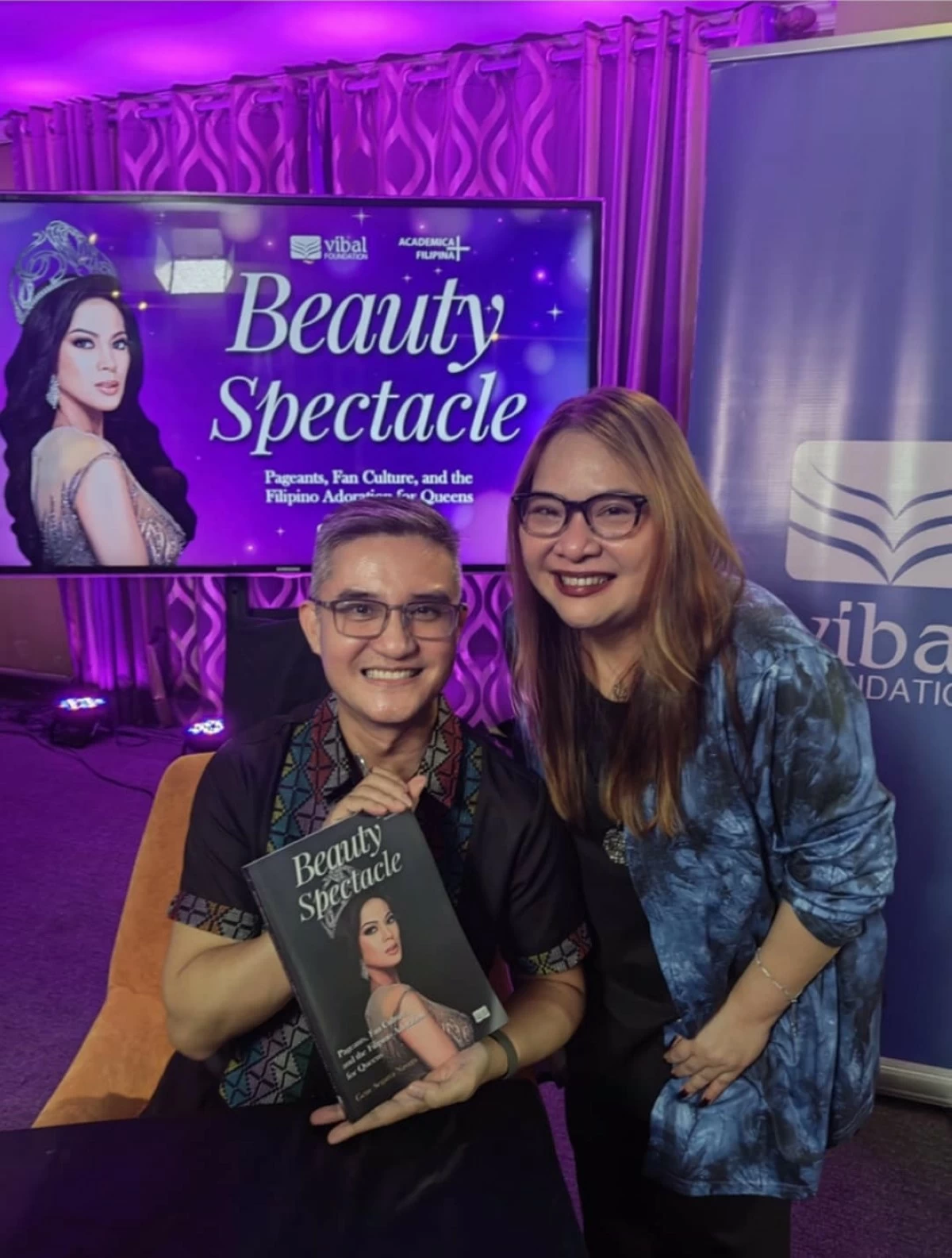
Dr. Gene Segarra Navera with the author
As a young queer boy, Dr. Gene began watching pageants at the age of six, “fascinated with women parading in costumes, evening gowns, and uniform swimsuits.” Growing up in the analog era, he could only watch pageants broadcasted on television and for years, satisfy his thirst for more information or trivia by poring over collected newspaper and magazine clippings by friends who are fellow pageant fans.
He observed how the shift from analog to digital also transformed not only access to information but also the experience of pageant fandom itself. The easy access to real-time updates, online communities, and live commentaries fundamentally changed how fans participate and engage.
As an adult, Dr. Gene merged his academic discipline with his personal fascination, driven by a desire “to make sense of pageants from a disciplined lens… and explain why we, as a people, are so fascinated with them.” He also sought to understand “how pageant contestants, trainers, and organizers navigate realities in the pageant space,” while acknowledging the important role that pageant fans play in shaping that world.
Glimmers of truth
Dr. Gene shares that the book is “more of an exercise on self-reflection rather than an attempt at a systematic investigation.” He wanted to understand his own fascination for pageant queens and pageantry while figuring out how such fascination may be looped to the broader sociopolitical, cultural, and historical context.
In writing the book, he not only reflected on his personal understanding of pageants and fandom in the context of understanding beauty but also incorporated insights from philosophers, historians, cultural anthropologists, feminists, human rights advocates, players in the beauty industry, and fellow pageant enthusiasts.
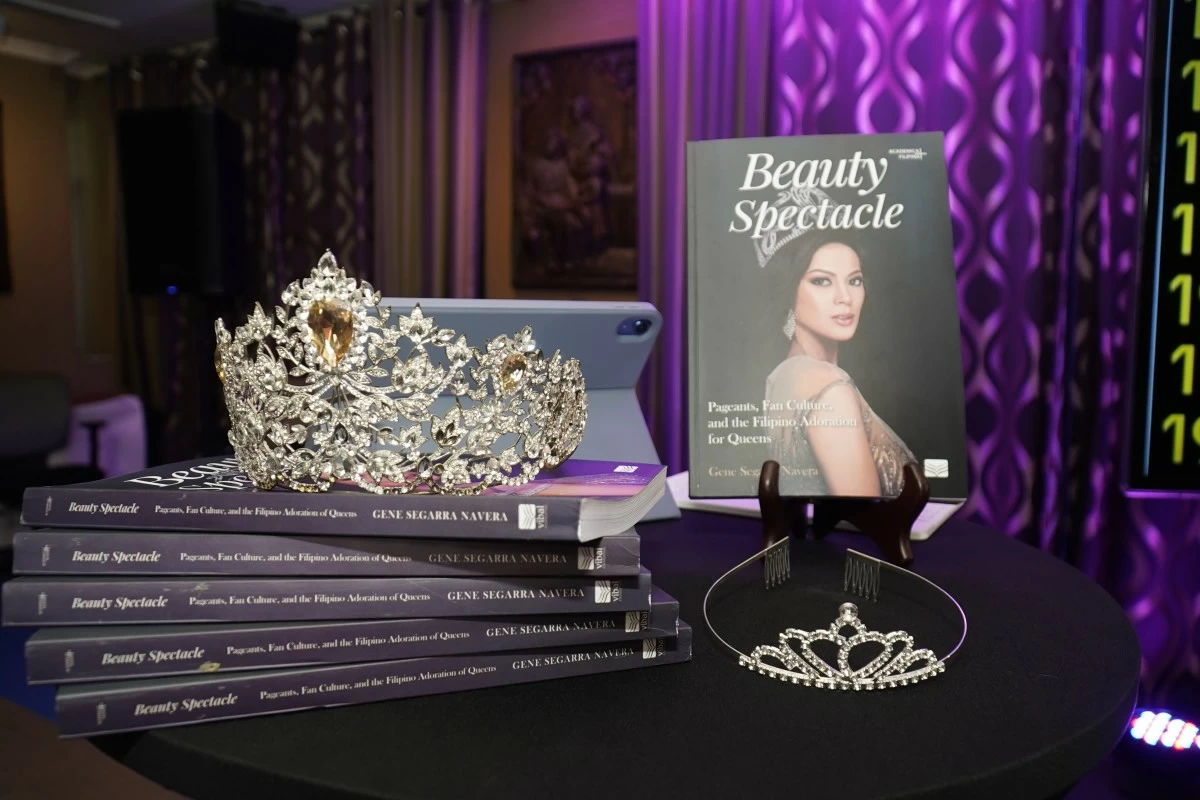
'Beauty Spectacle' explores Pinoys' fascination with beauty pageants.
One of the book’s key arguments is that the Filipino adoration for queens is neither blind nor uncritical. Although shaped by cultural, historical, and sociopolitical forces, it is still capable of critical engagement. The book calls for a deeper, more reflective fandom and challenges misconceptions, such as the idea that pageants merely exploit women or that pageant fans are unthinking followers chasing after entertainment.
The book expounds on how pageants are evolving systems that cannot be seen as “monolithic.” They are cultural performances that serve both as mirror and mask for the societies that stage them. In the Philippine context, beauty pageants mirror Filipino values such as national pride, love of heritage, sisterhood, social harmony, and the richness of cultural diversity. Yet, as pageants are spectacles that are assembled, commercialized, and commodified, they also tend to create illusions for us. These illusions, as Dr. Gene explains, include embellishments or ornaments, which an oppressive regime may use to deodorize its excesses. These illusions, he furthers, can be forms of escapism.
Toward enlightenment
Divided into three parts, “Beauty Spectacle” tackles numerous themes by articulating the conceptualizations and contestations surrounding them.
The first part is all about beauty—explored under different theoretical and conceptual lenses. It asserts that “the notion of beauty as a spectacle recognizes beauty—and by extension pageants—as a contested site or space where subjects can either be exploited or empowered.” It also traces the conceptualization and contestation of beauty in Philippine history and cultures.
The second part focuses on the Philippine pageant scene, particularly what Dr. Gene calls “heritage pageants” or those competitions that have existed for more than two decades and have significantly shaped the country’s pageant culture. These pageants include “Binibining Pilipinas,” “Mutya ng Pilipinas,” “Miss Universe,” “Miss World,” “Miss International,” and “Miss Earth/ Miss Philippines Earth.”
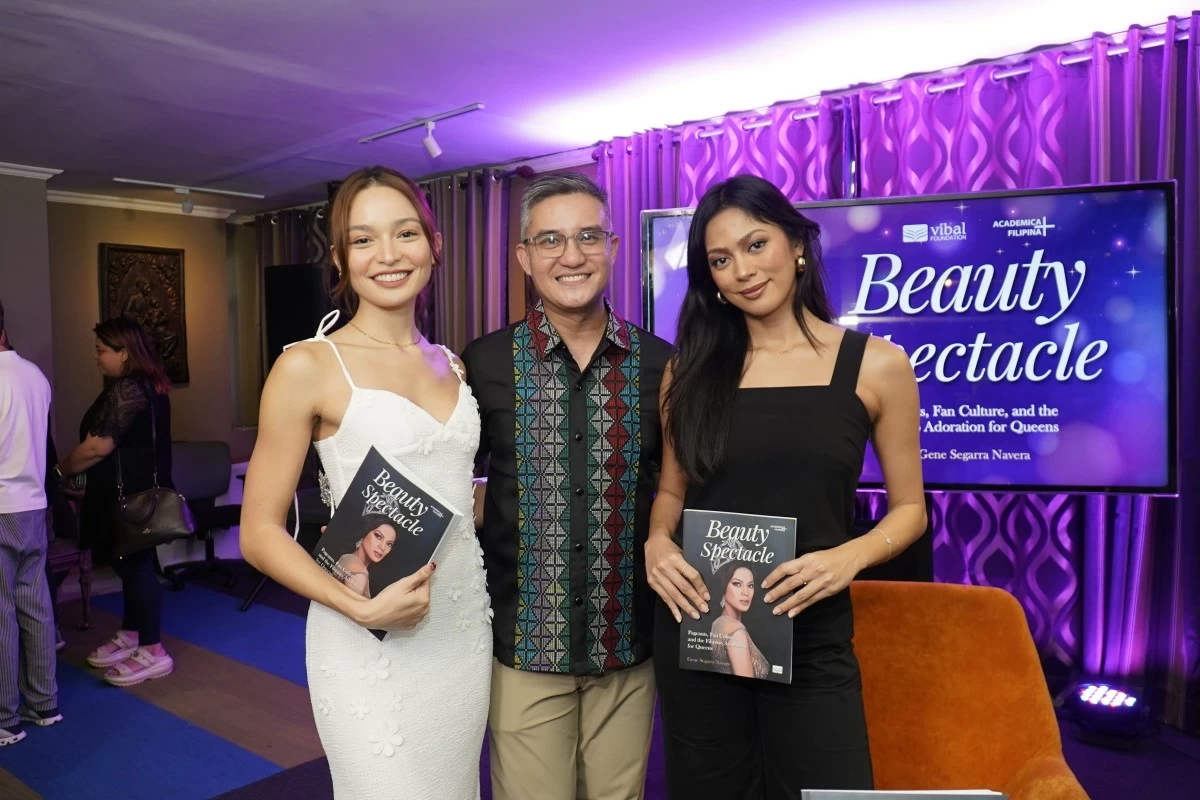
Dr. Gene (center) with beauty queens Bella Ysmael and Ara Arida.
There’s also a dedicated chapter on Miss Universe for the author believes that among all the pageants, it remains the most popular among Filipinos. The chapter revisits the reigns of the four Filipina Miss Universe winners and unpacks why this particular pageant continues to enthrall the nation.
The second chapter concludes with a critique of dominant narratives that paint pageants solely as exploitative spaces. Dr. Gene is quick to acknowledge that while the chapter “does not deny the history of exploitation in pageants, it rejects simplistic and reductionist criticism of pageantry.”
The final part of the book turns the spotlight on pageant fans, exploring their diversity, their roles, and their impact on the culture of pageantry. It examines the phenomenon of fandom through what Dr. Gene describes as “concentric circles” of engagement, from casual spectators to deeply invested aficionados.
In this section, he also shares his own journey as a pageant fan, culminating in a reflection on critical fandom, which he hopes can help “transform pageantry into a more inclusive, embracive, and transformational space.”
Beyond the tiara
“Beauty Spectacle” invites readers to look beyond the glamour and examine what beauty pageants reveal about Filipino society. It is more than a study of fan culture or a personal memoir as the book opens a dialogue on issues that matter within the pageant scene and beyond.
Because ultimately, behind our curiosity lies a deeper question: What does our fascination with beauty pageants say about us?