






Manila Bulletin
 Philippines
National
New orchid species 'Habenaria diwata' discovered in Mt. Malinao forest
Philippines
National
New orchid species 'Habenaria diwata' discovered in Mt. Malinao forest
Philippines
National
New orchid species 'Habenaria diwata' discovered in Mt. Malinao forest
New orchid species 'Habenaria diwata' discovered in Mt. Malinao forest
By Jel Santos
Published Jul 19, 2025 01:38 pm


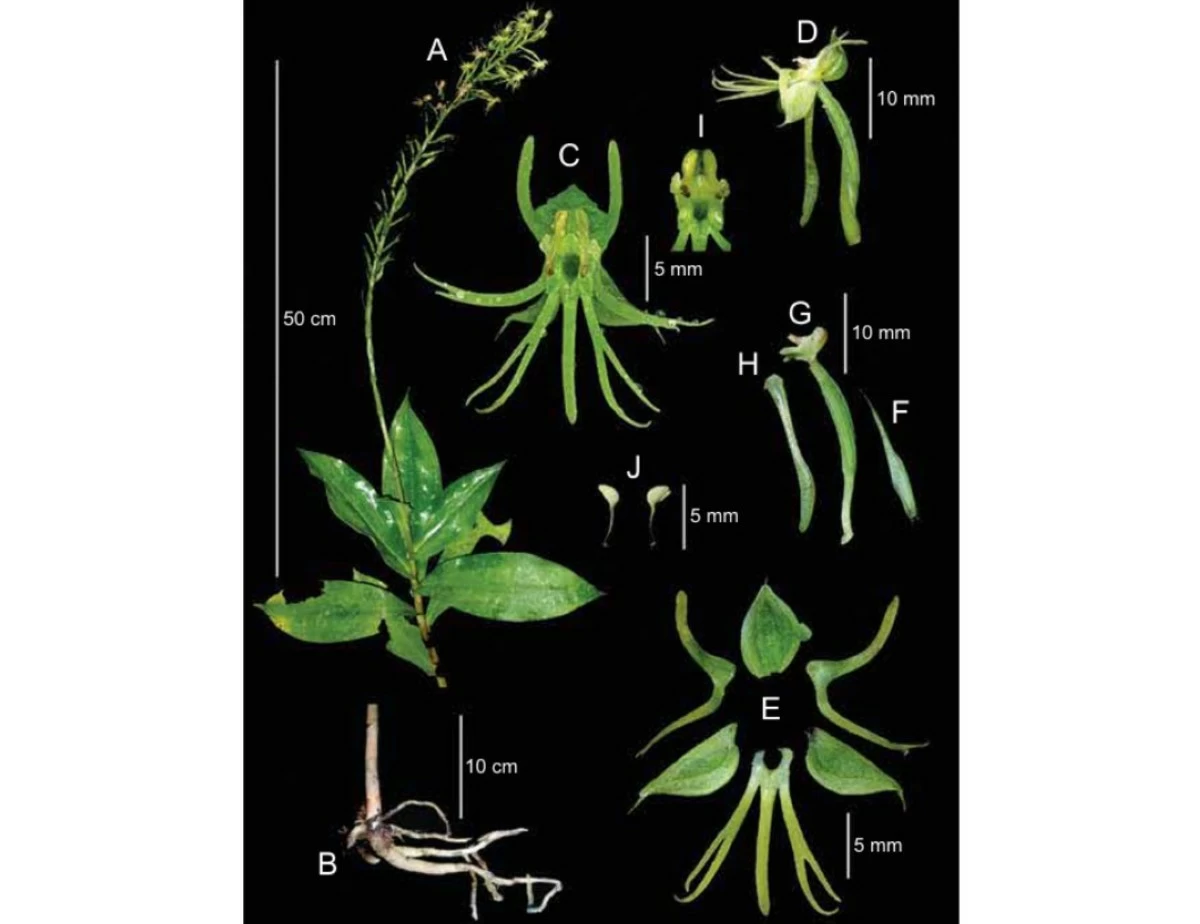
Fig. 2. Habenaria diwata R.Bustam., J.Collantes & M.R.B.Altamirano. A. Flowering plant, upper part. B. Basal part showing stem and roots. C. Ventral view of perianth and column. D. Lateral view of flower. E. Dissected perianth with ventral view of sepals, petals and labellum. F. Floral Bract. G. Lateral view of column and ovary. H. Lateral view of spur. I. Ventral view of column. J. Pollinaria. From the holotype, PTI-SLP1 27. (Photos: J.P.R. Collantes)
A new orchid species, named “Habenaria diwata,” has been discovered in the highland mossy forests of Mt. Malinao in Albay, Luzon, the Philippine Taxonomic Initiative (PTI) announced on Saturday, July 19.
According to the non-profit group focused on documenting the country’s native plants, the orchid was found growing in cool, high-elevation forests over 1,200 meters above sea level.
It features a slim flowering stalk that can carry up to 50 delicate greenish-white flowers with long, slender, and uniquely shaped floral parts.
In Filipino mythology, “diwata” refers to a forest spirit or guardian.
The researchers said the name reflects the orchid’s graceful and mystical appearance.
“This discovery serves as a reminder of the urgent need to protect and conserve our forests, not only in the Bicol Region but across the entire country,” the PTI said in a statement.
The species was officially described in 2024 by Altamirano of the University of the Philippines Visayas, along with Collantes and Bustamante of PTI.
They confirmed its novelty after a detailed comparison with similar orchids using live specimens, herbarium records, and published images.
While it shares some traits with “Habenaria tsaiana” from Taiwan and “H. lingulosa” from the Philippines, PTI said “H. diwata” stands out with its longer petals, extended side lobes, and more elongated floral structure.
“With this discovery, the number of known Habenaria species in the Philippines rises to 22, 14 of which are found only in the country,” the PTI said.
The group warned that the orchid has only been seen in a single location and is highly vulnerable to habitat loss and climate change.
“Because of this, the researchers recommend classifying it as Endangered under IUCN guidelines,” they said.
The discovery adds to the PTI’s broader efforts to explore and protect the Philippines’ lesser-known ecosystems.
“With continued support from government agencies, academic institutions, and local communities, more species can be discovered and documented, contributing to our understanding of the country’s rich and unique biodiversity,” the group said.