ADVERTISEMENT

The price we must pay for food security

Published Jul 18, 2025 12:05 am  |  Updated Jul 17, 2025 06:07 pm
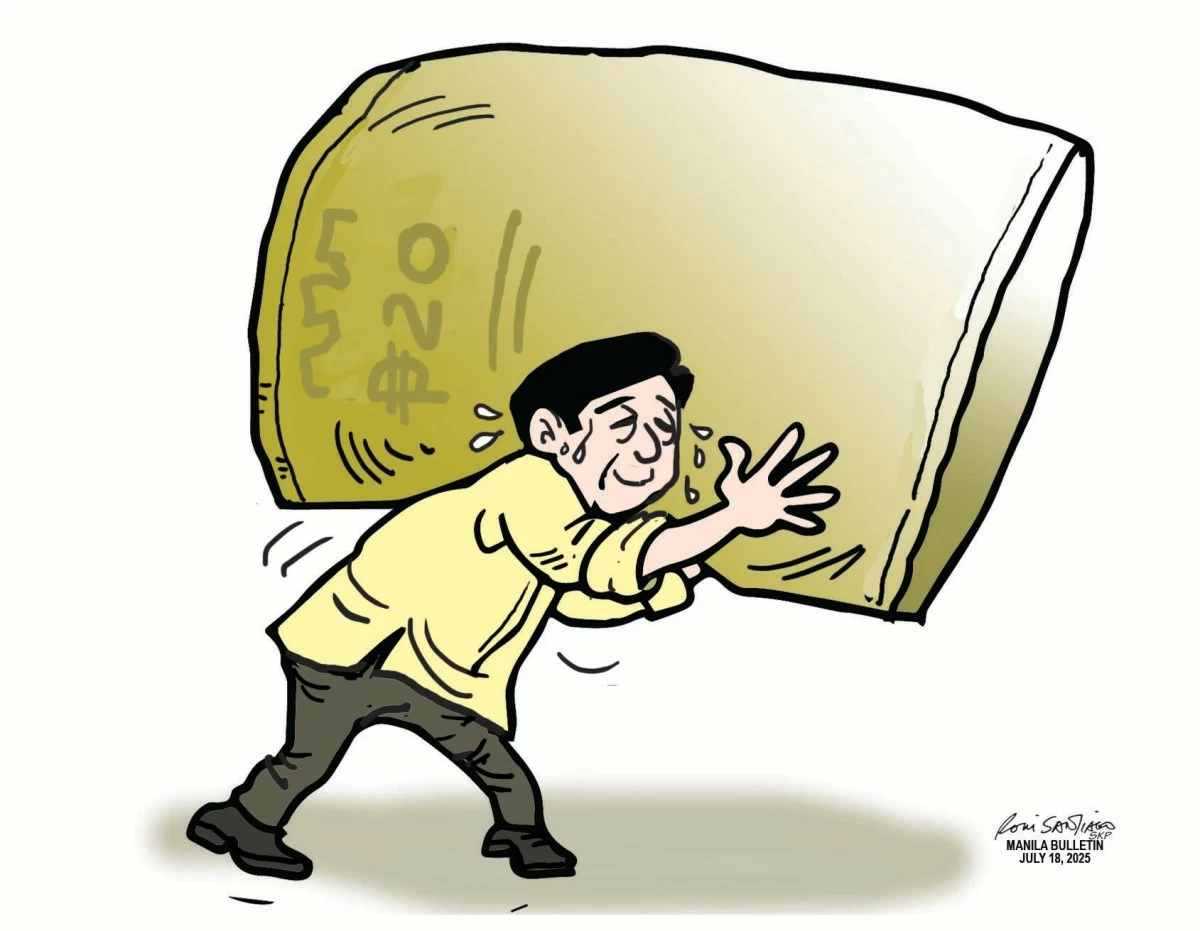
The government’s ambitious ₱20-per-kilo rice promise ignited hope in every Filipino household. To the struggling mother feeding five mouths, the senior citizen living on pension, the daily wage earner whose budget barely lasts a week—this pledge came as a big relief, a lifeline, and a sort of dignity to every struggling Filipino.
But hope, noble as it is, cannot stand alone. It must be rooted in reality. Because behind every grain of rice is a farmer—sunburned, knee-deep in mud, laboring with no guarantee that his harvest will feed his family, let alone the nation.
According to the Philippine Statistics Authority (PSA), the average cost of producing a kilo of palay rose by around seven percent—from ₱13.54 in 2023 to ₱14.52 in 2024. In Central Visayas, the cost ballooned to ₱19.73 per kilo, with the lowest cost recorded in Eastern Visayas ₱12.59. At these rates, expecting the government to sell rice at ₱20 per kilo borders on the miraculous, unless it is willing to absorb the financial hit. And it has—subsidizing the price to meet the ₱20 per kilo promise.
The farmgate price of palay has grown to ₱23.48 per kilo in 2024, an 18-percent increase from 2023. Encouraging, yes, but let’s not forget: Filipino farmers earned only ₱0.61 for every peso they spent on production last year. Imagine investing everything you have and gaining barely half back. That is the brutal reality our farmers live by.
So, how can the government sustain the ₱20-per-kilo rice without draining our national coffers dry?
First, the government must stop treating subsidies as band-aids and instead as investments. Targeted subsidies—like mechanization grants, fertilizer vouchers, and irrigation infrastructure—should be poured into high-cost regions. Farming must be modernized to lower production costs. This will help end the cycle of farmers borrowing for fertilizers and not having enough to repay the loan as there is barely enough left for food.
Second, the private sector must be mobilized not merely as buyers or middlemen but as co-investors. Agritech startups must be encouraged and supported. Corporations that support local farm cooperatives should be offered tax incentives. Public-private partnerships (PPPs) in post-harvest facilities need to curb wastage—one of the silent killers of farm profit margins.
Third, local government units must champion localized procurement. Why should rice travel hundreds of kilometers, accruing logistics costs, when nearby provinces produce enough? Buying local not only saves money, it revitalizes rural economies as well.
Fourth, revisit the Rice Tariffication Law. While it opened the gates to cheaper imports, it also affected local farmers as increased imports drove down domestic prices. Safeguard mechanisms, such as quotas for local procurement, must be implemented to ensure Filipino farmers aren’t competing against heavily subsidized foreign producers on an uneven playing field.
And lastly, transparency must reign. The billions allocated for agriculture must not disappear into bureaucratic black holes. Farmers need to see real, tangible support. The Filipino people deserve to know where every peso goes.
There is no doubt, the ₱20-per-kilo rice is a moral economic goal. But to achieve it, we must understand that rice cannot be made cheaper by simply setting prices. We must make its production genuinely affordable and sustainable for the farmers who grow it.
If we want rice that is affordable for the poor, it must first be profitable for the farmer. That is the paradox. That is the challenge. And that is the price of true food security.
It’s time we pay it—together—so the food we place on our tables is affordable and sustainable.
ADVERTISEMENT
.most-popular .layout-ratio{ padding-bottom: 79.13%; } @media (min-width: 768px) and (max-width: 1024px) { .widget-title { font-size: 15px !important; } }

{{ articles_filter_1561_widget.title }}

.most-popular .layout-ratio{ padding-bottom: 79.13%; } @media (min-width: 768px) and (max-width: 1024px) { .widget-title { font-size: 15px !important; } }

{{ articles_filter_1562_widget.title }}

.most-popular .layout-ratio{ padding-bottom: 79.13%; } @media (min-width: 768px) and (max-width: 1024px) { .widget-title { font-size: 15px !important; } }

{{ articles_filter_1563_widget.title }}

{{ articles_filter_1564_widget.title }}

.mb-article-details { position: relative; } .mb-article-details .article-body-preview, .mb-article-details .article-body-summary{ font-size: 17px; line-height: 30px; font-family: "Libre Caslon Text", serif; color: #000; } .mb-article-details .article-body-preview iframe , .mb-article-details .article-body-summary iframe{ width: 100%; margin: auto; } .read-more-background { background: linear-gradient(180deg, color(display-p3 1.000 1.000 1.000 / 0) 13.75%, color(display-p3 1.000 1.000 1.000 / 0.8) 30.79%, color(display-p3 1.000 1.000 1.000) 72.5%); position: absolute; height: 200px; width: 100%; bottom: 0; display: flex; justify-content: center; align-items: center; padding: 0; } .read-more-background a{ color: #000; } .read-more-btn { padding: 17px 45px; font-family: Inter; font-weight: 700; font-size: 18px; line-height: 16px; text-align: center; vertical-align: middle; border: 1px solid black; background-color: white; } .hidden { display: none; }
function initializeAllSwipers() { // Get all hidden inputs with cms_article_id document.querySelectorAll('[id^="cms_article_id_"]').forEach(function (input) { const cmsArticleId = input.value; const articleSelector = '#article-' + cmsArticleId + ' .body_images'; const swiperElement = document.querySelector(articleSelector); if (swiperElement && !swiperElement.classList.contains('swiper-initialized')) { new Swiper(articleSelector, { loop: true, pagination: false, navigation: { nextEl: '#article-' + cmsArticleId + ' .swiper-button-next', prevEl: '#article-' + cmsArticleId + ' .swiper-button-prev', }, }); } }); } setTimeout(initializeAllSwipers, 3000); const intersectionObserver = new IntersectionObserver( (entries) => { entries.forEach((entry) => { if (entry.isIntersecting) { const newUrl = entry.target.getAttribute("data-url"); if (newUrl) { history.pushState(null, null, newUrl); let article = entry.target; // Extract metadata const author = article.querySelector('.author-section').textContent.replace('By', '').trim(); const section = article.querySelector('.section-info ').textContent.replace(' ', ' '); const title = article.querySelector('.article-title h1').textContent; // Parse URL for Chartbeat path format const parsedUrl = new URL(newUrl, window.location.origin); const cleanUrl = parsedUrl.host + parsedUrl.pathname; // Update Chartbeat configuration if (typeof window._sf_async_config !== 'undefined') { window._sf_async_config.path = cleanUrl; window._sf_async_config.sections = section; window._sf_async_config.authors = author; } // Track virtual page view with Chartbeat if (typeof pSUPERFLY !== 'undefined' && typeof pSUPERFLY.virtualPage === 'function') { try { pSUPERFLY.virtualPage({ path: cleanUrl, title: title, sections: section, authors: author }); } catch (error) { console.error('ping error', error); } } // Optional: Update document title if (title && title !== document.title) { document.title = title; } } } }); }, { threshold: 0.1 } ); function showArticleBody(button) { const article = button.closest("article"); const summary = article.querySelector(".article-body-summary"); const body = article.querySelector(".article-body-preview"); const readMoreSection = article.querySelector(".read-more-background"); // Hide summary and read-more section summary.style.display = "none"; readMoreSection.style.display = "none"; // Show the full article body body.classList.remove("hidden"); } document.addEventListener("DOMContentLoaded", () => { let loadCount = 0; // Track how many times articles are loaded const offset = [1, 2, 3, 4, 5, 6, 7, 8, 9, 10]; // Offset values const currentUrl = window.location.pathname.substring(1); let isLoading = false; // Prevent multiple calls if (!currentUrl) { console.log("Current URL is invalid."); return; } const sentinel = document.getElementById("load-more-sentinel"); if (!sentinel) { console.log("Sentinel element not found."); return; } function isSentinelVisible() { const rect = sentinel.getBoundingClientRect(); return ( rect.top < window.innerHeight && rect.bottom >= 0 ); } function onScroll() { if (isLoading) return; if (isSentinelVisible()) { if (loadCount >= offset.length) { console.log("Maximum load attempts reached."); window.removeEventListener("scroll", onScroll); return; } isLoading = true; const currentOffset = offset[loadCount]; window.loadMoreItems().then(() => { let article = document.querySelector('#widget_1690 > div:nth-last-of-type(2) article'); intersectionObserver.observe(article) loadCount++; }).catch(error => { console.error("Error loading more items:", error); }).finally(() => { isLoading = false; }); } } window.addEventListener("scroll", onScroll); });

Sign up by email to receive news.