

ADVERTISEMENT

German leader Merz says his government has a 'stable foundation' despite a dispute

Published Jul 18, 2025 08:55 pm

At A Glance

  • German Chancellor Friedrich Merz took office on May 6, leading a coalition of his conservative Union bloc with the center-left Social Democrats that has a relatively thin parliamentary majority. He vowed to strengthen Europe's biggest economy after years of stagnation, enable Germany to build Europe's strongest conventional army and keep the U.S. on board with aid to Ukraine.
BERLIN (AP) — German Chancellor Friedrich Merz said Friday that his coalition has a "stable foundation" and has achieved a lot in its first 10 weeks, but acknowledged that "occasional setbacks" are a risk in government as his administration struggles with its first major dispute.
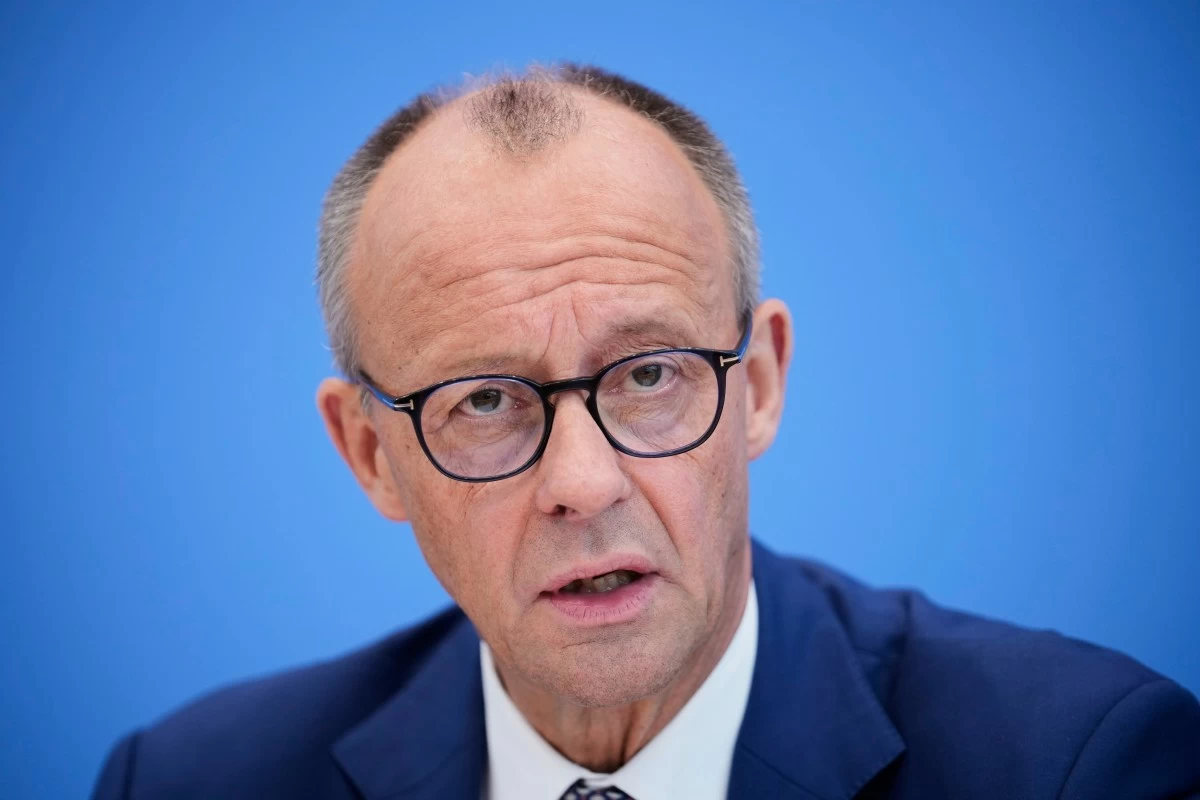
German Chancellor Friedrich Merz attends the annual press conference at the Federal Press Conference in Berlin, Germany, Friday, July 18, 2025. (AP Photo/Ebrahim Noroozi)
Merz took office on May 6, leading a coalition of his conservative Union bloc with the center-left Social Democrats that has a relatively thin parliamentary majority. He vowed to strengthen Europe's biggest economy after years of stagnation, enable Germany to build Europe's strongest conventional army and keep the U.S. on board with aid to Ukraine.
The government has launched a program to encourage investment, set in motion plans to raise defense spending and implemented a tougher approach to migration. Merz has taken a prominent role in diplomacy on Ukraine and other issues.
Merz said at the German leader's annual summer news conference that he is "very satisfied with what we have achieved in the first 10 weeks."
Merz set out to avoid the infighting that plagued ex-Chancellor Olaf Scholz's three-party coalition, which collapsed in November. However, the new government's record has been overshadowed over the past week by parliament's failure to elect three new justices for Germany's highest court.
Nominations have in the past mostly been approved uneventfully. But planned votes last Friday were scrapped at the last minute after some lawmakers in Merz's bloc balked at a candidate put forward by the Social Democrats.
Opponents of the nominee, law professor Frauke Brosius-Gersdorf, have cited her perceived liberal views on issues such as abortion. Leading Social Democrats have been irked by the conservatives' failure to follow through on an agreement on the new justices and have stood by their candidate.
Merz has downplayed the argument and insisted Friday that "there is no time pressure" to rush to a solution. And he rejected a suggestion that his coalition is on wobbly ground, with the court nominee flap following its bumpy start when lawmakers needed an unprecedented two rounds of voting to elect Merz as chancellor in May.
"This government stands on a stable foundation, on a stable majority in the German parliament," Merz said. "But you see from these two votes that we are living in very uncertain times, also regarding supposed certainties in the German parliament."
He said that "we know what job we have, and high points and successes are part of that as well as occasional setbacks."
Recent polls have suggested that Merz's coalition has work to do to convince voters. Ratings for the Union and Social Democrats haven't picked up from their lackluster showing in Germany's February election. Surveys show the far-right, anti-immigration Alternative for Germany solidifying its strong second place.

Related Tags

World news
ADVERTISEMENT
.most-popular .layout-ratio{ padding-bottom: 79.13%; } @media (min-width: 768px) and (max-width: 1024px) { .widget-title { font-size: 15px !important; } }

{{ articles_filter_1561_widget.title }}

.most-popular .layout-ratio{ padding-bottom: 79.13%; } @media (min-width: 768px) and (max-width: 1024px) { .widget-title { font-size: 15px !important; } }

{{ articles_filter_1562_widget.title }}

.most-popular .layout-ratio{ padding-bottom: 79.13%; } @media (min-width: 768px) and (max-width: 1024px) { .widget-title { font-size: 15px !important; } }

{{ articles_filter_1563_widget.title }}

{{ articles_filter_1564_widget.title }}

.mb-article-details { position: relative; } .mb-article-details .article-body-preview, .mb-article-details .article-body-summary{ font-size: 17px; line-height: 30px; font-family: "Libre Caslon Text", serif; color: #000; } .mb-article-details .article-body-preview iframe , .mb-article-details .article-body-summary iframe{ width: 100%; margin: auto; } .read-more-background { background: linear-gradient(180deg, color(display-p3 1.000 1.000 1.000 / 0) 13.75%, color(display-p3 1.000 1.000 1.000 / 0.8) 30.79%, color(display-p3 1.000 1.000 1.000) 72.5%); position: absolute; height: 200px; width: 100%; bottom: 0; display: flex; justify-content: center; align-items: center; padding: 0; } .read-more-background a{ color: #000; } .read-more-btn { padding: 17px 45px; font-family: Inter; font-weight: 700; font-size: 18px; line-height: 16px; text-align: center; vertical-align: middle; border: 1px solid black; background-color: white; } .hidden { display: none; }
function initializeAllSwipers() { // Get all hidden inputs with cms_article_id document.querySelectorAll('[id^="cms_article_id_"]').forEach(function (input) { const cmsArticleId = input.value; const articleSelector = '#article-' + cmsArticleId + ' .body_images'; const swiperElement = document.querySelector(articleSelector); if (swiperElement && !swiperElement.classList.contains('swiper-initialized')) { new Swiper(articleSelector, { loop: true, pagination: false, navigation: { nextEl: '#article-' + cmsArticleId + ' .swiper-button-next', prevEl: '#article-' + cmsArticleId + ' .swiper-button-prev', }, }); } }); } setTimeout(initializeAllSwipers, 3000); const intersectionObserver = new IntersectionObserver( (entries) => { entries.forEach((entry) => { if (entry.isIntersecting) { const newUrl = entry.target.getAttribute("data-url"); if (newUrl) { history.pushState(null, null, newUrl); let article = entry.target; // Extract metadata const author = article.querySelector('.author-section').textContent.replace('By', '').trim(); const section = article.querySelector('.section-info ').textContent.replace(' ', ' '); const title = article.querySelector('.article-title h1').textContent; // Parse URL for Chartbeat path format const parsedUrl = new URL(newUrl, window.location.origin); const cleanUrl = parsedUrl.host + parsedUrl.pathname; // Update Chartbeat configuration if (typeof window._sf_async_config !== 'undefined') { window._sf_async_config.path = cleanUrl; window._sf_async_config.sections = section; window._sf_async_config.authors = author; } // Track virtual page view with Chartbeat if (typeof pSUPERFLY !== 'undefined' && typeof pSUPERFLY.virtualPage === 'function') { try { pSUPERFLY.virtualPage({ path: cleanUrl, title: title, sections: section, authors: author }); } catch (error) { console.error('ping error', error); } } // Optional: Update document title if (title && title !== document.title) { document.title = title; } } } }); }, { threshold: 0.1 } ); function showArticleBody(button) { const article = button.closest("article"); const summary = article.querySelector(".article-body-summary"); const body = article.querySelector(".article-body-preview"); const readMoreSection = article.querySelector(".read-more-background"); // Hide summary and read-more section summary.style.display = "none"; readMoreSection.style.display = "none"; // Show the full article body body.classList.remove("hidden"); } document.addEventListener("DOMContentLoaded", () => { let loadCount = 0; // Track how many times articles are loaded const offset = [1, 2, 3, 4, 5, 6, 7, 8, 9, 10]; // Offset values const currentUrl = window.location.pathname.substring(1); let isLoading = false; // Prevent multiple calls if (!currentUrl) { console.log("Current URL is invalid."); return; } const sentinel = document.getElementById("load-more-sentinel"); if (!sentinel) { console.log("Sentinel element not found."); return; } function isSentinelVisible() { const rect = sentinel.getBoundingClientRect(); return ( rect.top < window.innerHeight && rect.bottom >= 0 ); } function onScroll() { if (isLoading) return; if (isSentinelVisible()) { if (loadCount >= offset.length) { console.log("Maximum load attempts reached."); window.removeEventListener("scroll", onScroll); return; } isLoading = true; const currentOffset = offset[loadCount]; window.loadMoreItems().then(() => { let article = document.querySelector('#widget_1690 > div:nth-last-of-type(2) article'); intersectionObserver.observe(article) loadCount++; }).catch(error => { console.error("Error loading more items:", error); }).finally(() => { isLoading = false; }); } } window.addEventListener("scroll", onScroll); });

Sign up by email to receive news.