






Manila Bulletin
 Business
Banking & Finance
DOF insists fiscal situation 'under control' despite high debt repayment ratio
Business
Banking & Finance
DOF insists fiscal situation 'under control' despite high debt repayment ratio
Business
Banking & Finance
DOF insists fiscal situation 'under control' despite high debt repayment ratio
DOF insists fiscal situation 'under control' despite high debt repayment ratio
By Derco Rosal
Published Jul 18, 2025 03:11 pm


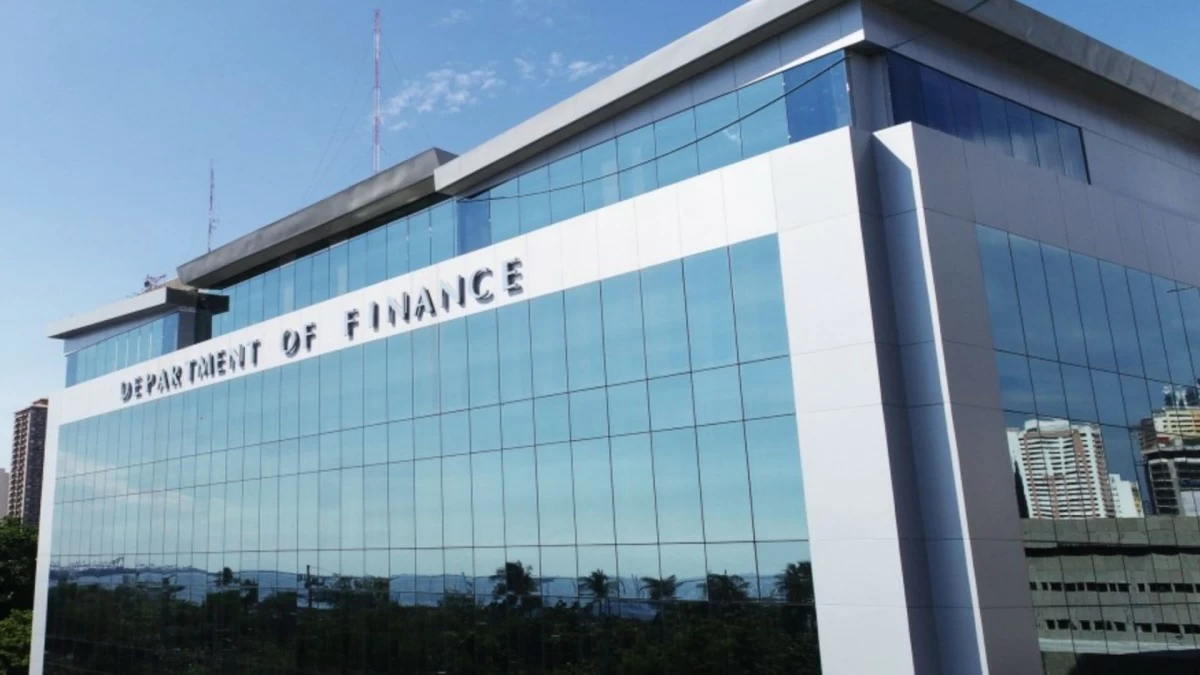
Department of Finance building in Manila (DOF photo)
With the Philippines being flagged as one of the developing countries that spent more than 10 percent of its income on debt repayments in 2023, the Department of Finance (DOF) argued that the fiscal strain stemming from mounting debt payments remains under control.
“We’re managing it,” DOF Secretary Ralph G. Recto told Manila Bulletin when asked if the government faces a challenge on the fiscal side due to the increasing debt payments.
“That’s why we are doing fiscal consolidation—reducing the deficit every year while growing the economy,” Recto said.
“What’s important,” he stressed, is that “we grow the economy faster than the growth of debt.”
Similarly, National Treasurer Sharon P. Almanza told Manila Bulletin that the country’s debt burden “remains manageable.”
“Also, we expect that this will gradually improve as the government continues its commitment to fiscal consolidation coupled with prudent management of our debt portfolio,” Almanza said.
As reported by the Manila Bulletin, rising post-pandemic debt repayments in developing economies across the region, including the Philippines, have been flagged by the Asian Development Bank Institute (ADBI). According to the Tokyo-based think tank, this setup deprives governments of more funding for public goods and services.
“Between 2008 and 2019, annual interest expenses averaged just 7.35 percent of overall government budgets. However, from 2020 to 2023, debt servicing absorbed an average of 10.33 percent of government budgets in the developing countries in the Asia and Pacific region,” ADBI reported.
As of 2023, the debt service ratios in the Philippines, Bangladesh, Fiji, India, Indonesia, Laos, Malaysia, Maldives, Papua New Guinea, and Sri Lanka exceeded 10 percent, ADBI noted.
“Increasingly expensive debt burdens are crowding out other vital government expenditures due to rising debt service costs; indeed, approximately 83 percent of the population of developing Asia and the Pacific, excluding China—2.2 billion people—live in countries where governments spend more on debt servicing than on healthcare,” the think tank lamented.
In ADBI’s developing Asia debt and climate heatmap, the Philippines’ gross debt-to-gross domestic product (GDP) ratio of 57 percent was tagged as “moderate.”
However, the country’s 16.4-percent share of interest payments to government revenues was flagged by ADBI as “high.”
ADBI noted that while the Philippines’ gross debt-to-GDP ratio fell to 37.1 percent in 2018 from 50 percent in 2008, the share soared to 56.5 percent in 2023.
Annual interest expense as a percentage of government revenue also dropped to 12.3 percent in 2018 from 24.1 percent in 2008; however, the ratio climbed in 2023 to 16.4 percent.
ADBI placed the Philippines’ progress so far in achieving the United Nations’ (UN) Sustainable Development Goals (SDGs) at only 53 percent, while the country also faces “moderate” climate vulnerability.
As such, ADBI described as “moderate” the composite risk that the Philippines has to deal with from its mounting debt and exposure to climate hazards.
The Manila Bulletin reported in April that data from the Washington-based global financial industry association, the Institute of International Finance (IIF), showed that from 2022 to 2024, the Philippines’ debt servicing budget averaged 6.2 percent of GDP.
Amortization or principal repayments as a share of Philippine GDP reached 3.8 percent, while interest payments stood at 2.4 percent.
IIF data showed that the Philippines’ debt payments exceeded the budgets for more important sectors like education (an average of 3.6 percent of GDP from 2022 to 2024), health (1.2 percent of GDP), and the military (1.1 percent of GDP).
The Philippines will repay a record ₱2.05 trillion in debt this year, up from ₱2.02 trillion last year.
The national government will settle over ₱1.2 trillion in principal amortization in 2025, on top of more than ₱848 billion in interest.
The IIF had cited the Philippines as among the countries that have experienced both rising interest costs and falling social expenditures during the period 2018 to 2024.
To recall, over half a trillion pesos was slashed from total payments in the first five months of the year, a 42.4 percent decline by end-May.
According to the Bureau of the Treasury (BTr), the Marcos administration’s total debt financing only amounted to ₱703 billion from January to May, falling by ₱517 billion from ₱1.22 trillion recorded in the same period last year.
A sharp drop in principal payments or amortization significantly contributed to the massive decline.
Additionally, the national government’s outstanding debt reached ₱16.92 trillion in May, setting a new record high as it neared the ₱17-trillion mark, from ₱16.75 trillion at end-April.
Fresh loans from domestic lenders were blamed from the one-percent increase in debt stock from the end-April level.